
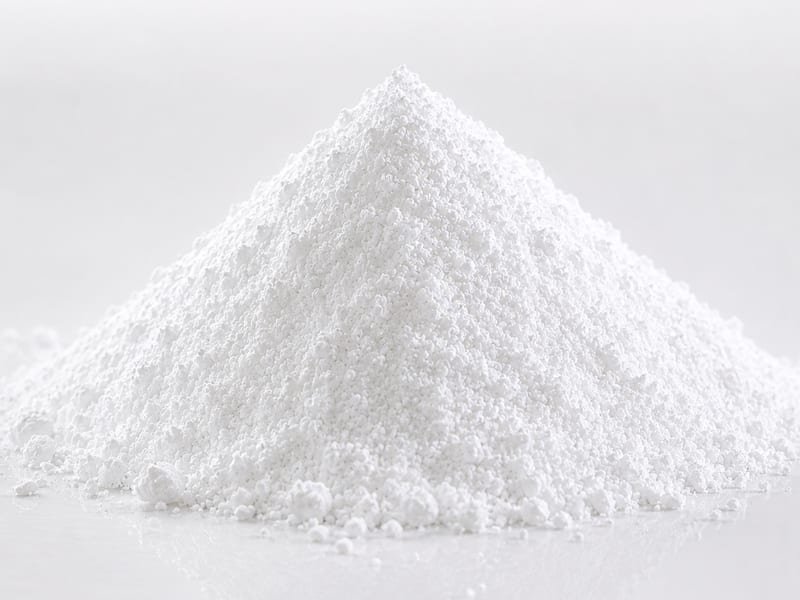
Titanium Dioxide
What Titanium Dioxide is used for, Rutile vs Anatase grade selection, how it compares to Zinc Oxide, and what buyers should know — a practical guide for buyers and engineers.
Overview
Titanium Dioxide (TiO₂) is a pigment used across five industries — paints, plastics, printing inks, cosmetics, and textiles. Its role isn’t identical in any of them; the breakdown below covers what it actually does in each.
What is it?
Titanium Dioxide is produced commercially in two crystalline forms, and the difference is a real grade-selection decision, not just a naming detail:
- Rutile — the higher refractive index of the two forms (~2.70), and the grade preferred for exterior/durable coatings (see Paints & Coatings below). It’s commonly further treated with silica and alumina surface coatings, which improve the pigment’s stability and dispersion.
- Anatase — a lower refractive index (~2.55) and distinctly higher photocatalytic activity than Rutile.
ISO 591-1 formalizes this Rutile/Anatase distinction for paint-grade material specifically. ASTM D476 separately classifies dry pigmentary TiO₂ into eight types by composition, intended end use, and performance properties — scoped specifically to hiding (opacifying) pigment, not dispersions or non-hiding specialty forms.
It’s manufactured by one of two commercial processes: the chloride process (continuous, now accounting for roughly 65% of global production) or the older sulfate process (batch). In the US specifically, the feedstock is mined ilmenite and rutile ore concentrate, and more than 95% of the titanium mineral concentrate produced there goes to TiO₂ pigment manufacturers (USGS).
Why should I use it?
- Hiding power. Rutile-grade Titanium Dioxide has a substantially higher refractive index than Zinc Oxide (~2.70 vs. ~2.00) — the main mineral white pigment it’s compared against — which is why formulators reach for it whenever maximum opacity or whiteness per unit of pigment is the priority.
- Versatility. It performs a different job in each industry it’s used in — see the breakdown below.
How its role changes by industry
- Paints & Coatings: the primary opacifying pigment. For exterior/durable coatings specifically, Rutile is preferred over Anatase — Anatase’s higher photocatalytic activity accelerates chalking and coating breakdown under sustained outdoor UV exposure, while Rutile remains color-stable for years.
- Plastics & Polymers: an opacifier/pigment — its high refractive index lets formulators achieve strong hiding at a low use level compared to alternatives (see Limitations for why that use level matters).
- Printing Inks: an opacifier, used at 3–27% of ink weight.
- Cosmetics & Personal Care: performs two distinct jobs depending on the product — an opacifier in makeup formulations, and a mineral UV filter in sunscreens.
- Textiles: a delustering agent on synthetic fibers — a different function from the other four industries, since the goal here is reducing the fiber’s natural shine, not adding opacity or whiteness.
Limitations — when it isn’t the right choice
- It cannot be fully replaced where maximum hiding power is required. Zinc Oxide is a partial substitute in some applications — cheaper, and preferred where mold resistance or lower skin sensitivity matters more than opacity — but its lower refractive index (~2.00) means weaker hiding power at the same use level. (A dedicated comparison article — Titanium Dioxide vs. Zinc Oxide — is planned.)
- It costs more than the extenders it’s commonly combined with. Calcium Carbonate is the best-documented example of a lower-cost extender used alongside it, reducing the amount of Titanium Dioxide a formulation needs without a significant loss in hiding power.
- Regulatory history worth knowing for EU-facing formulations: the European Union classified TiO₂ in certain powder forms (≥1% of particles ≤10 micron) as a suspected inhalation carcinogen (Category 2) in 2020. That classification was annulled by the Court of Justice of the European Union in August 2025 — it no longer applies.
Key Applications
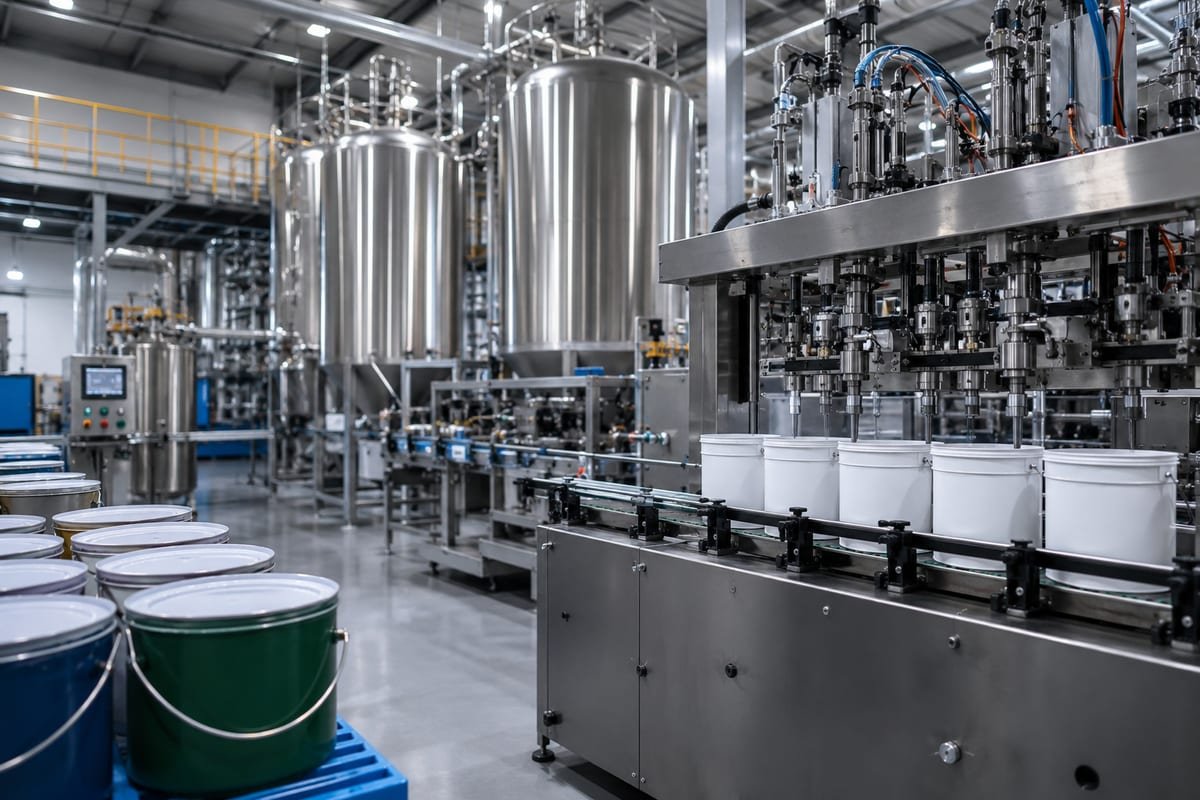
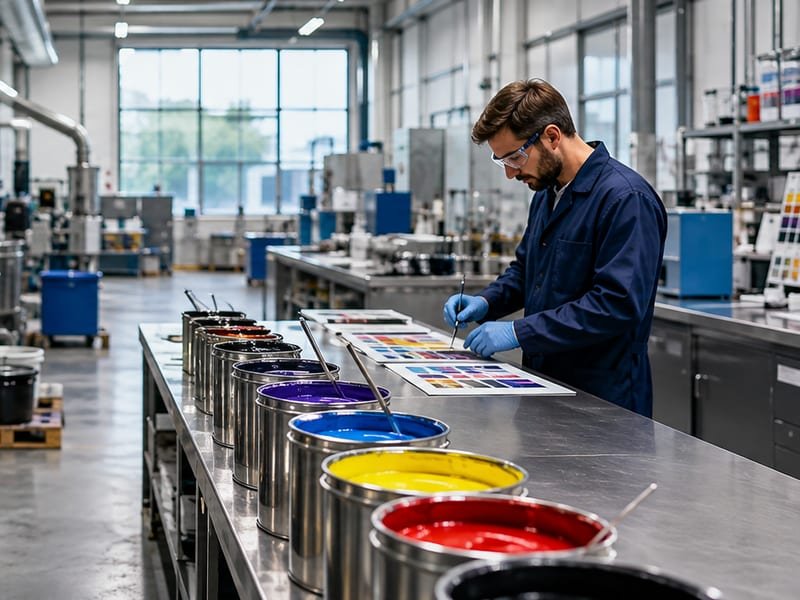
The material's role changes by industry — click any industry to see its full page.



Physical Properties
| Property | Typical Value | Note |
|---|---|---|
| Refractive Index (Rutile) | ≈ 2.70 | Typical published value — refractiveindex.info |
| Refractive Index (Anatase) | ≈ 2.55 | Typical published value — refractiveindex.info |
| Specific Gravity (Rutile) | ≈ 4.2-4.3 | Typical published value — samaterials.com |
| Specific Gravity (Anatase) | ≈ 3.8-3.9 | Typical published value — samaterials.com |
| Mohs Hardness (Rutile) | ≈ 6.0-7.0 | Typical published value — samaterials.com |
| Optimal Pigment Particle Size (light scattering) | ≈ 0.2-0.3 micron (peak efficiency near 0.25 micron) | Typical published value — ScienceDirect, 2014 |
| Oil Absorption (Rutile pigment grade) | ≈ 17-22 g/100g | Typical published value — YIPIN Rutile SR201 TDS |
These are typical published values for the material in general, not a certificate of analysis (COA) for a specific shipment. Actual per-batch values are set by the COA accompanying supply.
Grades
Grade and Specification Guide
These reference codes illustrate grade categories and specifications for comparison and selection. The commercial grade and final specification are determined by your application requirements, the technical data sheet and the batch certificate of analysis.
Standards & Technical References
Every claim on this page traces back to a verifiable reference:
- Tier 1StandardASTM D476-15(2021) — Standard Classification for Dry Pigmentary Titanium Dioxide Products
- Tier 1StandardISO 591-1:2000 (reviewed and confirmed 2025) — Titanium dioxide pigments for paints — Specifications and methods of test
- Tier 1Government PublicationUSGS — Mineral Commodity Summaries 2025/2026, Titanium Minerals
- Tier 1Government PublicationUS EPA — Technical Support Document for the Titanium Dioxide Listing
- Tier 1Government/RegulatoryRIVM (Dutch National Institute for Public Health and the Environment) — EU Court upholds annulment of classification of TiO2 in certain powder forms
- Tier 2Industry AssociationTDMA — Titanium Dioxide Manufacturers Association (Cefic Sector Group)
- Tier 2University/ResearchHydrated alumina surface treatment on a titanium dioxide pigment — peer-reviewed (PubMed/ScienceDirect)
- Tier 2Physical Reference Databaserefractiveindex.info — TiO2 (Rutile/Anatase)
- Tier 3Educational Referenceessentialchemicalindustry.org (CIEC, University of York) — Titanium Dioxide
- Tier 3Educational Referencesamaterials.com — Titanium Dioxide Polymorphs: Rutile vs. Anatase (specific gravity, hardness)
- Tier 2University/ResearchThe effects of particle size distribution on the optical properties of titanium dioxide rutile pigments, ScienceDirect, 2014
- Tier 3Supplier Technical Data SheetYIPIN — Titanium Dioxide Pigment Rutile SR201 TDS (oil absorption)
Frequently Asked Questions
What is titanium dioxide?
Titanium dioxide is produced commercially in two crystalline forms — rutile and anatase — a real grade-selection decision, not just a naming difference: rutile has the higher refractive index (~2.70) and is the preferred grade for exterior coatings.
What is the difference between the Rutile and Anatase grades?
Rutile has the higher refractive index of the two forms (~2.70) and is preferred for exterior/durable coatings, while Anatase has a lower refractive index (~2.55) and distinctly higher photocatalytic activity than Rutile.
Why is Rutile preferred over Anatase in exterior coatings?
Because Anatase's higher photocatalytic activity accelerates chalking and coating breakdown under sustained outdoor UV exposure, while Rutile remains color-stable for years.
How is Titanium Dioxide manufactured commercially?
Via one of two commercial processes: the continuous chloride process (roughly 65% of global production currently) or the older, batch sulfate process.
Can Zinc Oxide fully replace Titanium Dioxide?
No. Zinc Oxide's lower refractive index (~2.00) means weaker hiding power at the same use level, so it's only a partial substitute — cheaper, and preferred where mold resistance or lower skin sensitivity matters more than maximum opacity.
What is Titanium Dioxide's regulatory status in the EU?
The EU classified TiO₂ in certain powder forms (≥1% of particles ≤10 micron) as a suspected inhalation carcinogen (Category 2) in 2020, but the Court of Justice of the European Union annulled that classification in August 2025 — it no longer applies.


