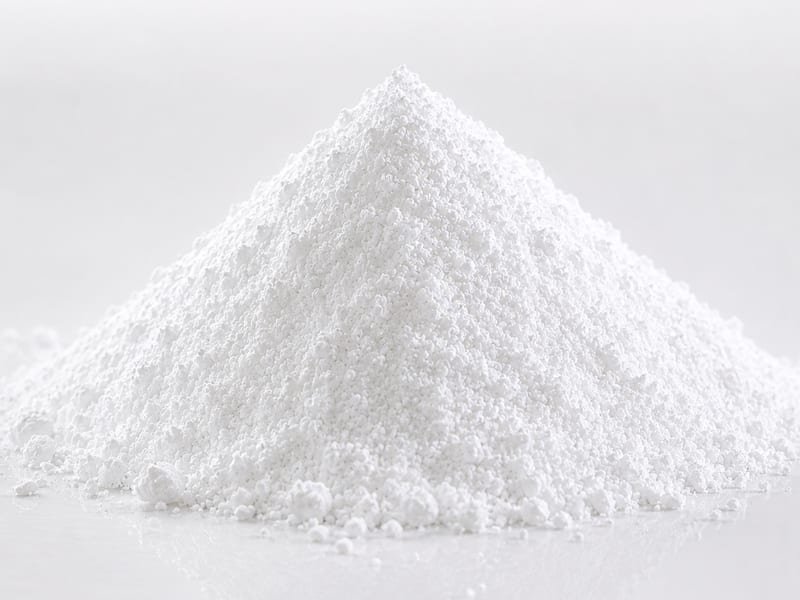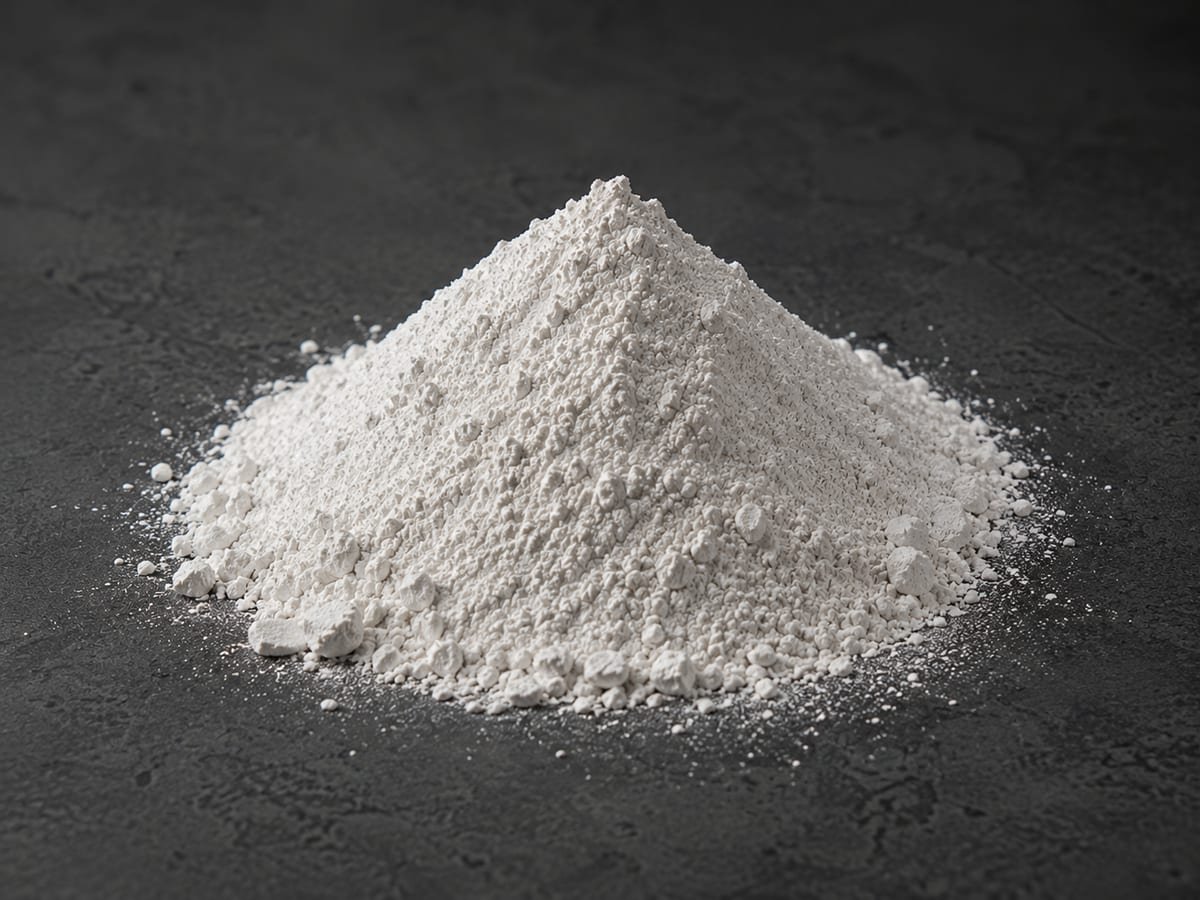
Paper brightness and whiteness are specified numbers, not visual impressions, and a mill blending mineral fillers or coating pigments to hit a target grade needs to understand that titanium dioxide, calcium carbonate, and kaolin do not deliver the same optical performance per unit of material — the choice between them, and the ratio when they’re blended, is a real specification decision, not an interchangeable commodity swap.
Root Causes
Optical performance in paper fillers and coatings comes down largely to refractive index and particle characteristics. Titanium dioxide has a substantially higher refractive index than either calcium carbonate or kaolin, which is why it delivers brighter paper with stronger hiding power (opacity) per unit of pigment than either mineral alternative. Calcium carbonate performs better as a brightening agent than clay, but still falls meaningfully short of titanium dioxide’s optical contribution — a hierarchy documented consistently across paper-industry technical sources.
Particle size and manufacturing route add a further layer of variability specific to each mineral. Titanium dioxide produced via the chloride process is documented as more consistently pure than material from alternative routes, with fewer impurities that could otherwise reduce brightness — a manufacturing-route distinction that matters when specifying TiO2 grade, not just nominal chemistry. Calcium carbonate and kaolin, by contrast, are naturally occurring minerals whose particle size distribution varies with deposit and processing, which is documented to limit their whitening efficiency relative to manufactured TiO2, and research on engineered nano-scale calcium carbonate has shown that reducing particle size measurably improves optical performance — one documented study found nano calcium carbonate improved brightness by roughly 0.6-1.3%, whiteness by 2.1-2.8%, and opacity by 0.9-2.3% compared with conventional ground calcium carbonate, illustrating that particle engineering, not just mineral identity, drives real optical differences within the same filler category.
What This Means for Raw Material Selection
Because titanium dioxide’s optical performance advantage comes at a materially higher cost than calcium carbonate or kaolin, most paper formulations blend TiO2 with one of the cheaper mineral fillers rather than using either extreme alone — a cost-performance balancing decision documented across the industry, not a compromise unique to any one mill. That means brightness and whiteness targets are met by managing the TiO2-to-filler ratio and each component’s particle characteristics together, not by treating TiO2 loading as the only lever or by assuming any calcium carbonate or kaolin grade contributes equally to the optical result.
For a buyer specifying furnish or coating formulation, the practical implications are: confirm which TiO2 manufacturing route (chloride versus alternative processes) a supplier’s grade uses, since this affects purity and brightness consistency batch to batch; specify calcium carbonate or kaolin particle size distribution against the optical target being blended for, rather than assuming a generic “filler grade” delivers consistent whitening contribution; and re-verify brightness, whiteness, and opacity on an actual furnish or coating trial whenever a mineral source or particle-size grade changes, since particle engineering differences that don’t show up in a bulk chemical assay can still shift the final optical result measurably.
Sources: paper industry technical literature and supplier documentation (Inter-China Chemical, CQ Titanium Dioxide) comparing titanium dioxide with calcium carbonate and kaolin as paper whitening agents; peer-reviewed research on calcium carbonate–titanium dioxide core-shell nanoparticles and nano calcium carbonate optical performance in paper coating (ScienceDirect); PrintWiki technical reference on calcium carbonate use in papermaking.