
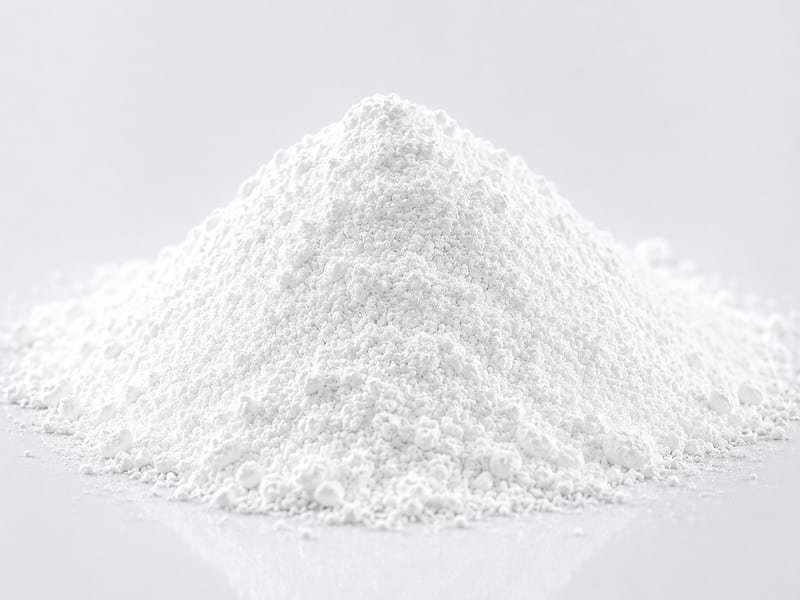
Zinc Oxide
What Zinc Oxide is used for across rubber, cosmetics, and paints, how it compares to Titanium Dioxide, and what buyers need to know.
Overview
Zinc Oxide is used across several industries — rubber, cosmetics, and paints — for a different reason in each. The breakdown below covers what it actually does in each industry.
What is it?
Zinc Oxide is qualified for rubber compounding against ASTM D4295’s classification and ASTM D4315’s chemical/physical test methods. Its behavior in that role comes down to reactivity: it reacts with a fatty acid such as stearic acid to form zinc stearate, which is what actually accelerates the sulfur crosslinking reaction — it’s typically used at 2–5 phr (parts per hundred rubber) alongside the fatty acid.
Why should I use it?
- A real chemical role in rubber, not just a filler effect. It’s a genuine reaction partner in the cure system — see the Rubber entry below.
- A distinct regulatory standing in sunscreens — see the Cosmetics entry below for what that means in practice.
How its role changes by industry
- Rubber: a vulcanization activator — it reacts with stearic acid to form zinc stearate, which accelerates the sulfur crosslinking reaction, improving cure efficiency and the finished rubber’s physical properties.
- Cosmetics & Personal Care: a mineral UV filter, permitted up to 25% in FDA-regulated OTC sunscreen products, and one of only two active ingredients the FDA classifies as Category I (Generally Recognized as Safe and Effective) — the other being Titanium Dioxide. It’s the only single sunscreen active that provides broad-spectrum protection (UVB, UVA1, and UVA2) on its own.
- Paints & Coatings: used for anti-corrosive and anti-fungal properties — it reinforces the coating’s barrier against moisture and oxygen, and helps resist mold/mildew growth on the finished film.
Limitations — when it isn’t the right choice
- It cannot fully replace Titanium Dioxide where maximum hiding power is the priority. Its refractive index (~2.00) is well below TiO₂’s (~2.70 for Rutile), so it provides weaker opacity at the same use level — it’s the better choice specifically where broad-spectrum UV protection, skin-safety profile, or anti-fungal performance matters more than raw hiding power. (A dedicated comparison article — Titanium Dioxide vs. Zinc Oxide — is planned.)
Key Applications
The material's role changes by industry — click any industry to see its full page.



Physical Properties
| Property | Typical Value | Note |
|---|---|---|
| Chemical Formula | ZnO | Definitional |
| Specific Gravity | ≈ 5.6 | Typical published value — chemicalbook.com |
| Purity (rubber/technical grade) | ≥ 99% ZnO | Typical published value — American Elements |
| Particle Size (French process) | ≈ 0.1 micron to a few microns | Typical published value — industry process references (Zochem; Alibaba product insights) |
These are typical published values for the material in general, not a certificate of analysis (COA) for a specific shipment. Actual per-batch values are set by the COA accompanying supply.
Grades
Grade and Specification Guide
These reference codes illustrate grade categories and specifications for comparison and selection. The commercial grade and final specification are determined by your application requirements, the technical data sheet and the batch certificate of analysis.
Standards & Technical References
Every claim on this page traces back to a verifiable reference:
- Tier 1StandardASTM D4295-89(2021) — Standard Classification for Rubber Compounding Materials—Zinc Oxide
- Tier 1StandardASTM D4315-21 — Standard Test Methods for Rubber Compounding Material—Zinc Oxide
- Tier 1Government/RegulatoryUS FDA — OTC Monograph M020, Sunscreen Drug Products for OTC Human Use
- Tier 1Government PublicationUSGS — Mineral Commodity Summaries 2025, Zinc
- Tier 2University/ResearchPeer-reviewed research on ZnO/MgO co-cure activators and organic zinc salts in sulfur vulcanization (PMC)
- Tier 3Global Supplier/IndustryIndustry sources on Zinc Oxide's anti-corrosive and anti-fungal role in coatings
- Tier 3Reference Databasechemicalbook.com — Zinc Oxide (CAS 1314-13-2) physical properties
- Tier 3Global SupplierAmerican Elements — Zinc Oxide, high purity 99%-99.9999%
- Tier 3Global SupplierZochem — French Process Zinc Oxide Grade 103 / Grade 112USP product data
Frequently Asked Questions
What is zinc oxide's chemical role in rubber?
A genuine vulcanization activator — it reacts with a fatty acid such as stearic acid to form zinc stearate, which actually accelerates the sulfur crosslinking reaction, typically used at 2-5 phr (parts per hundred rubber).
What is zinc oxide's regulatory standing in sunscreens?
A mineral UV filter, permitted up to 25% in FDA-regulated OTC sunscreen products, and one of only two active ingredients the FDA classifies as Category I — the other being Titanium Dioxide — and the only single sunscreen active that provides broad-spectrum protection (UVB, UVA1, and UVA2) on its own.
What role does zinc oxide play in paints and coatings?
It's used for its anti-corrosive and anti-fungal properties — it reinforces the coating's barrier against moisture and oxygen, and helps resist mold/mildew growth on the finished film.
Can zinc oxide fully replace titanium dioxide?
No. Its refractive index (~2.00) is well below TiO₂'s (~2.70 for Rutile), so it provides weaker opacity at the same use level — it's the better choice specifically where broad-spectrum protection, skin-safety profile, or anti-fungal performance matters more than raw hiding power.
What standard qualifies zinc oxide for rubber compounding?
It's qualified against ASTM D4295's classification and ASTM D4315's chemical/physical test methods.


