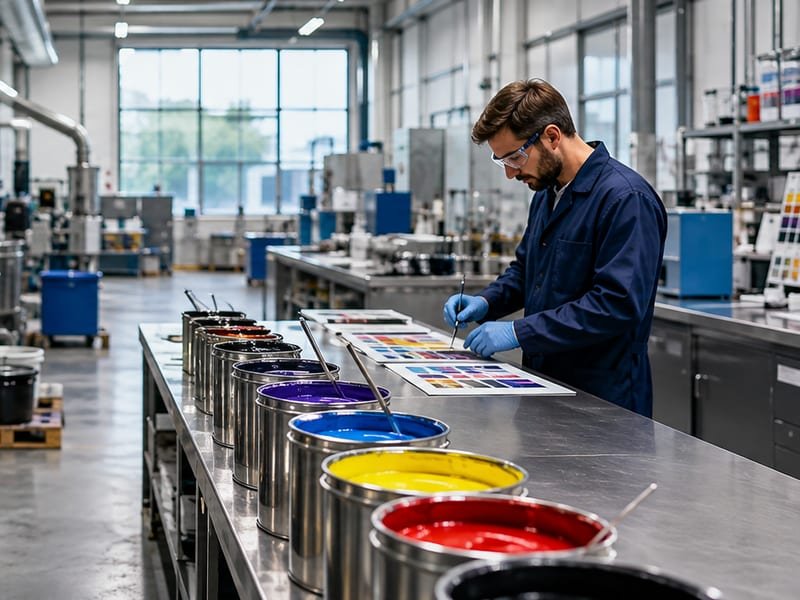
Graininess, reduced gloss, or patchy color strength in a finished print often trace back to a single, testable root cause: pigment that wasn’t ground fine enough during ink manufacture, a defect that a fineness-of-grind test catches directly rather than something a formulator has to diagnose after the fact.
Root Causes
Fineness of grind is documented as the degree of uniformity and extent of fineness to which pigment particles are ground and dispersed in a liquid vehicle, and the resulting dispersion’s properties vary directly with both the individual particle size and how completely those particles are actually dispersed rather than left as coarse agglomerates. This is measured with a Hegman gauge (also called a grind gauge or grindometer) — a stainless steel block machined with a tapering groove that reveals the depth at which coarse particles or agglomeration first become visible, read on a scale running from 0 to 8 Hegman, where higher numbers indicate finer, more complete dispersion.
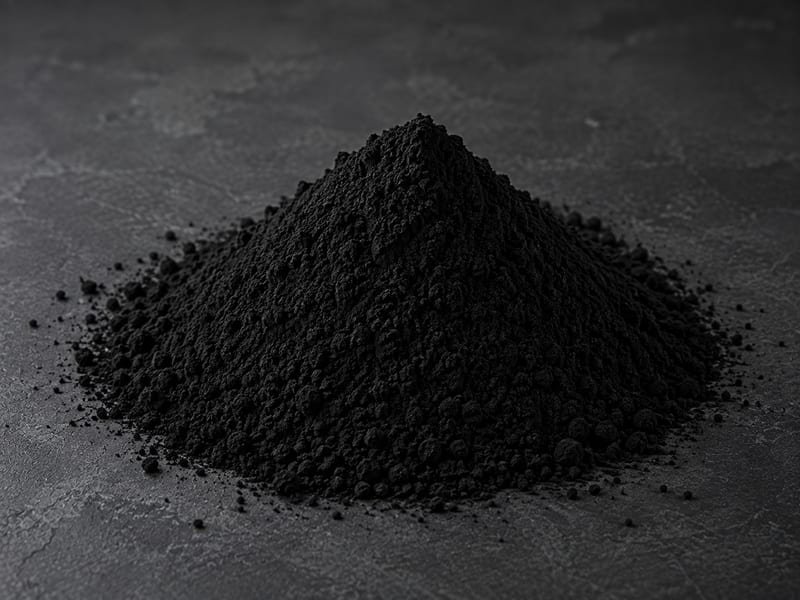
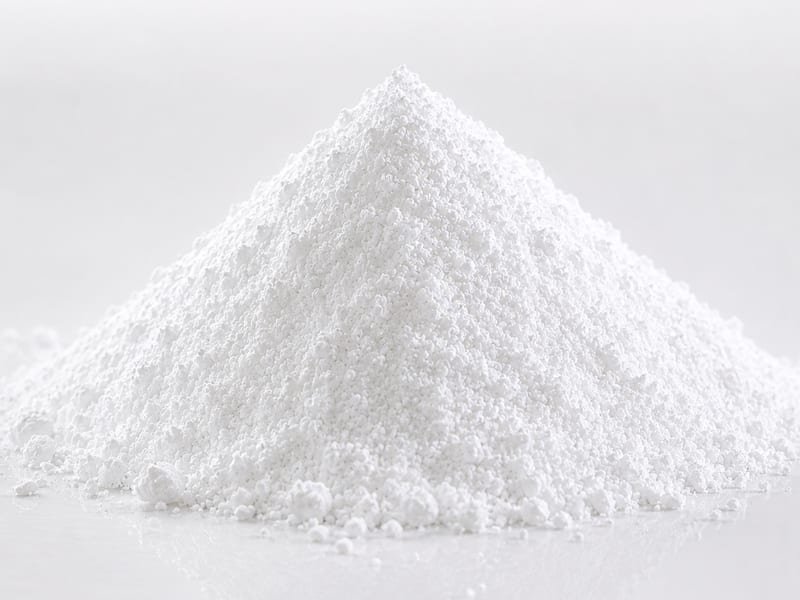
The industry runs multiple standardized test methods depending on the exact measurement need: ASTM D1210 covers fineness of dispersion of pigment by Hegman-type gauge broadly, ASTM D1316 is specific to fineness of grind of printing inks using the NPIRI grindometer, and ISO 1524 provides the international equivalent. These aren’t redundant — carbon black and titanium dioxide both arrive as agglomerated powder that has to be broken down and wetted into the vehicle during ink manufacture, and fineness-of-grind testing is what verifies that milling step actually achieved the target particle dispersion rather than leaving coarse material that a visual inspection alone might miss until it shows up as a print defect.
What This Means for Raw Material Selection
Because fineness of grind is a testable, standardized output of the milling process rather than an assumption tied to the raw pigment’s nominal particle size, a buyer troubleshooting graininess, dull gloss, or inconsistent tint strength has a direct diagnostic tool available before escalating to a formulation change.
The practical points for a buyer are: specify a target Hegman/fineness-of-grind reading (per ASTM D1316 or ISO 1524) as part of the ink’s quality control, not just a raw pigment particle-size spec, since the finished dispersion’s fineness depends on the milling process as much as the incoming pigment; run fineness-of-grind checks per batch for pigments prone to agglomeration during storage or handling (carbon black in particular), since the same nominal grade can require different milling attention depending on how it arrived; and treat a fineness-of-grind failure as a milling-process signal distinct from a raw-material-quality signal, since the test isolates dispersion completeness from the pigment’s intrinsic particle-size specification, pointing toward different corrective actions depending on which one is actually out of range.
Sources: SpecialChem technical guide on fineness of grind — importance, testing methods, and gauges; Wikipedia and Biuged technical references on the Hegman gauge; ASTM D1210 and D1316 fineness-of-grind and NPIRI grindometer test method standards as documented across paint and printing ink industry technical literature; Qualtech Products Industry technical reference on professional fineness-of-grind gauge equipment and use.