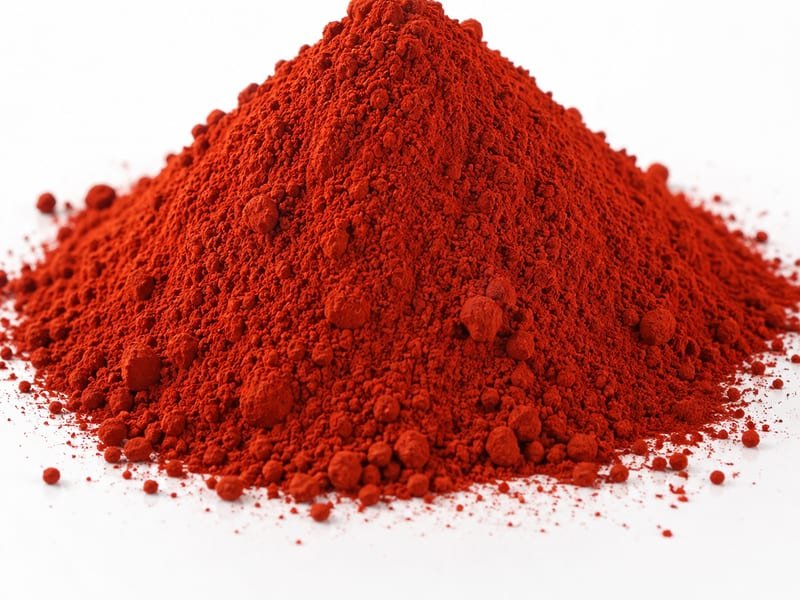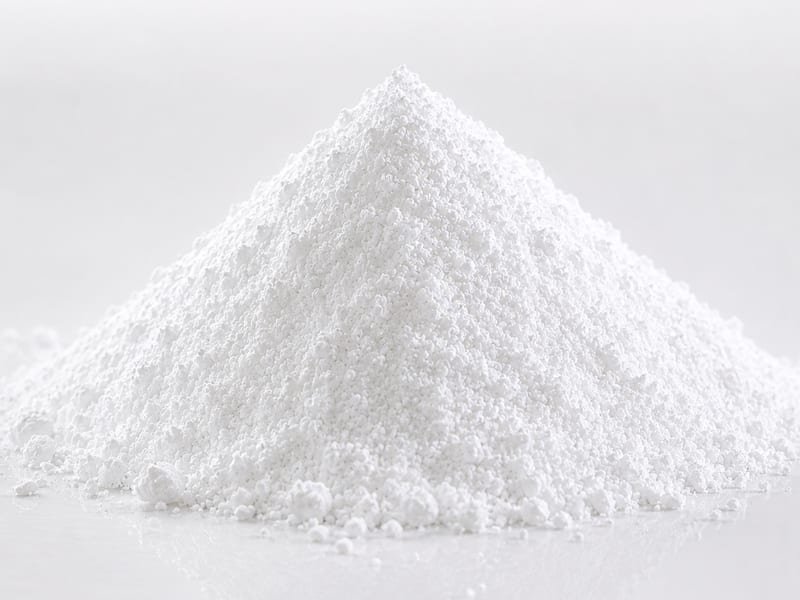
Cosmetic pigment particle size isn’t a single specification shared across colorants — iron oxide and titanium dioxide operate in genuinely different size ranges to do genuinely different jobs, and buyers who treat “fine particle size” as one universal target miss the specific number that actually governs each pigment’s performance.
Root Causes
Pigmentary iron oxide is documented with an average primary particle size greater than 100 nm but typically under 500 nm, with cosmetic applications like hair dyes specifically favoring particle diameters in the 150-700 nm range for better durability and coverage. Titanium dioxide operates at a notably different scale: the documented mean primary particle size for cosmetic TiO2 is around 1,100 nm, spanning a broader range of roughly 150 to 10,000 nm depending on grade and intended use.
The two pigments also diverge sharply on efficiency by weight: titanium dioxide is documented as delivering approximately 50-100 times higher opacity efficiency on a weight basis compared with iron oxide, while iron oxides provide unmatched color efficiency for yellows, reds, browns, and blacks that TiO2 can’t replicate — meaning the two aren’t interchangeable at any dosage ratio; each does a job the other physically cannot at comparable cost. Production method matters directly to consistency: synthetic iron oxide is produced through precipitation and calcination processes specifically optimized for particle size control, and that process control is what determines whether a batch holds its target particle size distribution rather than drifting between lots.
What This Means for Raw Material Selection
Because iron oxide and TiO2 occupy different, non-overlapping particle-size ranges tied to fundamentally different optical mechanisms (color efficiency versus opacity efficiency), a buyer troubleshooting shade drift or texture inconsistency should check particle size data specific to the pigment actually causing the problem, not a single generic “fineness” spec across the formulation.
The practical points for a buyer are: request particle size distribution data specific to each pigment type (100-500 nm range for iron oxide, up to roughly 1,100 nm mean for TiO2), since the two operate on different scales and a spec sheet that reports only one number for a multi-pigment formulation can mask which component is actually drifting; verify that a synthetic iron oxide supplier’s precipitation and calcination process is controlled for particle size specifically, since this manufacturing step is what determines lot-to-lot consistency rather than the raw chemistry alone; and treat opacity and color-strength targets as governed by different pigments doing different jobs, since TiO2’s weight-basis opacity efficiency and iron oxide’s color efficiency aren’t substitutable levers for the same formulation outcome.
Sources: PatSnap Eureka technical report comparing pigment efficiency between iron oxide and titanium dioxide; USPTO patent literature on cosmetic pigment particle size specifications for hair dye and white pigment formulations; Feiyan Pigment technical article on titanium dioxide particle size effects in cosmetic powder finish.