
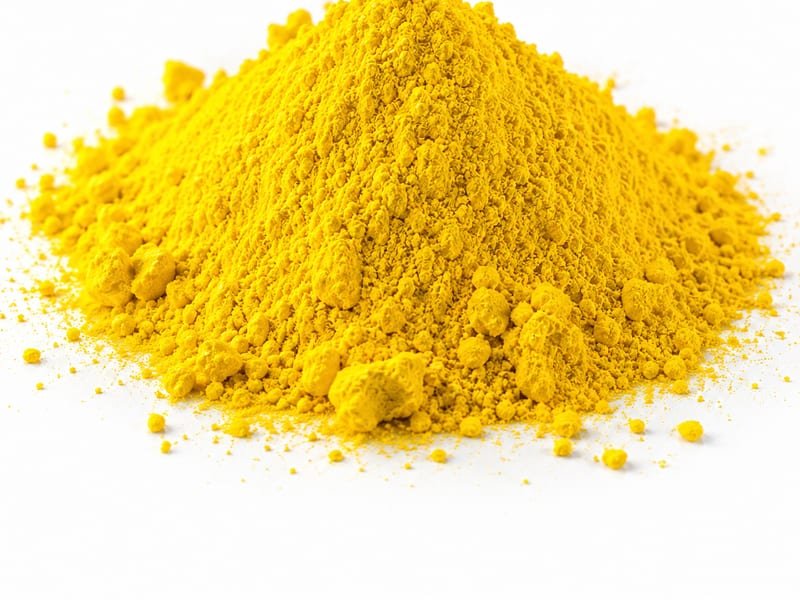
Organic Pigments (Phthalocyanine)
How phthalocyanine organic pigments perform on solar reflectance and water repellency before any surface treatment, and where phthalocyanine green is specifically regulated as a color additive.
Overview
Phthalocyanine pigments — the blue and green organic pigments most widely used across industry — have real baseline optical and water-repellent properties even before any surface treatment, and research measuring those baseline properties shows exactly how much room silica coating leaves to improve on them. This page covers that baseline data and phthalocyanine green’s narrow, specific FDA regulatory status.
What is it?
Organic pigments in this class are phthalocyanine blue and green colorants used across paints, coatings, plastics, and inks. Per 21 CFR §73.3124, phthalocyanine green (CAS Registry No. 1328-53-6, Colour Index No. 74260) is permitted by the FDA specifically as a color additive in contact lenses, in amounts not exceeding the minimum reasonably required for the intended coloring effect, and is exempt from certification requirements; this authorization is narrow and does not waive separate medical device requirements under the Federal Food, Drug, and Cosmetic Act, and does not apply to general industrial uses of the pigment.
Why should I use it?
- Even without surface treatment, phthalocyanine pigments have measurable baseline solar reflectance and water-repellent properties — see “How it’s used.”
- Phthalocyanine green has a specific, defined FDA color-additive status for one particular application, contact lenses — see “What is it?” above.
How it’s used
In paints and coatings, phthalocyanine pigments are used for solar-reflective and weather-protective formulations. A 2021 peer-reviewed study measured the baseline optical properties of untreated copper phthalocyanine pigment before applying a silica coating: total near-infrared reflectance of the untreated pigment was 36.4% for the green variant and 40.9% for the blue variant, with water contact angles of 113.3° (green) and 71.6° (blue).
Limitations — when it isn’t the right choice
- Untreated phthalocyanine pigment’s baseline solar-reflective and water-repellent performance is well below what’s achievable with surface treatment — plain pigment may not be enough for demanding reflective-coating applications. The same 2021 study found that applying a silica coating raised solar reflectance at 450-540 nanometers by 76.5% to 98.3% for the green pigment, and by 40.0% to 61.5% at 380-530 nanometers for the blue pigment, with near-infrared reflectance rising by a further 10.6% and 11.5% respectively; water contact angle rose to 154.4° (green) and 142.9° (blue) after coating. This means that for applications specifically demanding high solar reflectance or strong water repellency, untreated phthalocyanine pigment alone is unlikely to match a properly surface-treated grade, and the choice should be based on the specific coating’s performance requirements rather than assumed from the base pigment’s color properties alone.
Key Applications
The material's role changes by industry — click any industry to see its full page.
Physical Properties
| Property | Typical Value | Note |
|---|---|---|
| CAS Number (Pigment Blue 15) | 147-14-8 | Definitional |
| Specific Gravity (green, phthalocyanine) | ≈ 2.05 | Typical published value — Clariant Hostaperm Green GNX TDS (per patent literature) |
| Specific Gravity (blue, phthalocyanine) | ≈ 1.6 | Typical published value — Clariant Hostaperm Blue B2G-D TDS (per patent literature) |
| Average Particle Size (green) | ≈ 50 nm, surface area ≈ 40 m²/g | Typical published value — Clariant Hostaperm Green GNX TDS (per patent literature) |
| Average Particle Size (blue) | ≈ 75 nm, surface area ≈ 44 m²/g | Typical published value — Clariant Hostaperm Blue B2G-D TDS (per patent literature) |
These are typical published values for the material in general, not a certificate of analysis (COA) for a specific shipment. Actual per-batch values are set by the COA accompanying supply.
Grades
Grade and Specification Guide
These reference codes illustrate grade categories and specifications for comparison and selection. The commercial grade and final specification are determined by your application requirements, the technical data sheet and the batch certificate of analysis.
Standards & Technical References
Every claim on this page traces back to a verifiable reference:
- Tier 1Standard21 CFR §73.3124 — Phthalocyanine Green, US FDA Color Additive Regulations
- Tier 2University/ResearchEnhanced Solar Reflectance and Superhydrophobic Properties of Functionalized Silica-Coated Copper Phthalocyanine Pigments by the Sol-Gel Process, ACS Omega, 2021
- Tier 3Patent LiteratureUS Patent 6544325 — Pigmentary copper phthalocyanine solid solution (cites Clariant Hostaperm Green GNX / Blue B2G-D TDS values)
- Tier 3Supplier ReferenceTCI America / Chem-Impex — Pigment Blue 15 (CAS 147-14-8) product data
Frequently Asked Questions
What is phthalocyanine green's regulatory status with the FDA?
It's permitted specifically as a color additive in contact lenses under 21 CFR §73.3124, in amounts not exceeding the minimum reasonably required, and is exempt from certification requirements — this is a narrow authorization that does not apply to general industrial uses of the pigment.
Do untreated phthalocyanine pigments have real solar-reflective properties?
Yes. A 2021 peer-reviewed study measured the untreated pigment's total near-infrared reflectance at 36.4% for the green variant and 40.9% for the blue variant, with water contact angles of 113.3° (green) and 71.6° (blue) — measurable baseline properties even without treatment.
How much does silica coating improve phthalocyanine pigments' optical performance?
Substantially. Silica coating raised solar reflectance at 450-540 nanometers by 76.5% to 98.3% for the green pigment, and by 40.0% to 61.5% for the blue pigment, while water contact angle rose to 154.4° (green) and 142.9° (blue) after coating.
Is untreated raw pigment enough for demanding reflective-coating applications?
Usually not. The untreated pigment's solar-reflective and water-repellent performance is well below what's achievable with surface treatment, so the choice should be based on the specific coating's performance requirements rather than the base pigment's color properties alone.


