
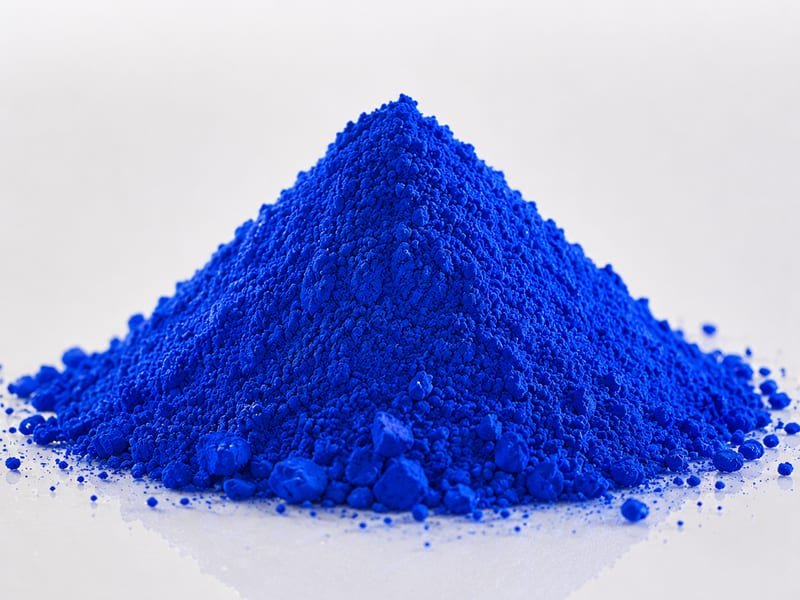
Ultramarine Blue Pigment (PB29): Uses and Grade Selection
Understand ultramarine blue pigment PB29 and CI 77007, compare standard and acid-resistant grades, and check cosmetic-use scope and application test conditions.
Overview
Ultramarine blue is a blue pigment identified as Pigment Blue 29 (PB29), Colour Index 77007. It is used in selected coating, plastic, construction, artist-colour and cosmetic systems. Grade selection depends on shade, dispersion, exposure and the product’s qualification. Acid sensitivity is an important limitation, so an attractive colour match alone does not establish suitability.
Standard or acid-resistant ultramarine?
Standard ultramarine can deteriorate under acid exposure. Coated or treated grades are designed to improve resistance, but acid-resistant is not a universal exposure guarantee. Venator’s 2019 technical announcement distinguishes grades by acid strength and exposure duration and notes the influence of resin protection. Treat it as a documented reference example, not evidence of current product availability or approval of a PLAXRAW grade.
Which pigment properties should you compare?
Compare red- or green-leaning shade, colour strength under a stated method, particle distribution, dispersion, surface treatment and relevant durability tests. Measure the proposed grade in the intended binder or polymer. A shade name does not specify chemical resistance, and a nominal mineral property does not establish acceptable processing temperature for every commercial grade.
How do you test acid resistance in the application?
Specify the acid or exposure medium, concentration, temperature, duration and final formulation. Agree colour-change and integrity criteria before the trial. Test the complete coating or plastic where practical, because binder protection is part of the result. Published laboratory percentages for one pigment and treatment cannot be transferred to all commercial ultramarines. Surface treatment may improve performance; verify the exact grade rather than assuming it fixes every acid exposure.
What does cosmetic-use permission actually cover?
Cosmetic requirements depend on the destination market and intended use. In the United States, the FDA table lists ultramarines for externally applied cosmetics, including the eye area, under 21 CFR 73.2725; it does not list general use including lipstick. This listing does not qualify every industrial pigment or approve a PLAXRAW product. Review the applicable regulation and the proposed cosmetic grade’s documentation for the exact finished product.
A practical selection and substitution checklist
Record the target shade, binder or polymer, processing conditions, acid exposure and required compliance. Request the exact grade’s TDS, SDS and application test evidence. Compare titanium dioxide separately when opacity is required; a blue pigment and a white opacifier serve different roles. Use an agreed trial before approving a replacement. Reference codes below describe illustrative grade categories, not confirmed stock or certified cosmetic grades.
Sources and scope
Manufacturer examples are reference evidence, not specifications or certifications for a PLAXRAW shipment.
Content updated:
Key Applications
The material's role changes by industry — click any industry to see its full page.




Physical Properties
| Property | Typical Value | Note |
|---|---|---|
| Colour Index | Pigment Blue 29, CI 77007 | Definitional |
| Specific Gravity | ≈ 2.35-2.45 | Typical published value — McCrone Research Institute |
| Refractive Index | ≈ 1.50 | Typical published value — McCrone Research Institute |
| Thermal performance | Grade- and application-specific | Use the TDS and processing/exposure tests; no universal 900°C limit |
These are typical published values for the material in general, not a certificate of analysis (COA) for a specific shipment. Actual per-batch values are set by the COA accompanying supply.
Grades
Grade and Specification Guide
These reference codes illustrate grade categories and specifications for comparison and selection. The commercial grade and final specification are determined by your application requirements, the technical data sheet and the batch certificate of analysis.
Standards & Technical References
Every claim on this page traces back to a verifiable reference:
- [Primary reference] Venator: acid-resisting ultramarine grades, 2019 — https://www.venatorcorp.com/~/media/Files/V/Venator/press-releases/fv-ecs-pre-show-pr-january-060319.pdf
- [Primary reference] FDA: colour additives permitted in cosmetics — https://www.fda.gov/cosmetics/cosmetic-ingredient-names/color-additives-permitted-use-cosmetics
- Tier 3Reference DatabaseMcCrone Research Institute — Ultramarine Blue Pigment, Synthetic
- Tier 3Artist Pigment Referenceartistpigments.org — PB29 Ultramarine Blue technical profile (CI 77007)
Frequently Asked Questions
What are PB29 and CI 77007?
They are Colour Index identifiers associated with ultramarine blue; they do not specify all properties of a commercial grade.
Does acid-resistant ultramarine withstand every acid exposure?
No. Verify the grade for the acid, concentration, exposure duration and final formulation.
Is every ultramarine pigment suitable for cosmetics?
No. Review the intended use, destination-market regulation and documentation for the proposed cosmetic grade.


