
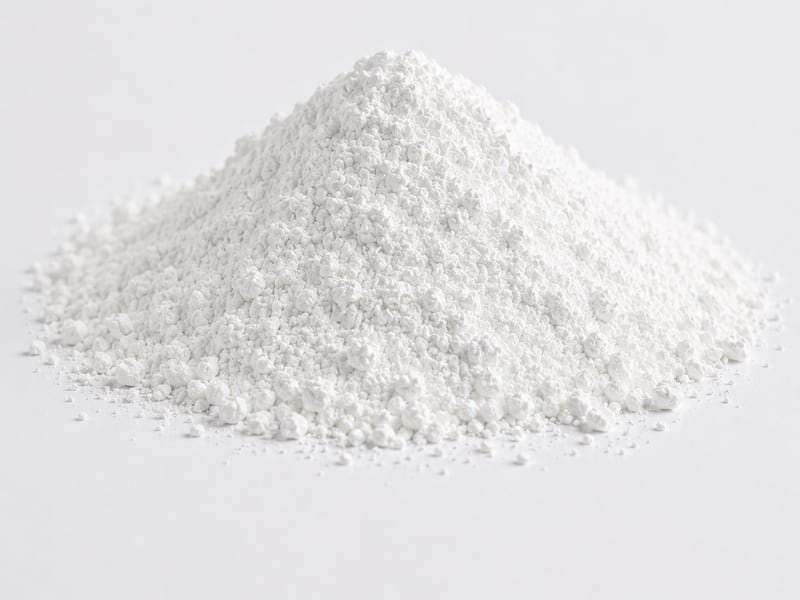
ATH (Aluminum Trihydrate)
How ATH works as a non-halogenated flame retardant filler in plastics and cable compounds, and what research shows about the trade-off between fire performance and mechanical strength at high loading.
Overview
ATH is a non-halogenated flame retardant filler produced from the same Bayer process used to refine bauxite into alumina, and research directly measuring its effect in a polymer composite shows a clear trade-off: it meaningfully cuts peak heat release, but only at a loading level that also cuts mechanical strength substantially. This page covers that trade-off and where ATH’s flame-retardant mechanism comes from.
What is it?
ATH (aluminum trihydrate, Al(OH)3) is a filler used mainly as a non-halogenated flame retardant in polymer compounds. Per the U.S. Geological Survey’s Mineral Commodity Summaries 2025, roughly 76% of bauxite consumed is refined via the Bayer process into alumina or aluminum hydroxide, with U.S. alumina production estimated at 810,000 tons in 2024; about 69% of that alumina went to primary aluminum smelters, with the remainder going to nonmetallurgical products such as abrasives, ceramics, chemicals, and refractories.
Why should I use it?
- ATH measurably reduces peak heat release in a tested polymer composite, backed by direct thermal and fire-testing data — see “How it’s used” and Limitations.
- Its flame-retardant action comes from a genuine chemical mechanism (endothermic decomposition releasing water vapor), not just inert bulk filling — see “How it’s used.”
How it’s used
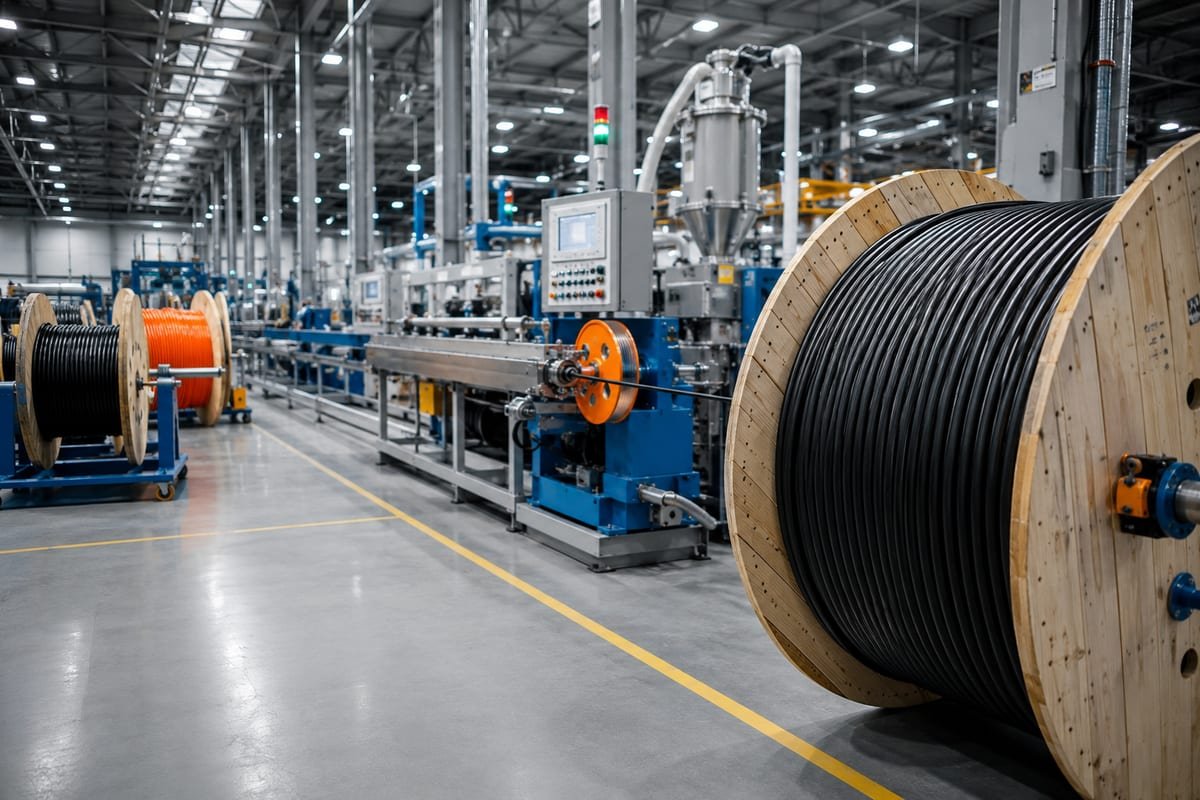
In plastics and polymer compounds — including cable and wire insulation and sheathing made from polymers like EVA — ATH works by decomposing endothermically at high temperature into aluminum oxide and water vapor. A 2025 peer-reviewed thermogravimetric study found raw ATH begins decomposing around 243°C, with significant mass loss continuing to about 359°C; the released water vapor dilutes the flame and lowers combustion temperature, while the resulting aluminum oxide forms a protective layer on the material’s surface that limits further heat and oxygen transfer.
Limitations — when it isn’t the right choice
- ATH needs a high loading level to work well, and that same loading level can substantially weaken the material’s mechanical properties. The same 2025 study tested raw ATH at a 50 wt% loading in an EVA composite: peak heat release rate in cone calorimeter testing dropped 62.2% compared to unfilled EVA (from 1027 to 388 kW/m²), but tensile strength dropped 74.4% in the same formulation (from 12.5 to 3.1 MPa). The study describes ATH’s flame-retardant efficiency as generally inferior to organic flame retardants, “necessitating a high loading exceeding 50 wt% to achieve the desired flame retardant performance.” This means ATH’s fire-performance benefit and its mechanical-strength cost are directly linked at the loading levels needed for real effectiveness; these figures are specific to this EVA formulation and should be checked against the actual polymer system and loading level being used, not assumed to transfer directly to other resins like PP or PVC.
Key Applications
The material's role changes by industry — click any industry to see its full page.

Physical Properties
| Property | Typical Value | Note |
|---|---|---|
| Chemical Formula | Al(OH)₃ | Definitional |
| Decomposition Onset Temperature | ≈ 180–200°C (endothermic, releasing ≈ 35% of its weight as water vapor) | Typical published value — ScienceDirect Topics |
| Specific Gravity | ≈ 2.42 | Typical published value — ChemicalBook |
| Particle Size Grades | D50 ≈ 0.5–80 µm commercially, with fine flame-retardant grades commonly 1–10 µm | Typical published value — commercial ATH technical data sheets |
These are typical published values for the material in general, not a certificate of analysis (COA) for a specific shipment. Actual per-batch values are set by the COA accompanying supply.
Grades
Grade and Specification Guide
These reference codes illustrate grade categories and specifications for comparison and selection. The commercial grade and final specification are determined by your application requirements, the technical data sheet and the batch certificate of analysis.
Standards & Technical References
Every claim on this page traces back to a verifiable reference:
- Tier 1Government PublicationUSGS — Mineral Commodity Summaries 2025, Bauxite and Alumina
- Tier 2University/ResearchModification of Aluminum Hydroxide by Ball Milling: A Feasible Method to Obtain High-Efficiency Flame Retardants for Production of High-Performance EVA Composites, Materials (MDPI), 2025, Vol. 18, Issue 5, Article 984
- Tier 3Reference DatabaseScienceDirect Topics — Aluminum Trihydroxide overview (decomposition onset temperature)
- Tier 3Commercial Spec SheetChemicalBook; GNP Graystar Technical Data Sheet — Alumina Tri-Hydrate (ATH) physical properties and particle size grades
Frequently Asked Questions
Why does ATH work as a flame retardant?
Because it decomposes endothermically at high temperature into aluminum oxide and water vapor. The released water vapor dilutes the flame and lowers combustion temperature, while the resulting aluminum oxide forms a protective surface layer.
At what temperature does ATH begin to decompose?
Around 180-200°C generally per industry references, though a specific 2025 peer-reviewed thermogravimetric study on raw ATH found decomposition beginning around 243°C.
Does a high ATH loading weaken the material mechanically?
Yes, substantially. A 2025 study tested ATH at 50 wt% loading in an EVA composite: peak heat release rate dropped 62.2%, but tensile strength dropped 74.4% in the same formulation.
Where is ATH produced from?
From the same Bayer process used to refine bauxite into alumina — roughly 76% of bauxite consumed is refined via this process into alumina or aluminum hydroxide.


