
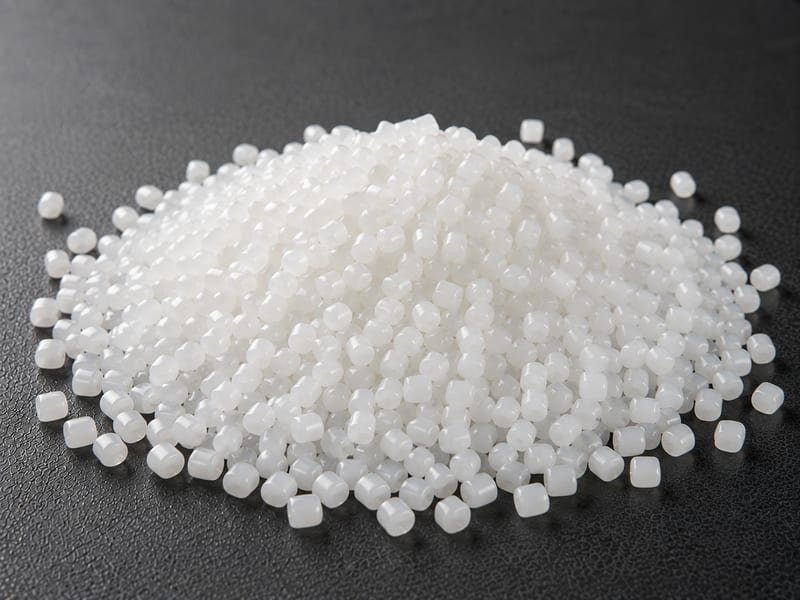
Polypropylene (PP): Properties, Uses and Grade Selection
Compare polypropylene families, application requirements and MFR test conditions. Build a grade comparison and controlled PP trial before selecting a replacement.
Overview
Polypropylene (PP) is a thermoplastic resin used in molded parts, packaging, films, fibers and tapes. Choosing a PP raw material starts with the product and manufacturing process, then the resin family and grade. A material name or melt flow rate alone cannot establish that a replacement will meet the finished product’s requirements.
Polypropylene properties and uses
PP offers a useful balance of low weight and stiffness, but clarity, impact behavior and processing response differ between grades. The British Plastics Federation’s PP overview describes its families and industrial uses. Treat published general properties as background, then obtain the candidate grade’s technical data sheet (TDS).
Homopolymer, random copolymer or impact copolymer?
| PP family | Question to investigate | Evidence to compare |
|---|---|---|
| Homopolymer | Is stiffness the main requirement, and is the grade intended for this process? | Flexural and tensile data, processing guidance and finished-part performance |
| Random copolymer | Does the part need a different clarity and property balance? | Optical data at relevant thickness, stiffness and service conditions |
| Impact copolymer | Does impact, including at the service temperature, control selection? | Impact method, specimen conditioning and temperature; appearance trade-offs |
This is a screening framework, not a substitution chart. The family narrows the search; grades within it still differ. Document whether the resin contains fillers or functional additives before comparing it with an unmodified material.
Select the grade for the process
LyondellBasell’s material-selection guide organizes the decision around process, appearance, mechanical function and additive requirements. Turn those questions into a written specification for your part.
| Application | Define before comparing grades | Read next |
|---|---|---|
| Injection molding | Geometry, filling, cycle, shrinkage, impact and appearance requirements | Injection-molding reference |
| Film or packaging | Film structure, clarity, sealing and mechanical acceptance tests | Blown-film selection; confirm that the specific process uses the proposed resin |
| Raffia and tapes | Tape dimensions, drawing process and strength requirements | PP raffia and tape selection |
Read MFR and the TDS together
Melt flow rate (MFR) is useful for comparing flow under specified test conditions. Record the method, temperature and load beside the number; do not compare values measured under different conditions as if they were equivalent. LyondellBasell discusses why process requirements change the appropriate MFR range. No universal MFR number on this page qualifies a resin for every injection or extrusion line.
Create a comparison sheet with the approved control and candidate grade: producer and code, MFR conditions, mechanical test methods, impact temperature, dimensional requirements and required application documents. Separate a typical TDS value from a contractual acceptance limit or batch certificate. See flow data and batch consistency.
A controlled replacement trial
Agree acceptance criteria before running the candidate. Record resin lot, color concentrate, fillers and other additives; keep the process comparison controlled and record any setting changes. Check part dimensions, appearance and relevant mechanical performance as well as line behavior. If recycled input is proposed, include contamination and consistency checks.
One good-looking sample does not establish repeatable production. Keep the control sample and trial record so a later material or process change can be reviewed against the same requirements.
Prepare a useful material enquiry
Share the product, process, current approved grade if available, required tests, quantity and destination. Attach the specification and identify any contact-use or market requirements that need grade-specific documentation. This reference guide explains selection; commercial availability and suitability need confirmation for the actual candidate.
Content reviewed: 8 October 2026. Technical framework: BPF and LyondellBasell links above; existing ASTM classification references are listed in the technical-reference section.
Content updated:
Key Applications
The material's role changes by industry — click any industry to see its full page.

Standards & Technical References
Every claim on this page traces back to a verifiable reference:
- Tier 1StandardASTM D4101-24 — Standard Classification System and Basis for Specification for Polypropylene Injection and Extrusion Materials
- Tier 1StandardASTM D3418-21 — Standard Test Method for Transition Temperatures and Enthalpies of Fusion and Crystallization of Polymers by Differential Scanning Calorimetry
- Reviewed 2026-10-08Primary sourceBPF — PP families and applications — https://www.bpf.co.uk/Plastipedia/Polymers/PP.aspx
- Reviewed 2026-10-08Primary sourceLyondellBasell — Polypropylene material selection — https://www.lyondellbasell.com/globalassets/lyb/our-solutions/products/documents/polymers-technical-literature/tech-topic---material-selection---polypropylene.pdf


