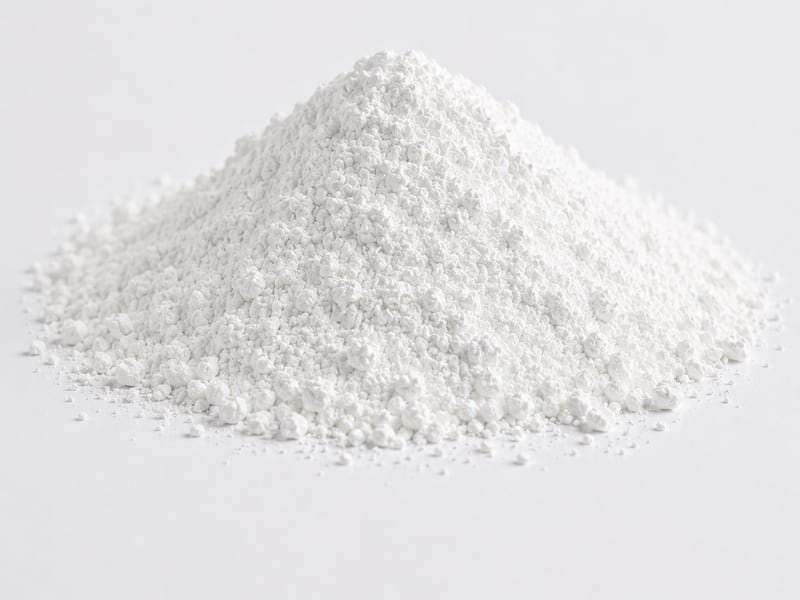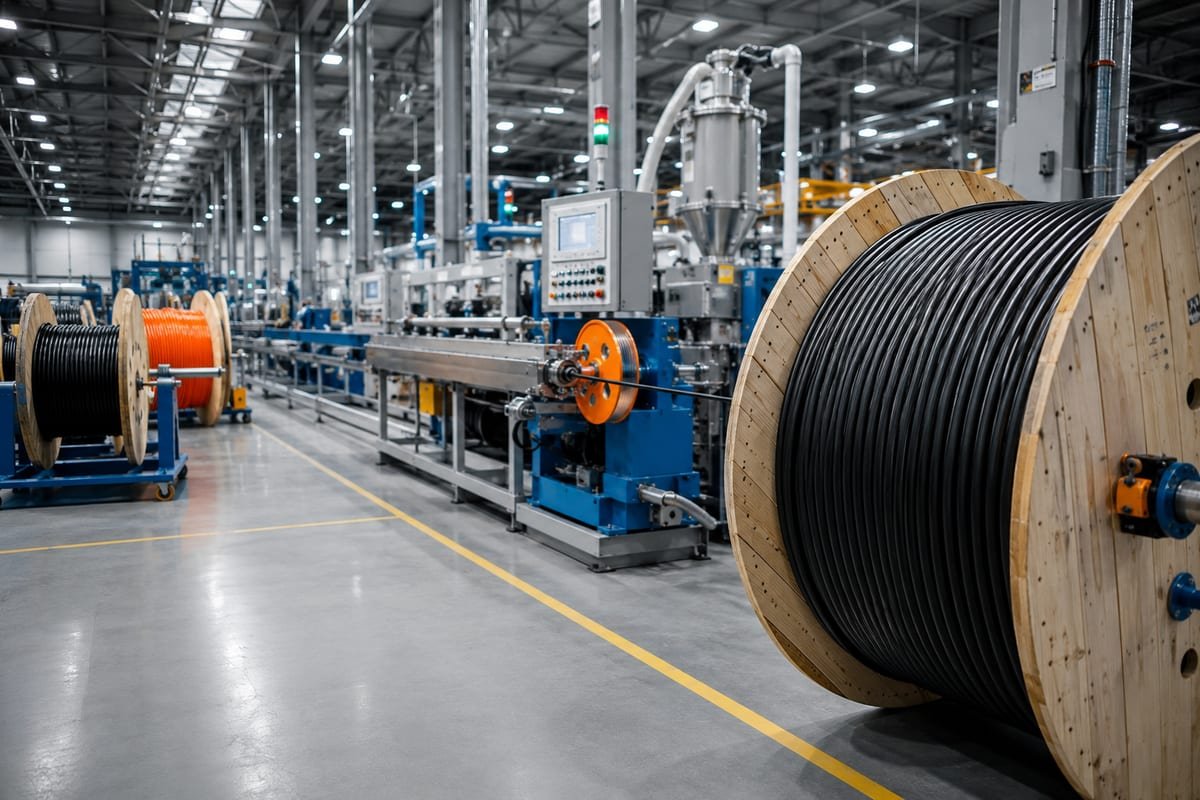
Flame-retardant cable compounds routinely carry high mineral filler loadings — ATH content in the tens of percent by weight is standard for halogen-free formulations — and that same loading that delivers the flame performance is what makes the compound fundamentally harder to process, a trade-off that has to be engineered around, not treated as a fixed cost of doing business.
Root Causes
Filler loading and melt viscosity scale together in a well-documented relationship: high filler content materials show significantly increased viscosity compared with unfilled polymer, with typical increases reported in the range of five to ten times depending on filler type, particle size, and loading level. This isn’t a minor processing inconvenience — processing high-filler compounds is documented as one of the more demanding applications in polymer compounding, requiring equipment designed to handle the elevated viscosity, increased abrasive wear from mineral content, and dispersion challenges that come with it, with severe cases documented as producing outright clog failures in processing equipment not suited to the loading level.
High-filler masterbatches and compounds commonly run in the roughly 40-80% filler content range by weight, with typical mineral fillers including calcium carbonate, talc, ATH, and glass fiber depending on the compound’s functional requirement (flame retardancy, cost reduction, or mechanical reinforcement). Within that broad range, particle size and dispersion quality determine whether a given loading level is actually processable on standard equipment or requires specialized compounding — the same nominal filler percentage can behave very differently depending on the filler’s particle characteristics.
What This Means for Raw Material Selection
Because viscosity increase scales with filler type and particle size, not just loading percentage alone, two compounds at the same nominal filler content can place very different demands on the same extrusion line — one processable on standard equipment, the other requiring specialized high-torque, wear-resistant compounding equipment to avoid degradation or clog failure. Specifying filler loading purely against a flame-retardancy or cost target, without confirming the resulting compound is processable on the actual equipment available, risks a formulation that meets its functional spec on paper but can’t be reliably manufactured at scale.
The practical points for a buyer are: confirm the target filler loading against the specific extrusion equipment’s documented capability (torque, wear resistance, shear capacity) rather than assuming standard equipment scales to any loading level; select filler particle size and, where available, surface-treated grades specifically to manage viscosity and dispersion at the target loading, since finer or better-dispersing grades can extend the processable loading range beyond what a standard mineral grade allows; and treat high-filler compound qualification as a joint material-and-process decision, verifying actual extrusion behavior at the target loading rather than assuming a formulation that works at a lower loading scales linearly to a higher one.
Sources: peer-reviewed and industry research on highly-loaded filled polymer processing and viscosity behavior (ScienceDirect review on highly loaded fiber-filled polymers); industrial compounding equipment technical literature on extruder selection for high filler content materials; general masterbatch and filled-compound industry literature on typical filler loading ranges and mineral filler types (calcium carbonate, talc, ATH, glass fiber).