
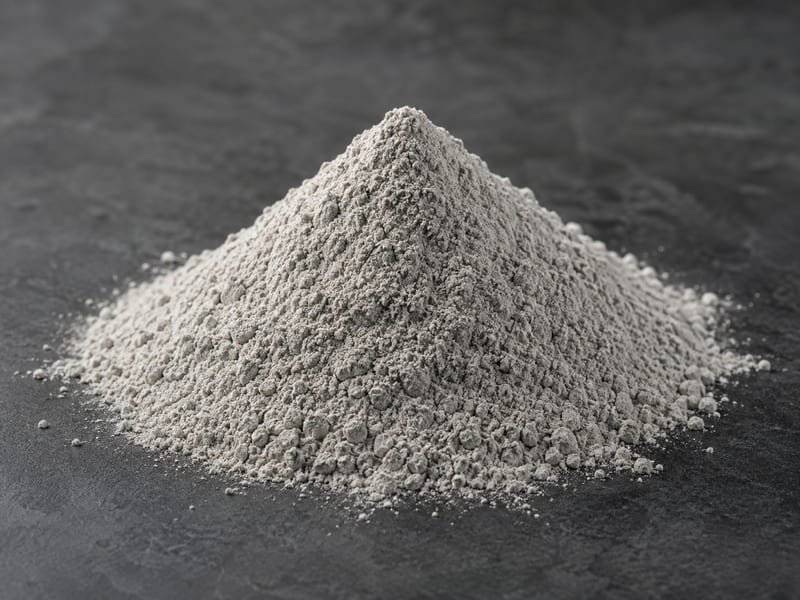
Accelerators (Rubber Vulcanization)
How accelerator choice in rubber vulcanization affects nitrosamine safety, and what research shows about matching or beating single-accelerator mechanical performance with a nitrosamine-safe combination.
Overview
Accelerator choice in rubber vulcanization isn’t just a question of cure speed — it’s a genuine safety consideration, since some accelerators used alone generate nitrosamine byproducts above accepted limits. This page covers research showing how a nitrosamine-safe accelerator combination can match strong mechanical performance while staying within that limit, and the regulatory background on nitrosamine exposure risk in rubber manufacturing.
What is it?
Accelerators are chemicals used to speed up and control the sulfur vulcanization reaction in rubber. Per an OSHA Hazard Information Bulletin, certain amine-containing accelerators can form N-nitrosamine compounds when “nitrosated with nitrogen oxides from the air during mixing, milling, extrusion, molding, calendaring, curing, including warehousing and storage.” IARC has classified these compounds as Group 2A or 2B carcinogens and the National Toxicology Program has designated them anticipated human carcinogens; OSHA’s bulletin further describes them as potent animal carcinogens, potentially comparable in risk to aflatoxin, with other documented health effects on the liver, kidneys, lungs, skin, and eyes. NIOSH personal air sampling at multiple tire and rubber manufacturers found concentrations ranging from 0.05 to 109 micrograms per cubic meter. OSHA currently has no formal permissible exposure limit for most of these compounds — the one exception is N-Nitrosodimethylamine (NDMA), which OSHA regulates under 29 CFR 1910.1016.
Why should I use it?
- A properly chosen, nitrosamine-safe accelerator combination can deliver strong mechanical performance without the associated safety risk — see “How it’s used.”
- Nitrosamine formation risk varies by specific accelerator, giving real, actionable choices to formulators — see Limitations.
How it’s used
In rubber compounding, accelerators are combined with sulfur to control vulcanization speed and network formation. A 2026 peer-reviewed study on natural rubber latex found that a ternary blend of nitrosamine-safe accelerators — 0.36 phr ZBEC, 0.36 phr TBzTD, and 0.03 phr ZDEC — achieved a tensile strength of 22.13 MPa (the highest among all systems tested) and an elongation at break of 1153%, with total nitrosamine levels of 0.048 mg/kg — under the 0.05 mg/kg standard limit.
Limitations — when it isn’t the right choice
- Using a single accelerator like ZDEC alone can generate nitrosamine levels that exceed accepted safety limits, even though it performs adequately on its own. The same 2026 study measured ZDEC used alone and found it produced 0.130 mg/kg of NDMA and 0.100 mg/kg of NDEA — both exceeding the 0.05 mg/kg standard limit for these nitrosamine compounds. The nitrosamine-safe ternary blend, by contrast, kept total nitrosamine levels at 0.048 mg/kg — passing the 0.05 mg/kg limit — while also delivering better mechanical properties, and after accelerated aging it still retained a tensile strength of 14.23 ± 1.81 MPa and elongation of 892.91%. This means accelerator selection is a genuine safety decision, not just a performance one — a single accelerator that seems to work fine mechanically can still fail on nitrosamine safety grounds. These figures are specific to a natural rubber latex balloon application using a conventional sulfur vulcanizing system and shouldn’t be assumed to transfer directly to solid rubber goods like tires or footwear without separate verification.
Key Applications
The material's role changes by industry — click any industry to see its full page.
Standards & Technical References
Every claim on this page traces back to a verifiable reference:
- Tier 1Government PublicationOSHA Hazard Information Bulletin — N-Nitrosamines in the Rubber and Tire Industry (HIB 1989-10-10)
- Tier 2University/ResearchSynergistic Effects of Nitrosamine-Safe Accelerators for Enhanced Natural Rubber Latex Balloon in Sulfur Conventional Vulcanizing System, Polymers (MDPI), 2026, Vol. 18, Issue 4, Article 438

