
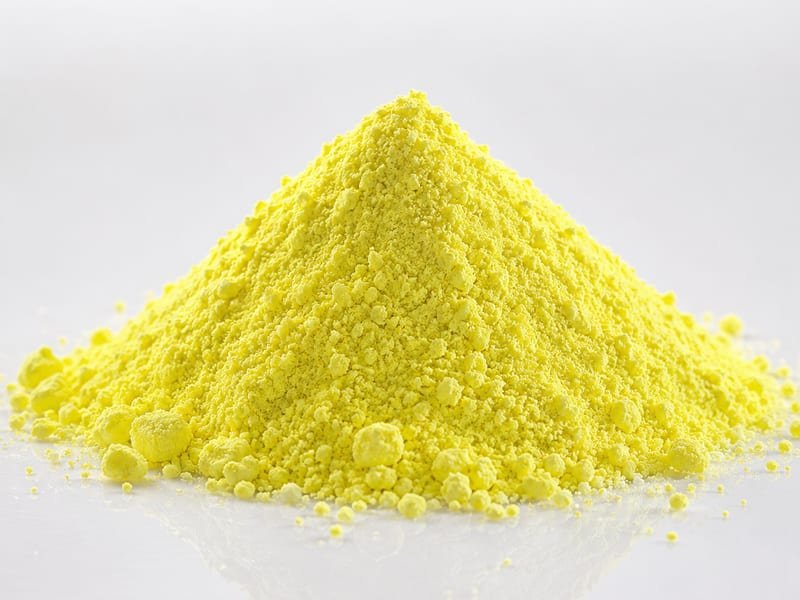
Sulfur in Rubber Vulcanization and Crosslinking
Understand sulfur’s role in rubber vulcanization, how it differs from accelerators, and why sulfur crosslinking in PMA or PMB requires a separate binder assessment.
Overview
Sulfur is a vulcanising agent used in suitable unsaturated rubber systems to form crosslinks between polymer chains. The cure system determines the resulting network and performance. Choosing sulfur for rubber therefore requires the elastomer, formulation and curing process—not simply a sulfur purity number.
Sulfur or accelerator: what is the difference?
Sulfur supplies the sulfur used in crosslinks; accelerators influence the cure reaction in the complete system. An accelerator trade name is not interchangeable with elemental sulfur. Select the sulfur, accelerator and other cure ingredients together, using the formulation’s validated requirements.
How do sulfur crosslinks affect rubber?
Crosslink structure and distribution affect the balance of mechanical and ageing properties. Published research on sulfur-cured natural rubber or polyisoprene examines specific formulations and test conditions. It does not justify one sulfur dosage, crosslink ratio or cure schedule for every elastomer.
What does sulfur crosslinking mean in PMA or PMB?
In asphalt and binder terminology, PMA commonly means polymer-modified asphalt and PMB polymer-modified bitumen. Studies of SBS-modified binders investigate sulfur as a stabilising or crosslinking ingredient. That is a different application from rubber vulcanisation: binder compatibility, storage stability and rheology must be assessed for the specific formulation. Do not transfer a rubber cure recipe to an asphalt binder.
Which grade data should you request?
Review form, purity, particle-size distribution, dispersion and any oil treatment or insoluble-sulfur specification relevant to the formulation. Request the actual TDS and SDS. Names such as soluble or insoluble sulfur describe different selection considerations; they do not by themselves establish processing suitability.
How should a substitution be evaluated?
Agree acceptance criteria with the compound-development team: dispersion, cure behaviour under the specified test conditions, finished-part performance and ageing where relevant. Record the reference and trial results before changing the approved grade. Follow the product SDS and the facility’s handling controls.
Sources and scope
- Polymers: research on sulfur-cured rubber networks
- Infrastructures: sulfur and polymer-modified binders
Manufacturer products and research results cited here are reference examples, not specifications or certifications for a PLAXRAW grade.
Content updated:
Key Applications
The material's role changes by industry — click any industry to see its full page.
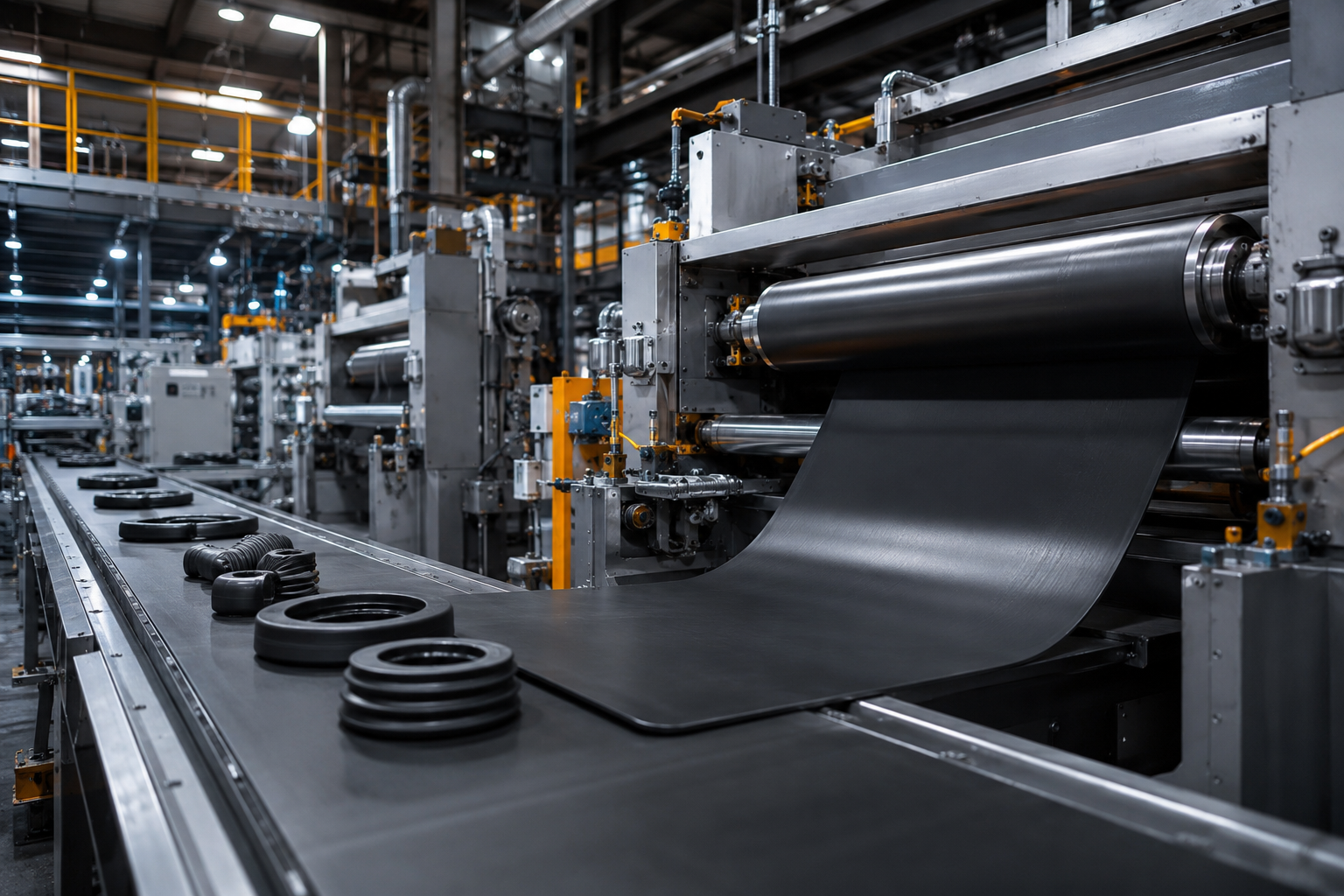
Standards & Technical References
Every claim on this page traces back to a verifiable reference:
- [Primary source] Polymers: research on sulfur-cured rubber networks — https://www.mdpi.com/2073-4360/14/4/767
- [Primary source] Infrastructures: sulfur and polymer-modified binders — https://www.mdpi.com/2412-3811/8/11/160
- Tier 1Government PublicationUSGS — Mineral Commodity Summaries 2025, Sulfur
- Tier 2University/ResearchInfluence of Sulfur-Curing Conditions on the Dynamics and Crosslinking of Rubber Networks: A Time-Domain NMR Study, Polymers (MDPI), 2022, Vol. 14, Issue 4, Article 767
Frequently Asked Questions
Is sulfur the same as a rubber accelerator?
No. Sulfur and accelerators perform different roles and must be assessed as parts of the complete cure system.
Can a rubber sulfur recipe be used directly in PMB?
No. Polymer-modified bitumen requires its own formulation, storage-stability and rheological assessment.

