A compound formulated exactly to the same phr (parts per hundred rubber) recipe, batch after batch, can still fail incoming or in-process quality control if the raw materials feeding that recipe aren’t as consistent as the recipe assumes. Zinc oxide, sulfur, and accelerators are the three ingredients where purity variation most directly shows up as a cure problem rather than a cosmetic one, because all three are active participants in the vulcanization chemistry itself, not inert fillers.
Root Causes
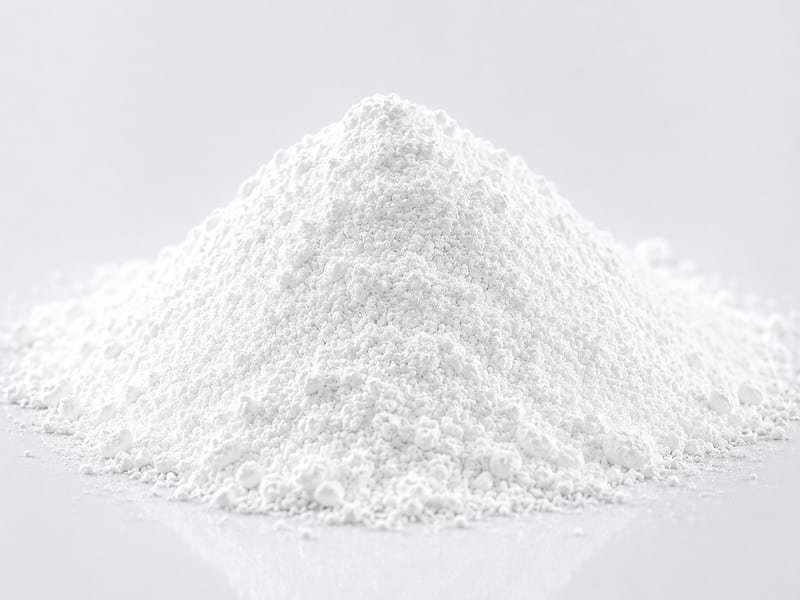
Zinc oxide functions as the vulcanization activator, not a passive additive: it reacts with the accelerator and fatty acid to form soluble zinc-accelerator complexes that carry sulfur into the polymer chain, and research using model-compound studies has shown zinc oxide’s polynuclear species promote formation of the trisulfido complexes that catalyze sulfur transfer during vulcanization. Because this is a chemical role, ZnO’s purity, particle size, and surface reactivity — not just its nominal ZnO content — determine how effectively it activates the system; a lower-purity grade with more lead, cadmium, iron, or copper contamination, or a mismatched particle-size grade, changes the rate and completeness of activation even at an identical phr dose.
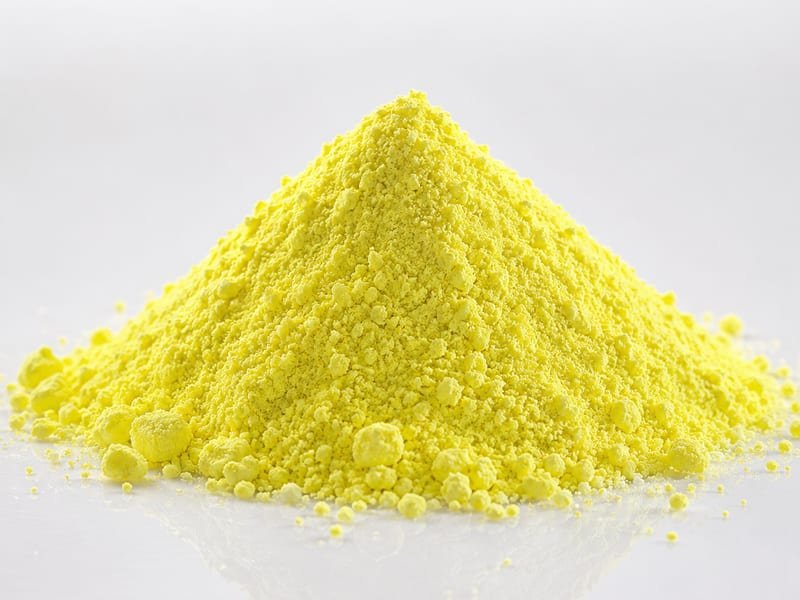
Sulfur itself is classified into distinct grades under ASTM D4528 (rubber compounding materials — sulfur), and rubber-grade sulfur is frequently supplied as insoluble sulfur specifically to control bloom and dispersion in storage and mixing, with the insoluble fraction verified by extraction testing under ASTM D4578. A shipment with an unexpected insoluble/soluble ratio, ash content, or acidity disperses and dissolves differently during mixing and cure than the grade the compound was designed around, shifting crosslink density even though the sulfur dose in phr didn’t change.
Accelerators add a third variable: commercial accelerators such as TBBS or CBS are supplied to defined minimum purity levels, and residual synthesis byproducts (such as free MBT carried over from sulfenamide accelerator manufacture) measurably affect scorch safety and cure rate independent of the nominal accelerator dose. Because the accelerator’s job is to form the reactive sulfurating intermediate during cure, batch-to-batch impurity drift at even the parts-per-million level changes how fast that intermediate forms — showing up as scorch time and cure rate variation from lot to lot.
What This Means for Raw Material Selection
All three of these effects converge on the same diagnostic: the oscillating disc/moving die rheometer curve run under ASTM D2084, which reports minimum torque (ML), scorch time (ts2), cure time (t90), and maximum torque (MH) for a compound. When purity variation in zinc oxide, sulfur, or accelerator shifts vulcanization kinetics, it’s this curve — not the raw material’s elemental assay alone — that moves outside the compound’s accepted window and triggers a batch rejection, even though the formula on paper was followed exactly.
The practical takeaway for sourcing is that purity specification needs to be treated as a process-control parameter, not a chemical-purity checkbox: zinc oxide grade should be documented against ASTM D79/D4315, sulfur against ASTM D4528 with its insoluble-sulfur fraction confirmed per ASTM D4578, and accelerator lots should carry certificates of analysis on purity and known byproduct levels. Because the underlying pass/fail criterion is cure behavior rather than composition alone, buyers should validate incoming lots against rheometer performance under ASTM D2084 rather than relying solely on supplier chemical assay, and should prioritize consistent, purity-verified supply over marginally cheaper material whose lot-to-lot variability is the actual driver of rejected batches.
Sources: ASTM D2084, Standard Test Method for Rubber Property—Vulcanization Using Oscillating Disk Cure Meter; ASTM D4528-88(2017), Standard Classification for Rubber Compounding Materials—Sulfur; ASTM D4578-22, Standard Test Methods for Rubber Chemicals—Determination of Percent Insoluble Sulfur by Extraction; ASTM D79-86(2020), Standard Specification for Zinc Oxide Pigments, and ASTM D4315, Standard Test Methods for Rubber Compounding Material—Zinc Oxide; Heideman, G. et al., “Influence of zinc oxide during different stages of sulfur vulcanization, elucidated by model compound studies,” Journal of Applied Polymer Science, 2005.