
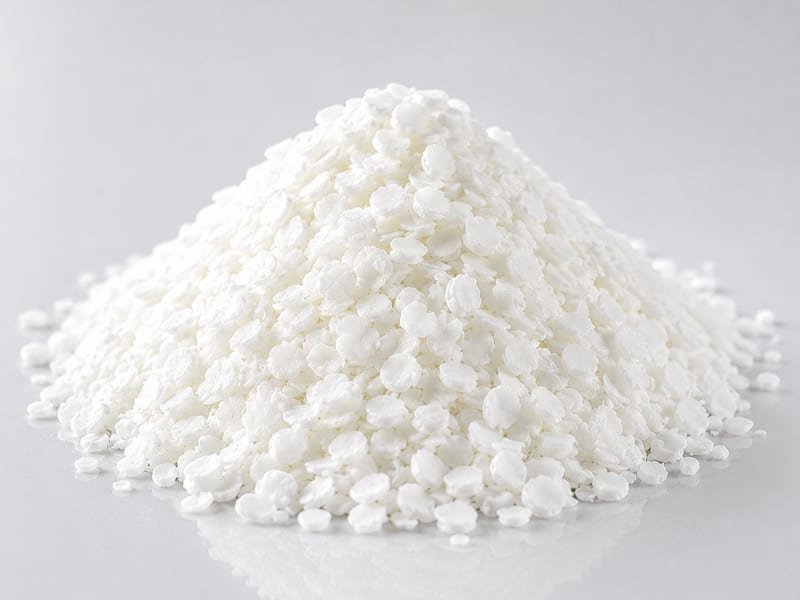
Stearic Acid
How stearic acid works as a conventional rubber vulcanization activator alongside zinc oxide, and what research shows about the cure-speed-versus-compression-set trade-off against faster-curing alternatives.
Overview
Stearic acid paired with zinc oxide is the conventional activator system for rubber vulcanization, and research comparing it against a faster-curing alternative shows a genuine trade-off: the alternative cures dramatically faster, but at a real cost to compression-set performance. This page covers that comparison and stearic acid’s separate, well-defined regulatory status as a food substance.
What is it?
Stearic acid (C18H36O2, CAS 57-11-4) is a white to yellowish-white solid fatty acid that occurs naturally as a glyceride in tallow and other animal or vegetable fats and oils, and is produced commercially by hydrolyzing tallow from edible sources or fully hydrogenated vegetable oil. Per 21 CFR §184.1090, the FDA recognizes stearic acid as Generally Recognized As Safe (GRAS) for direct use in food as a flavoring agent and adjuvant, with no limitation other than current good manufacturing practice.
Why should I use it?
- Paired with zinc oxide, it’s the conventional, well-established activator system for rubber vulcanization — see “How it’s used.”
- It has a clear, direct FDA regulatory status for food use, separate from its rubber-industry role — see “What is it?” above.
How it’s used
In rubber compounding, stearic acid is used together with zinc oxide as a vulcanization activator. A 2023 peer-reviewed study used a conventional formulation of 5 phr zinc oxide and 2.5 phr stearic acid as its reference system, measuring an optimum cure time (t90) of 9 minutes 12 seconds.
Limitations — when it isn’t the right choice
- The conventional stearic acid/zinc oxide activator system cures noticeably slower than some alternatives, though that slower cure comes with a real benefit. The same 2023 study compared this conventional system against zinc stearate as a replacement activator across a range of loadings (6-9 phr), finding cure-time reductions of 58.3% to 69% versus the reference. At 8 phr specifically — the fastest-curing loading tested — zinc stearate cut the optimum cure time to 2 minutes 51 seconds, a 69% reduction. However, the zinc stearate formulations also showed compression set increase by 28.6% to 57.1% compared to the conventional system. This means faster curing with zinc stearate comes at the cost of worse compression-set performance, so the choice between stearic acid/zinc oxide and a substitute like zinc stearate should be based on which property matters more for the specific rubber application — cure speed or compression-set resistance — rather than assuming the faster-curing option is simply better. These figures are specific to the natural rubber/SBR/NBR blend compounds tested for solid tire applications in this study and shouldn’t be assumed to hold across every rubber compound or application.
Key Applications
The material's role changes by industry — click any industry to see its full page.

Standards & Technical References
Every claim on this page traces back to a verifiable reference:
- Tier 1Standard21 CFR §184.1090 — Stearic Acid, US FDA Direct Food Substances GRAS Regulations
- Tier 2University/ResearchCharacterization of Natural Rubber, Styrene Butadiene Rubber, and Nitrile Butadiene Rubber Monomer Blend Composites Loaded with Zinc Stearate to Be Used in the Solid Tire Industry, Applied Sciences (MDPI), 2023, Vol. 13, Issue 3, Article 1277

