
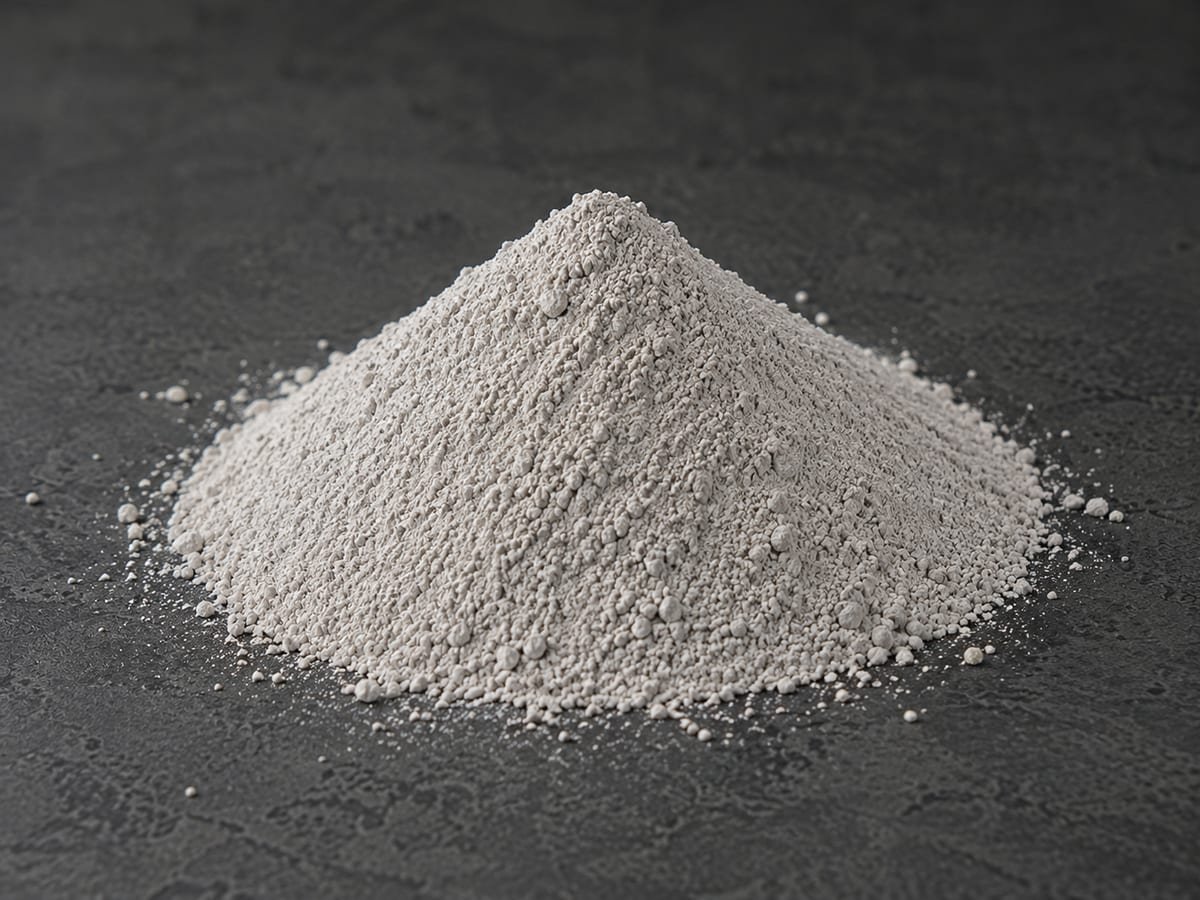
Dolomite
What Dolomite is used for across construction, paints, and agriculture, how it compares to Calcium Carbonate, and what buyers need to know.
Overview
Dolomite is a mineral used across several industries — construction, paints, and agriculture — for a different reason in each. The breakdown below covers what it actually does in each industry.
What is it?
Dolomite is a calcium magnesium carbonate, CaMg(CO₃)₂. It’s harder than plain limestone or Calcium Carbonate — rated 3.5–4 on the Mohs hardness scale, compared to roughly 3 for calcite — with a specific gravity of about 2.85 (geology.com; Britannica).
Why should I use it?
- Harder and more abrasion-resistant than Calcium Carbonate, which is the deciding factor in several of its industrial roles — see the breakdown below.
- A dual mineral source for agriculture — see the Agriculture entry below for what that means in practice.
How its role changes by industry
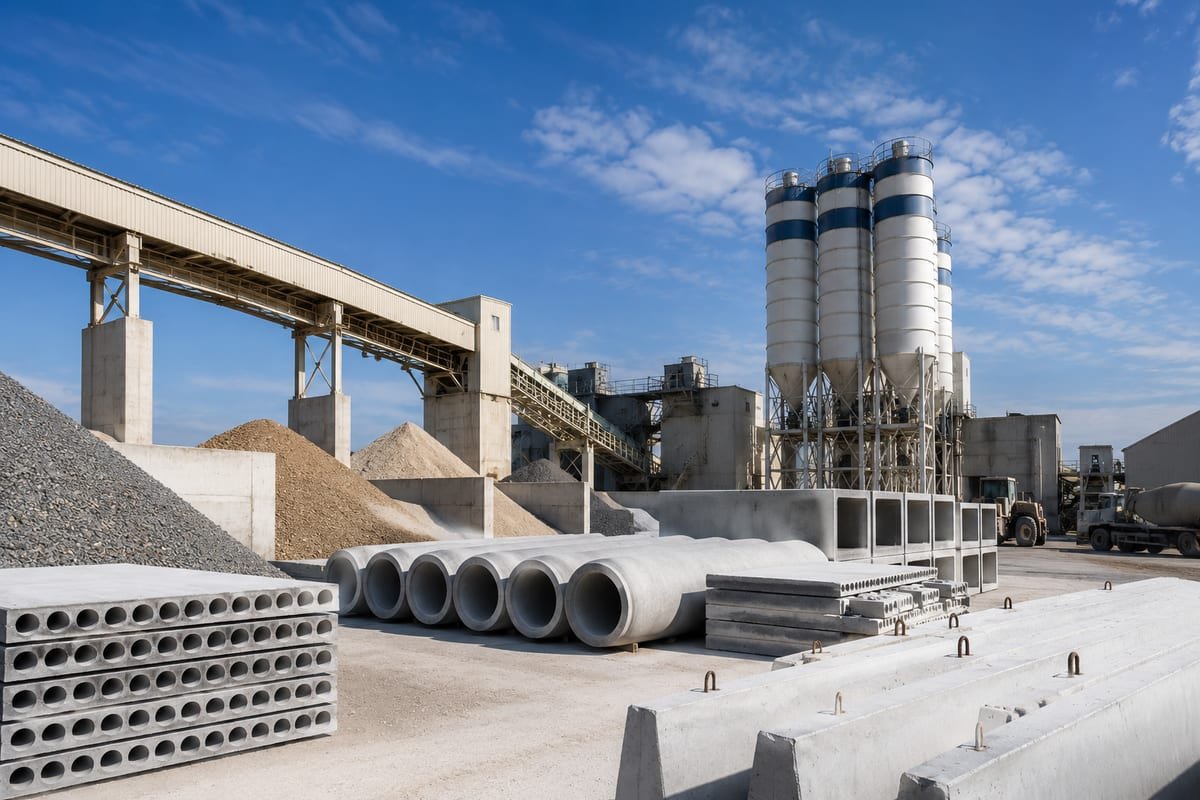
- Construction & Building Materials: a filler and aggregate, qualified under the same grading and quality framework (ASTM C33) that governs crushed stone generally — limestone and dolomite together make up about 70% of US crushed stone production, most of it going to construction aggregate (USGS).
- Paints & Coatings: an extender valued for its greater hardness and abrasion resistance compared to Calcium Carbonate, making it a better fit for exterior and industrial coatings that need durability. Where brightness and low cost are the priority instead, Calcium Carbonate is the more suitable choice — Dolomite has weaker brightness.
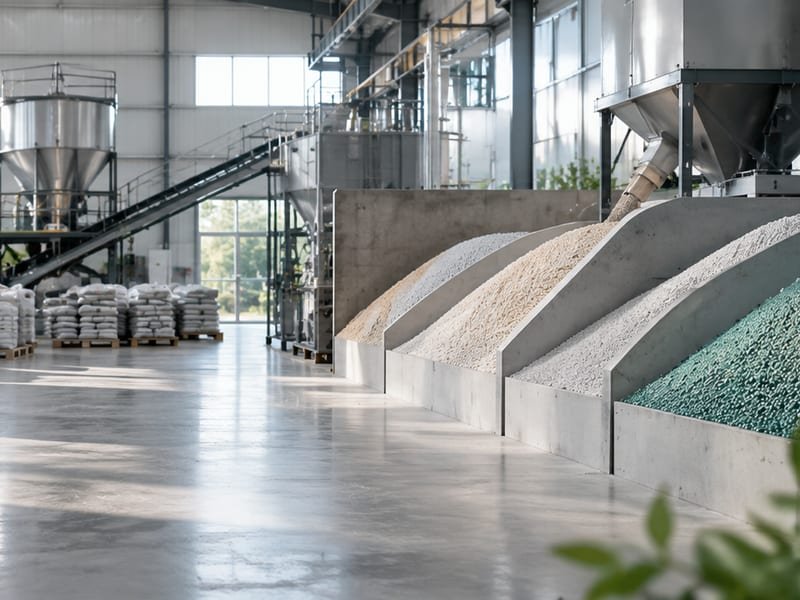
- Agriculture: used as dolomitic lime to raise acidic soil pH, specifically where a soil test also shows low magnesium — it supplies both calcium and magnesium at once, unlike ordinary calcitic lime.
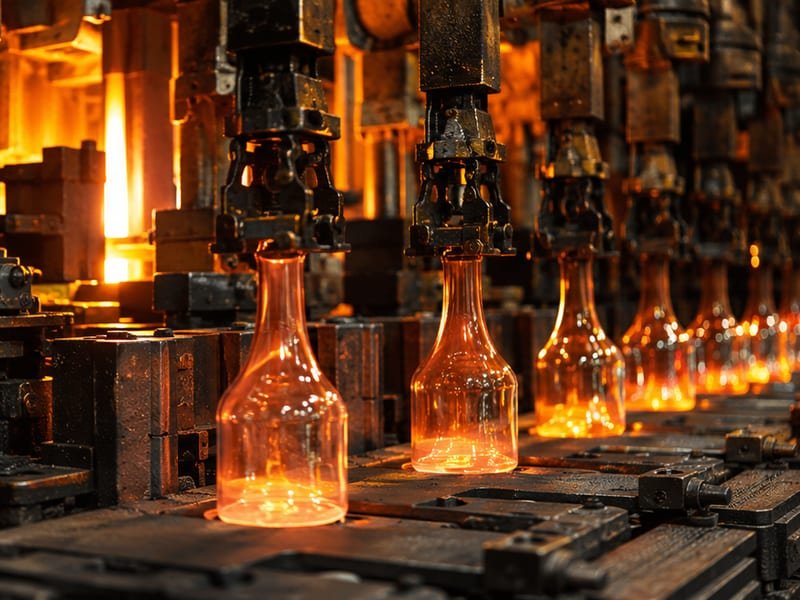
- Glass: a raw batch ingredient supplying MgO, typically 3–5% of the total furnace feed by weight in soda-lime-silica glass, added alongside limestone to prevent devitrification (unwanted crystallization) during forming.
Limitations — when it isn’t the right choice
- In Paints, it isn’t the right choice when brightness and cost are the priority over durability. Calcium Carbonate offers better brightness at a lower cost; Dolomite’s advantage is hardness and weathering resistance for exterior/industrial use, not opacity or whiteness.
- In Agriculture, it isn’t the right lime to reach for if soil magnesium is already adequate. Ordinary calcitic lime is the simpler, usually cheaper choice in that case — dolomitic lime’s specific value is supplying magnesium alongside calcium, so it’s only the better pick when a soil test actually shows a magnesium shortfall.
Key Applications
The material's role changes by industry — click any industry to see its full page.

Physical Properties
| Property | Typical Value | Note |
|---|---|---|
| Chemical Formula | CaMg(CO₃)₂ | Definitional |
| Calcium Oxide (CaO) | ≈ 30.4% (theoretical), typically 30.5% ± 0.5% commercially | Typical published value — Indian Minerals Yearbook / industry spec sheet |
| Magnesium Oxide (MgO) | ≈ 21.9% (theoretical), typically 20.5% ± 0.5% commercially | Typical published value — Indian Minerals Yearbook / industry spec sheet |
| Specific Gravity | ≈ 2.85 | Typical published value — geology.com; Britannica |
| Hardness (Mohs) | 3.5-4 | Typical published value — geology.com; Britannica |
These are typical published values for the material in general, not a certificate of analysis (COA) for a specific shipment. Actual per-batch values are set by the COA accompanying supply.
Grades
Grade and Specification Guide
These reference codes illustrate grade categories and specifications for comparison and selection. The commercial grade and final specification are determined by your application requirements, the technical data sheet and the batch certificate of analysis.
Standards & Technical References
Every claim on this page traces back to a verifiable reference:
- Tier 1Government PublicationUSGS — Mineral Commodity Summaries 2025/2026, Stone (Crushed)
- Tier 1StandardASTM C33/C33M — Standard Specification for Concrete Aggregates
- Tier 2University ExtensionOhio State, NC State, and Iowa State agricultural extension publications on dolomitic limestone
- Tier 3Educational Referencegeology.com and Britannica — Dolomite
- Tier 3Global Supplier/IndustryDolomite vs. Calcium Carbonate comparison sources (20microns.com, shikharmicrons.com)
- Tier 3Industry Batch ReferenceSoda-lime glass furnace batch composition sheet (client-supplied, 2026) — dolomite at 3-5% of batch weight as the MgO source
- Tier 1Government PublicationIndian Minerals Yearbook 2017 — Dolomite (IBM)
- Tier 3Industry SupplierIndustrial dolomite specification sheet — 3.imimg.com
Frequently Asked Questions
What is dolomite?
A calcium magnesium carbonate, CaMg(CO₃)₂. It's harder than plain limestone or Calcium Carbonate — rated 3.5-4 on the Mohs hardness scale, compared to roughly 3 for calcite — with a specific gravity of about 2.85.
Why is dolomite preferred over calcium carbonate in some applications?
Because it's harder and more abrasion-resistant than Calcium Carbonate, which is the deciding factor in its industrial roles — such as exterior/industrial coatings that need greater durability.
What is the difference between dolomitic lime and ordinary calcitic lime in agriculture?
Dolomitic lime supplies both calcium and magnesium, unlike ordinary calcitic lime which supplies calcium alone. It's used specifically when a soil test also shows low magnesium, not just to raise pH.
When isn't dolomite the right choice in paints?
When brightness and low cost are the priority over durability. Calcium Carbonate offers better brightness at a lower cost; Dolomite's advantage is hardness and weathering resistance for exterior/industrial use, not opacity or whiteness.
What role does dolomite play in glass manufacturing?
A raw batch ingredient supplying MgO, typically 3-5% of the total furnace feed by weight in soda-lime-silica glass, added alongside limestone to prevent unwanted devitrification during forming.


