
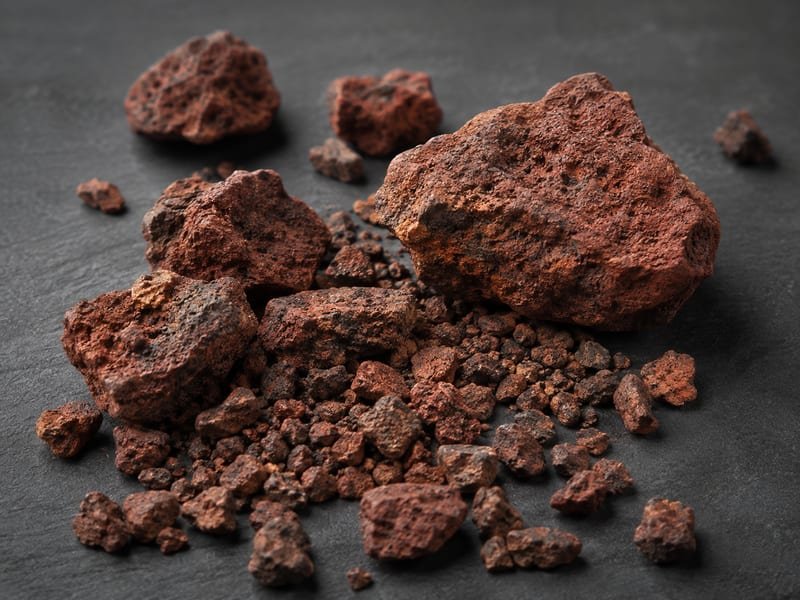
Bauxite
How bauxite is refined into alumina via the Bayer process, and what processing research shows about the ore-quality ratio that determines whether refining is economical.
Overview
Bauxite is the ore refined into alumina and aluminum hydroxide, with a smaller share going into cement, refractories, and other building-material products. This page covers that end-use split and what processing research shows about the ore-quality threshold that determines whether standard refining is even economical.
What is it?
Bauxite is the primary ore refined into alumina. Per 2024 U.S. Geological Survey data, an estimated 76% of bauxite consumed in the U.S. was refined via the Bayer process into alumina or aluminum hydroxide, with the remainder going into products such as abrasives, cement, chemicals, proppants, refractories, and as a slag adjuster in steel mills.
Why should I use it?
- Its dominant end use, alumina refining via the Bayer process, is documented by U.S. government data — see “What is it?” above.
- Its ore quality has a real, measurable economic threshold for standard processing — see Limitations.
How it’s used
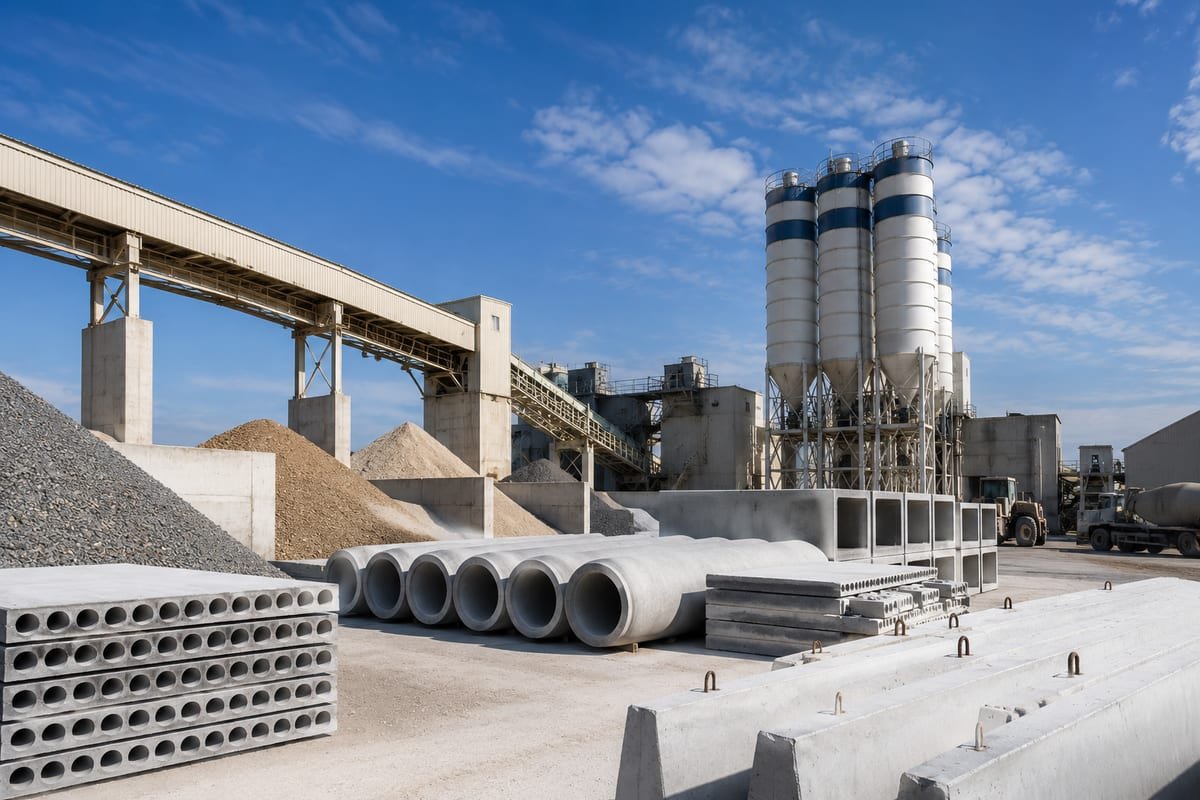
In Construction & Building Materials, bauxite is used in secondary applications such as cement and refractories — a smaller share of total use alongside its dominant role as feedstock for alumina refining.
Limitations — when it isn’t the right choice
- Below a certain alumina-to-silica ratio, bauxite becomes uneconomical to process by standard Bayer technology. A peer-reviewed 2009 review of high-silica bauxite processing found that the alumina-to-silica (Al₂O₃/SiO₂, or “A/S”) ratio is generally kept above about 7 for economical Bayer processing, with some researchers suggesting a threshold above 8. Reactive silica — mainly from kaolinite — lowers this ratio and causes excessive caustic soda consumption and alumina losses during Bayer processing. This threshold is a general industry benchmark discussed across high-silica bauxite processing literature; it should not be assumed to apply identically to every ore body without checking its own mineralogical assay.
Key Applications
The material's role changes by industry — click any industry to see its full page.
Physical Properties
| Property | Typical Value | Note |
|---|---|---|
| Composition | Gibbsite Al(OH)₃, boehmite and diaspore AlO(OH), with iron oxide and silica impurities | Definitional |
| Specific Gravity | ≈ 2.0 – 2.5 | Typical published value — geology.com |
| Mohs Hardness | 1 – 3 | Typical published value — geology.com |
| Alumina (Al₂O₃) Content | ≈ 50 – 65% (commercial-grade ore) | Typical published value — Arkansas Geological Survey |
These are typical published values for the material in general, not a certificate of analysis (COA) for a specific shipment. Actual per-batch values are set by the COA accompanying supply.
Grades
Grade and Specification Guide
These reference codes illustrate grade categories and specifications for comparison and selection. The commercial grade and final specification are determined by your application requirements, the technical data sheet and the batch certificate of analysis.
Standards & Technical References
Every claim on this page traces back to a verifiable reference:
- Tier 1Government PublicationUSGS — Mineral Commodity Summaries 2025, Bauxite and Alumina
- Tier 2University/ResearchThe processing of high silica bauxites — Review of existing and potential processes, Hydrometallurgy, 2009, Vol. 98
- Tier 3Educational Referencegeology.com — Bauxite: The Principal Ore of Aluminum
- Tier 2Government PublicationArkansas Geological Survey — Bauxite
Frequently Asked Questions
What is bauxite mainly used for?
Refining into alumina via the Bayer process is its dominant end use — an estimated 76% of bauxite consumed in the U.S. in 2024 was refined for this purpose specifically.
What other uses does bauxite have besides alumina refining?
A smaller share goes into secondary applications such as abrasives, cement, refractories, proppants, chemicals, and as a slag adjuster in steel mills.
What is the A/S ratio and why does it matter?
It's the alumina-to-silica ratio (Al₂O₃/SiO₂). Below a certain value (generally around 7, with some researchers suggesting 8), bauxite becomes uneconomical to process by standard Bayer technology, because reactive silica causes excessive caustic soda consumption and alumina losses.
Does the same A/S ratio threshold apply to every bauxite deposit?
No. This threshold is a general industry benchmark discussed in high-silica bauxite processing literature, and it should not be assumed to apply identically to every ore body without checking its own mineralogical assay.


