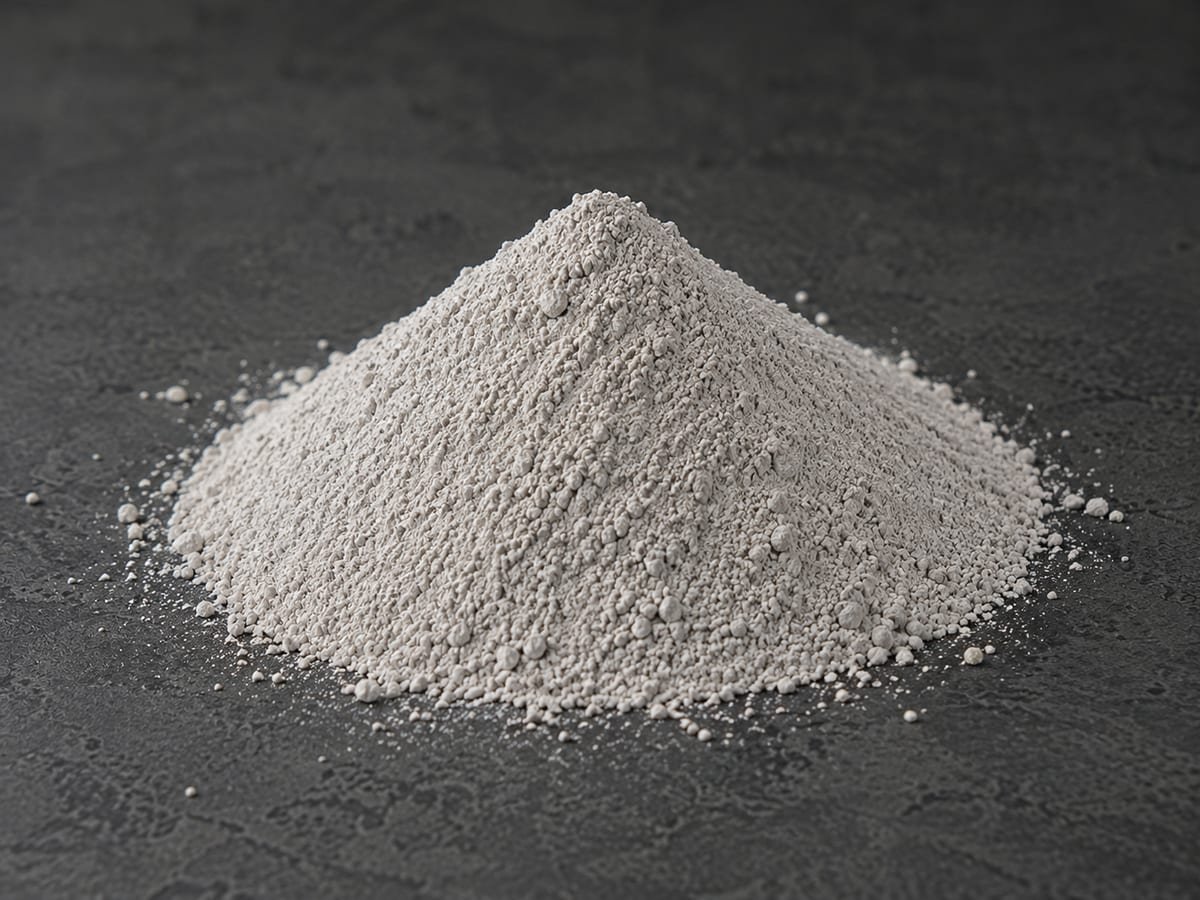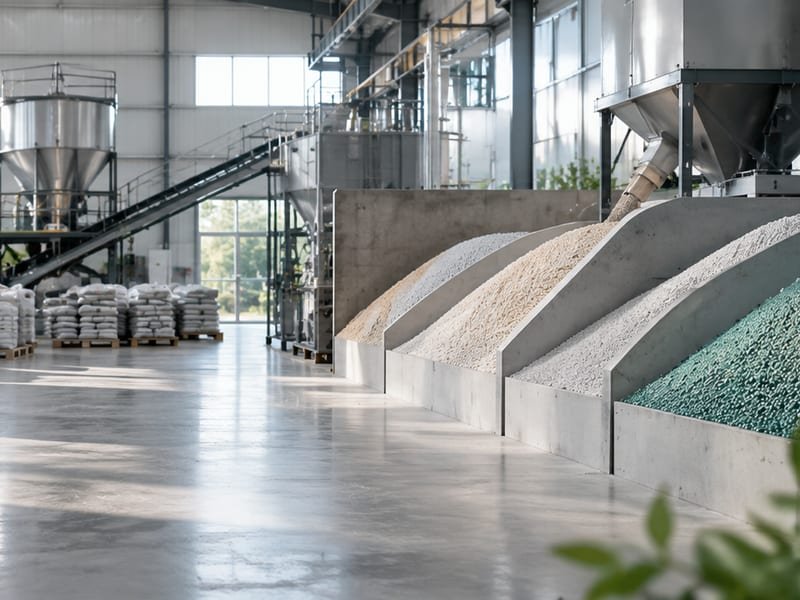
The same fine grind that makes agricultural dolomite agronomically effective — small particle size for fast, complete reaction in soil — also makes it a dust generator at every handling step between the quarry and the field: crushing, screening, bagging, pneumatic conveying, and broadcast spreading all put fine mineral particles into the air.
Root Causes
Dust generation scales with fineness and with the number of times material is transferred or agitated. A product ground fine enough to pass a #60 mesh sieve for agronomic reactivity is, by the same token, fine enough to become airborne readily during free-fall loading, screw-conveyor transfer, or field spreading, especially in dry conditions or with mechanical spreading equipment that agitates the material as it’s thrown.
The exposure hazard depends on composition as much as particle size. Dolomite itself is generally regulated in occupational settings as a nuisance/particulate-not-otherwise-regulated dust, with OSHA permissible exposure limits of 15 mg/m³ for total dust and 5 mg/m³ for the respirable fraction. But dolomite deposits can carry free (crystalline) silica as an impurity — the same insoluble residue that lowers CCE — and ASTM C25’s chemical analysis methods for limestone and dolomite include a dedicated free-silica determination applicable once silica content exceeds 0.05%. Material carrying meaningfully higher silica content shifts the applicable occupational exposure limit from the general nuisance-dust threshold to the much stricter respirable crystalline silica standard, which is a materially different worker health risk than “dust” in the generic sense.
What This Means for Raw Material Selection
For a buyer, dust management is not purely a handling-equipment question — it starts with knowing what’s actually in the material. A certificate of analysis that reports CCE and fineness but omits free silica content leaves a real gap in understanding what exposure standard actually applies during bagging, loading, and field application. This matters most for the fine end of the fineness spectrum — the very fraction that fineness-factor rules reward for fast reactivity is also the fraction that generates the most airborne dust, so a buyer optimizing purely for effective neutralizing value should also budget for dust suppression (moisture conditioning, enclosed conveying, dust collection at transfer points) rather than treating dust as a fixed cost of any ground mineral product.
Sources: OSHA, “Particulates Not Otherwise Regulated (PNOR)” and Annotated PEL Table Z-3; ASTM C25, Standard Test Methods for Chemical Analysis of Limestone, Quicklime, and Hydrated Lime (insoluble matter and free-silica determination methods); dolomite safety data sheet references compiled from mine safety and university environmental health and safety documentation.