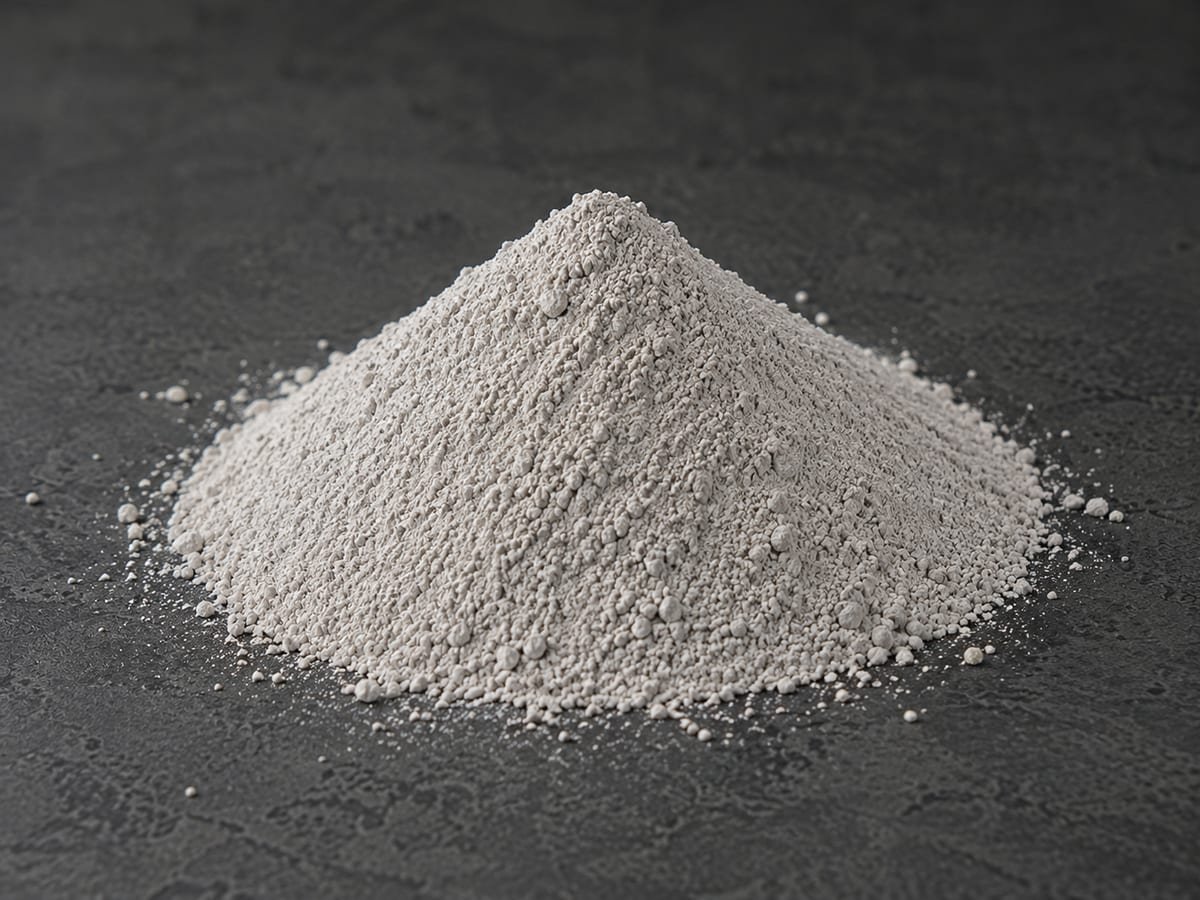
Agricultural dolomite particle size determines how quickly — and how completely — a liming material actually raises soil pH, which makes fineness inconsistency between shipments a real dosing problem, not a cosmetic one. Two loads with identical calcium carbonate equivalent (CCE) on the certificate of analysis can perform very differently in the field if their particle size distributions differ.
Root Causes
Dolomite reaches an agricultural buyer as crushed and screened quarry rock, and crushing/screening is a mechanical process, not a chemical one — output particle size distribution shifts with the specific rock being fed at that time, crusher and screen wear, and how tightly a given run is screened. That’s why regulatory frameworks for agricultural liming materials (most U.S. state departments of agriculture follow AAPFCO-based definitions) don’t rate a lime purely on chemical purity. They require a documented fineness factor derived from a sieve analysis — the fraction of material passing a given U.S. standard sieve and retained on the next, for example the #8, #40, and #60 sieve cuts used in Missouri’s agricultural liming material standard (6 CSR 250-10.020) — because coarser fractions dissolve and react far more slowly in soil than material passing a #60 mesh, which is treated as essentially immediately reactive.
Chemical purity and fineness are measured separately for a reason: a load can carry a high CCE and still under-perform if a large share of it is coarse enough to still be reacting in the soil two or three seasons later rather than in the current cropping cycle.
What This Means for Raw Material Selection
CCE alone is not a sufficient buying specification for agricultural dolomite. Effective Neutralizing Value (or Effective Neutralizing Material per ton, in states that report it that way) combines CCE with the fineness factor from a current sieve analysis, and that combined figure — not the CCE percentage by itself — is what predicts how much of the material will actually neutralize soil acidity within a normal planting-season timeframe. Most agricultural liming regulations also set a minimum passing rate on a coarse sieve (commonly around 90% passing a 10-mesh screen) as a floor below which a product cannot legally be marketed as agricultural limestone at all.
For a procurement manager, the practical takeaway is to request a current sieve analysis and fineness factor alongside CCE on every shipment’s certificate of analysis, rather than assuming fineness is constant because the CCE number looks stable — the two vary independently, and coarse, high-CCE material is a documented way for effective field performance to fall short of what the chemistry alone would suggest.
Sources: Missouri 6 CSR 250-10.020, Agricultural Liming Materials Standards; Mississippi State University Extension, “Agricultural Limestone’s Neutralizing Value”; Minnesota Department of Agriculture, “Agricultural Liming Material Analysis — Determining Quality and Effective Neutralizing Value”; University of Nebraska–Lincoln Extension, “Lime Use for Soil Acidity Management.”