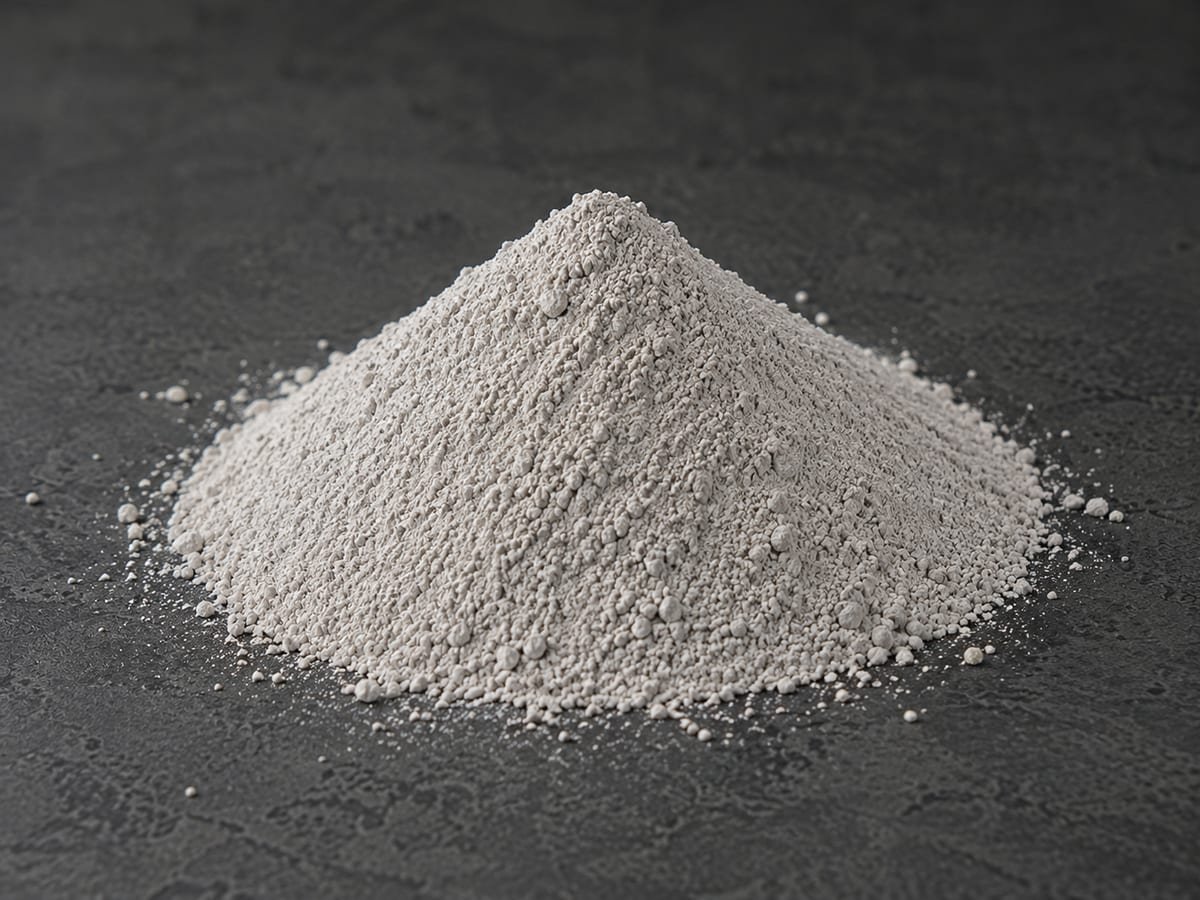
Dolomite is bought for agriculture specifically because it supplies both calcium and magnesium in one liming material, unlike ordinary calcitic limestone — but the calcium-to-magnesium ratio a buyer actually receives is not a fixed number, and treating it as one can lead to under-correcting a documented magnesium deficiency.
Root Causes
Pure, stoichiometric dolomite is CaMg(CO₃)₂ — an equal molar ratio of calcium to magnesium, which works out to roughly 21.7% Ca and 13.2% Mg by mass, a mass ratio near 1.6:1. Natural deposits, however, rarely sit exactly on that stoichiometry. Quarried dolomite ranges from calcitic dolomite, where excess calcium carbonate dilutes the magnesium content, to material close to the theoretical ratio, depending on the specific deposit and even on which part of a given quarry is being worked. Because dolomite is sold as a mined mineral rather than a manufactured blend, the Ca:Mg ratio delivered in a given shipment reflects the geology of the source, not a specification a supplier is formulating to.
What This Means for Raw Material Selection
For a buyer, the operative question isn’t chasing a specific soil Ca:Mg ratio for its own sake — a widely cited 2007 review in the Soil Science Society of America Journal (Kopittke and Menzies) examined the long-standing “ideal soil” / basic cation saturation ratio concept and found no research support for the idea that crop yield depends on hitting a particular exchangeable Ca:Mg ratio, as opposed to simply having adequate levels of each nutrient. What does matter, and what agricultural extension guidance consistently supports, is using dolomitic lime specifically when a soil test shows a magnesium shortfall alongside low pH, rather than defaulting to it for every liming job — and once that decision is made, the actual Mg content of the delivered dolomite (not an assumed textbook value) is what determines how much magnesium reaches the field per ton applied.
Because that Mg content varies by deposit, a certificate of analysis reporting actual Ca and Mg content — not just total CCE — is the specification that lets a buyer calculate real magnesium delivery per ton, and it’s worth re-verifying periodically rather than assuming a supplier’s dolomite matches the ratio from a prior shipment or a generic textbook figure.
Sources: geology.com and Encyclopaedia Britannica, “Dolomite” (mineral composition and stoichiometry); Kopittke, P.M. and Menzies, N.W., “A Review of the Use of the Basic Cation Saturation Ratio and the ‘Ideal’ Soil,” Soil Science Society of America Journal, 2007, Vol. 71; Ohio State University, North Carolina State University, and Iowa State University agricultural extension publications on dolomitic limestone and soil magnesium correction.