
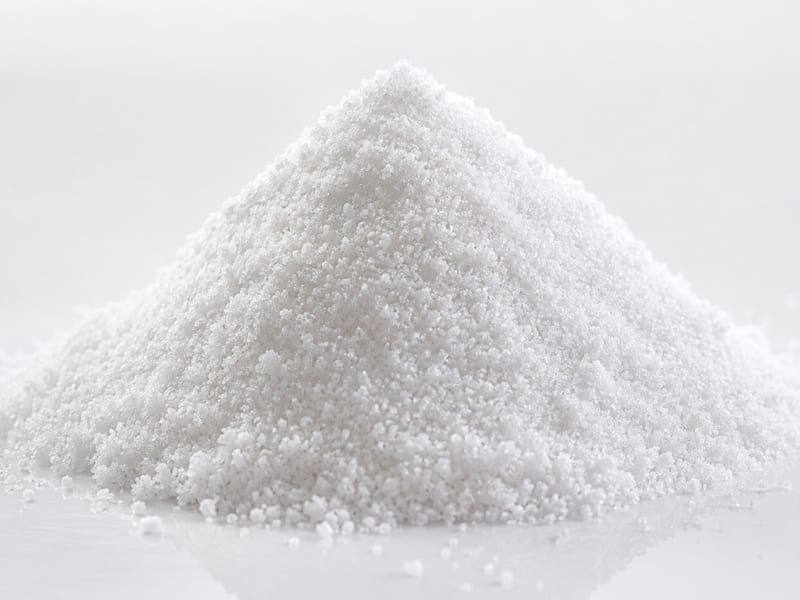
Sodium Sulphate
How sodium sulphate functions as a glass furnace fining agent, a detergent filler, and a textile dyeing electrolyte, with real batch and end-use data.
Overview
Sodium sulphate shows up in four documented industries doing four different jobs — a fining agent in glass, a filler in powdered detergents, a recovered process chemical in kraft pulping, and a dyeing electrolyte in textiles. This page covers what it actually does in each, using a real client-supplied glass furnace batch reference alongside the last published USGS data for this commodity.
What is it?
Sodium sulphate (Na₂SO₄) is an inorganic salt sold in two main commercial forms: anhydrous sodium sulphate (the mineral thenardite) and sodium sulphate decahydrate, historically known as Glauber’s salt (the mineral mirabilite). It’s produced from naturally occurring sodium-sulphate-bearing brines and evaporite deposits — commercial U.S. production has historically come from deposits in California and Texas — and is also recovered as a byproduct of several chemical manufacturing processes, including battery-acid recycling, cellulose, and boric acid production (USGS Mineral Commodity Summaries, Sodium Sulfate, January 2013). USGS discontinued dedicated coverage of this commodity after the 2013 edition, so the end-use and reserve figures cited on this page are the last ones the agency published, not current-year data.
Why should I use it?
- It’s a genuine multi-industry commodity with quantified, industry-specific end-use shares, not a single-purpose additive — see “How its role changes by industry” below.
- Its role in glass melting is backed by both a real furnace batch reference and peer-reviewed mechanism research, not just a general claim — see the Glass entry below.
How its role changes by industry
- Glass: functions as a fining (refining) agent. At high melt temperatures it decomposes and releases SO₂ and O₂ gas, which forms larger bubbles that help sweep smaller dissolved gas bubbles and seed out of the molten glass (Min’ko and Binaliev, Glass and Ceramics, 2013). Per a client-supplied soda-lime glass furnace batch composition document, sodium sulphate typically makes up 0.5-1% of total batch weight — about 2.5-5 tons/day in a 500 ton/day furnace.
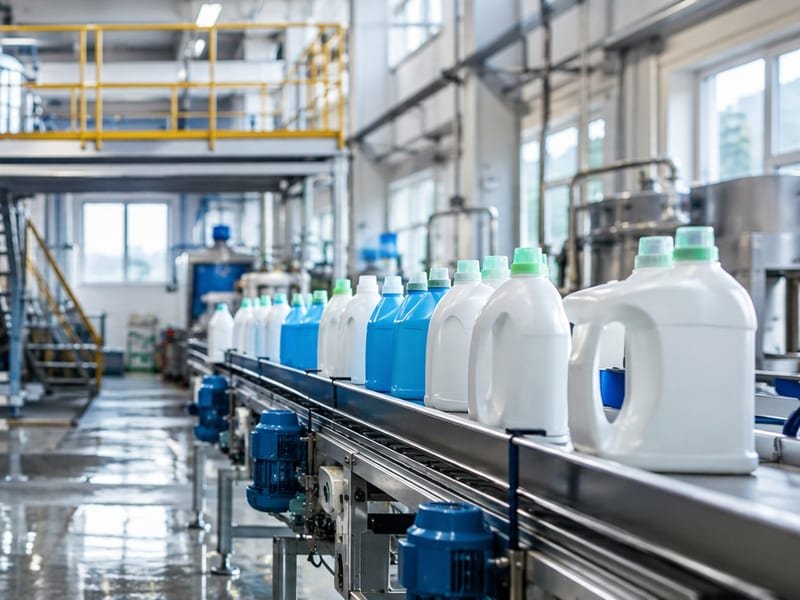
- Detergents & Cleaning: used as a low-cost, inert filler in powdered laundry detergent formulations. This was the single largest documented end use of sodium sulphate — about 35% of U.S. consumption per the last USGS estimate — and powdered formulations have historically contained as much as 50% sodium sulphate by weight; liquid detergents do not contain it at all.
- Paper (Pulp and Paper): tracked by USGS as a discrete end-use category (about 15% of U.S. consumption), with the agency also noting real recycling of sodium sulphate by consumers within the pulp and paper industry specifically.
- Textiles: used as an electrolyte (exhausting agent) in reactive dyeing of cotton. It increases the ionic strength of the dye bath, neutralizing the negative surface charge that cellulosic fibers acquire in water and promoting dye exhaustion from the bath into the fabric — a conventional method studied used sodium sulphate at 50 g/L (Aysha et al., Scientific Reports, 2022).
Limitations — when it isn’t the right choice
- In glassmaking, it isn’t the only fining option, but the documented substitutes perform worse. USGS notes that soda ash and calcium sulfate have both been substituted for sodium sulphate in glass batches “with less-effective results” — a real documented alternative, but not an equivalent one.
- In detergents, it’s specific to powdered formulations, not the category as a whole. USGS is explicit that liquid detergents contain no sodium sulphate at all, so its 35% end-use share applies only within the powdered-detergent segment, not total detergent production.
- The 0.5-1% glass batch share cited above comes from one client-supplied furnace reference, not a universal industry constant. Actual dosage in any given furnace depends on that furnace’s specific glass chemistry, redox state, and cullet ratio, and should be checked against the buyer’s own batch sheet rather than assumed.
Key Applications
The material's role changes by industry — click any industry to see its full page.



Physical Properties
| Property | Typical Value | Note |
|---|---|---|
| Chemical Formula | Na₂SO₄ | Definitional |
| Form | Anhydrous (thenardite) or decahydrate (Glauber's salt / mirabilite) | Definitional |
| Purity (anhydrous grade) | ≥ 99.0% (dried basis) | Typical published value — commercial AR-grade specification sheets |
| Specific Gravity (anhydrous) | ≈ 2.66–2.68 | Typical published value — ChemicalBook |
| Specific Gravity (decahydrate) | ≈ 1.46–1.49 | Typical published value — ChemicalBook |
These are typical published values for the material in general, not a certificate of analysis (COA) for a specific shipment. Actual per-batch values are set by the COA accompanying supply.
Grades
Grade and Specification Guide
These reference codes illustrate grade categories and specifications for comparison and selection. The commercial grade and final specification are determined by your application requirements, the technical data sheet and the batch certificate of analysis.
Standards & Technical References
Every claim on this page traces back to a verifiable reference:
- Tier 1Government PublicationUSGS — Mineral Commodity Summaries, Sodium Sulfate, January 2013 (the last edition published before USGS discontinued coverage of this commodity)
- Tier 2University/ResearchMin'ko, N.I. and Binaliev, I.M., Role of Sodium Sulfate in Glass Technology, Glass and Ceramics, 2013, Vol. 69, pp. 361-365
- Tier 2University/ResearchAysha, T. et al., Eco-friendly salt/alkali-free exhaustion dyeing of cotton fabric with reactive dyes, Scientific Reports, 2022, Vol. 12, article 22339
- Tier 3Client-Supplied Industry ReferenceClient-supplied soda-lime glass furnace batch composition document (2026) — sodium sulphate at 0.5-1% of batch weight, 2.5-5 tons/day in a 500 ton/day furnace, functioning as a fining/refining agent
- Tier 3Chemical DatabaseChemicalBook — Sodium Sulfate / Sodium Sulfate Decahydrate (Glauber's Salt) physical property data
- Tier 3Commercial Spec SheetSodium Sulphate Anhydrous (AR) specification sheet — suvchemlaboratorychemicals.com
Frequently Asked Questions
What is the difference between anhydrous and decahydrate sodium sulphate?
Anhydrous sodium sulphate (the mineral thenardite) is a dry form with a higher specific gravity (≈2.66), while sodium sulphate decahydrate (Glauber's salt, the mineral mirabilite) contains ten water molecules in its crystal structure with a much lower specific gravity (≈1.46).
What role does sodium sulphate play in glassmaking?
It functions as a fining agent. At high melt temperatures it decomposes and releases SO₂ and O₂ gas, which forms larger bubbles that help sweep smaller dissolved gas bubbles and seed out of the molten glass, typically making up 0.5-1% of total furnace batch weight.
Is sodium sulphate used in all types of detergents?
No. It's used as a low-cost, inert filler in powdered laundry detergent formulations only, and powdered formulations have historically contained as much as 50% sodium sulphate by weight; liquid detergents do not contain it at all.
How is sodium sulphate used in textile dyeing?
It's used as an electrolyte (exhausting agent) in reactive dyeing of cotton. It increases the ionic strength of the dye bath and neutralizes the negative surface charge that cellulosic fibers acquire in water, promoting dye exhaustion from the bath into the fabric.
Is sodium sulphate recycled in the paper industry?
Yes. USGS tracks it as a discrete end-use category (about 15% of U.S. consumption), with the agency also noting real recycling of sodium sulphate by consumers within the pulp and paper industry specifically.


