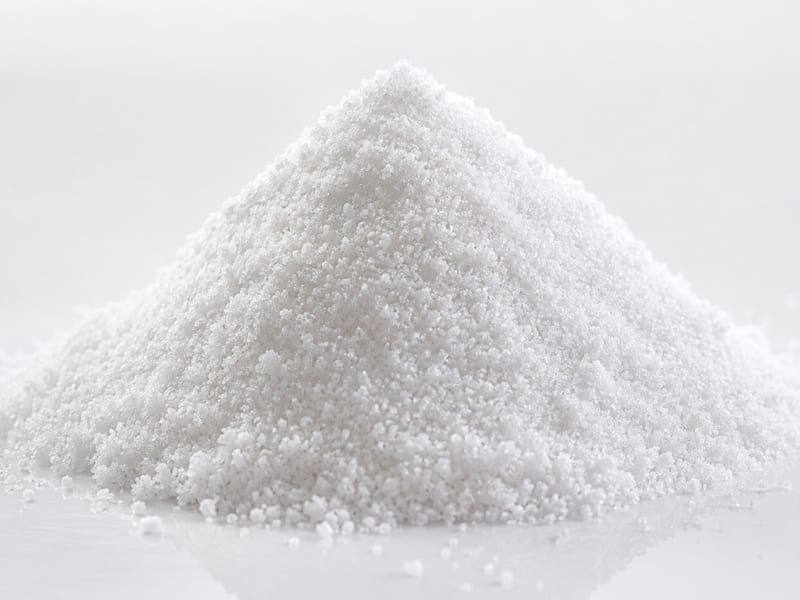
Sodium sulphate’s role in kraft pulping is easy to misunderstand — it isn’t the chemical that actually does the pulping work, it’s the makeup source that keeps the chemical that does the work in balance, and that distinction matters for how a mill should think about purity and dosing.
Root Causes
Sodium sulphate is documented explicitly as not the active chemical during kraft pulping — it functions only as the source used to generate sodium sulfide (Na₂S), the compound that actually drives the pulping reaction. That generation happens inside the recovery boiler, where sodium sulfate is documented as being reduced to Na₂S with a reduction efficiency normally in the 90-94% range — a specific, measurable conversion step rather than a complete or assumed transformation. The broader chemical recovery cycle around this reduction step is documented as capable of recovering pulping chemicals at efficiencies as high as 97%, with ash treatment systems specifically able to reduce the sodium and sulfur makeup chemical requirement by 5-50% depending on treatment level — meaning makeup chemical demand isn’t fixed, it’s a function of how well the recovery cycle itself is running.
The sulfur-sodium balance this system depends on is documented as sensitive to both raw material quality and process changes: sulfur in black liquor exists in multiple forms (sulfide, thiosulfate, sulfite, sulfate, and organic sulfur), and newer mill processes like tall oil production and lignin extraction are documented as disturbing that balance specifically, with internal sulfuric acid production identified as the most efficient way to separate sodium and sulfur streams when that disturbance needs correcting. This means the makeup sodium sulphate requirement a mill calculates isn’t a static number tied only to production volume — it shifts with recovery efficiency and with whatever byproduct-extraction processes are running alongside core pulping.
What This Means for Raw Material Selection
Because sodium sulphate functions specifically as a makeup chemical feeding a recovery cycle with a documented, variable reduction efficiency, a mill’s actual sodium sulphate demand depends on recovery boiler performance and process configuration, not just tonnage produced.
The practical points for a buyer are: track the mill’s actual recovery boiler reduction efficiency (documented normal range 90-94%) as a factor in makeup chemical planning, since efficiency below that range directly increases sodium sulphate demand; evaluate ash treatment system performance specifically as a lever on makeup chemical cost, given the documented 5-50% reduction in Na/S makeup achievable through ash treatment; and account for byproduct-extraction processes (tall oil, lignin extraction) as sulfur-sodium-balance disruptors specifically when they’re added to or expanded within a mill’s operations, since these are documented as requiring separate correction (such as internal sulfuric acid production) rather than being absorbed by standard makeup chemical dosing alone.
Sources: Pulp and Paper Canada industry technical article on the role of sulfidity during kraft pulping; ScienceDirect Topics technical reference on recovery boiler engineering principles; Valmet technical white paper on controlling sulfidity in a modern kraft pulp mill; academic technical research on modeling kraft mill chemical balance.