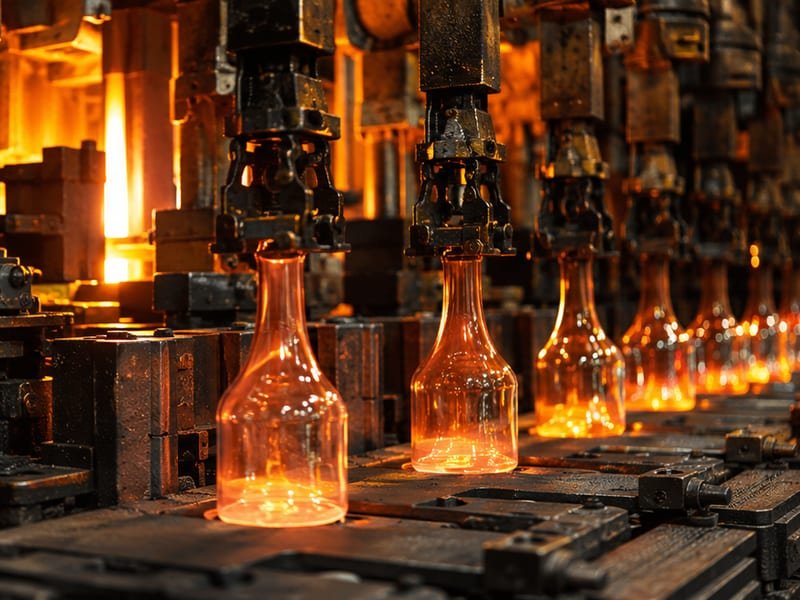
Bubbles and “seeds” (the smaller version of the same defect) are among the most common finished-glass rejects, degrading optical clarity in flat and container glass and, in more demanding tableware or optical applications, making an otherwise usable batch unsellable.
Root Causes
Most of the gas that ends up as bubbles doesn’t come from outside contamination — it comes from the batch materials themselves as they heat up. Raw batch ingredients release moisture as it evaporates, and, more significantly, carbonate raw materials decompose on heating and release CO₂: limestone (calcium carbonate) and dolomite decompose in roughly the 600-900°C range, and soda ash also breaks down releasing gas as it converts to the melt. Because conventional soda-lime-silica batches rely on these carbonate materials as their calcium, magnesium, and alkali sources, carbonate decomposition is understood in the glass science literature as the primary source of gas evolution during melting, not an occasional side effect.
Once that gas is present, whether it fully escapes before the glass cools depends on bubble size and rise time: very small bubbles (seeds) can be too small to develop enough buoyancy to reach the melt surface in the time available, so they get trapped as the glass is formed. Furnace redox conditions and insufficient time or temperature at the fining stage compound the problem by leaving more undissolved gas in the melt when forming begins.
What This Means for Raw Material Selection
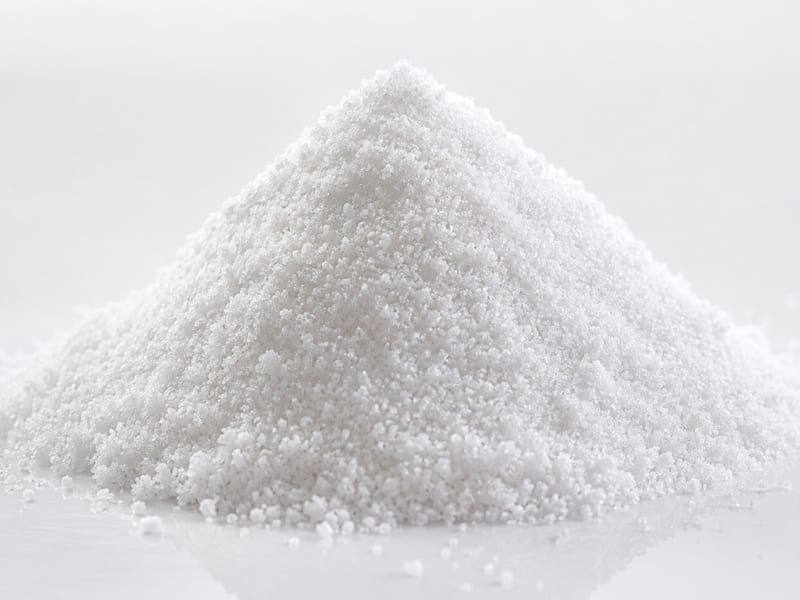
This is precisely the problem sodium sulphate is added to solve. At high melt temperatures sodium sulphate decomposes and releases SO₂ and O₂, and the resulting larger bubbles sweep up the smaller, otherwise-trapped seed bubbles on their way to the surface, carrying them out of the melt (a mechanism documented in peer-reviewed glass technology research). This fining function is why sodium sulphate shows up in soda-lime-silica furnace batches at roughly 0.5-1% of total batch weight in documented industrial practice — a small addition relative to the major batch components, but one doing a specific, non-substitutable job.
Dosing is not a “more is always better” parameter. Sulfate fining chemistry is closely tied to the melt’s redox state, and research on sulfate fining also examines related foaming behavior in the melt, so sulphate addition needs to be matched to the furnace’s actual chemistry and cullet ratio rather than fixed at a generic percentage. Documented substitutes such as soda ash or calcium sulfate have been used in place of sodium sulphate, but with less effective fining results — a real alternative, not an equivalent one. For a buyer, the practical takeaway is that consistent sodium sulphate supply, dosed against the furnace’s own batch sheet rather than an assumed industry-wide figure, is the raw-material-side lever most directly connected to bubble and seed defects — while carbonate content (limestone, dolomite, soda ash) is the root source of the gas the fining agent has to manage, not something a producer would remove, since those materials are also structurally necessary for the glass’s chemistry.
Sources: Min’ko, N.I. and Binaliev, I.M., “Role of Sodium Sulfate in Glass Technology,” Glass and Ceramics, 2013, Vol. 69; general glass-batch literature on carbonate decomposition (limestone, dolomite, soda ash) as a primary CO₂/gas source during melting; USGS Mineral Commodity Summaries, Sodium Sulfate (2013) on documented fining substitutes.