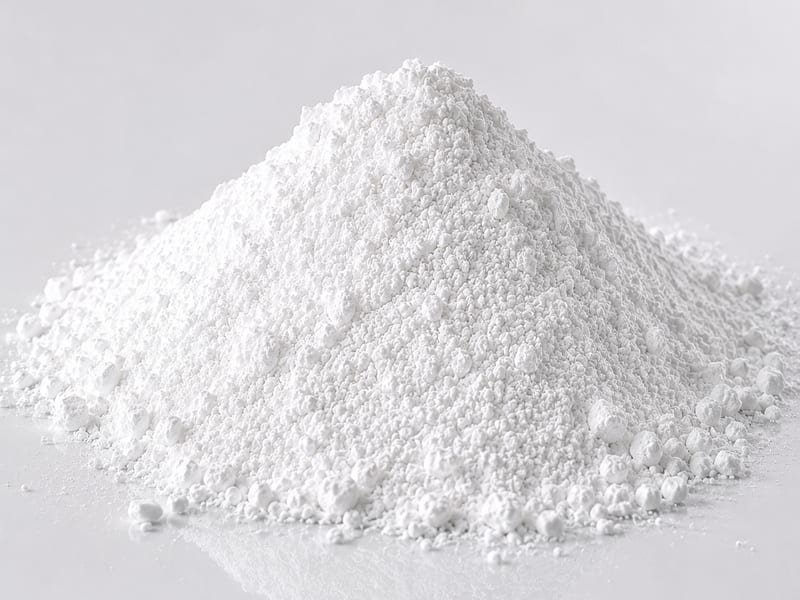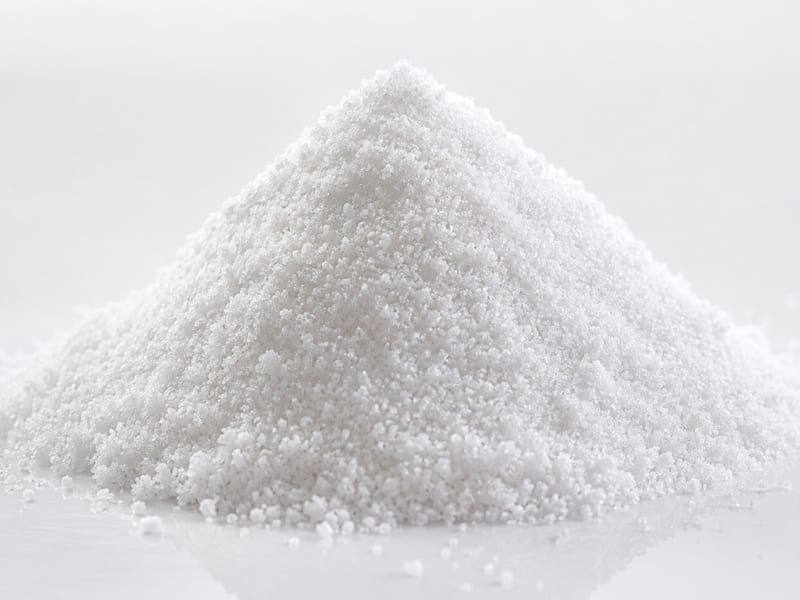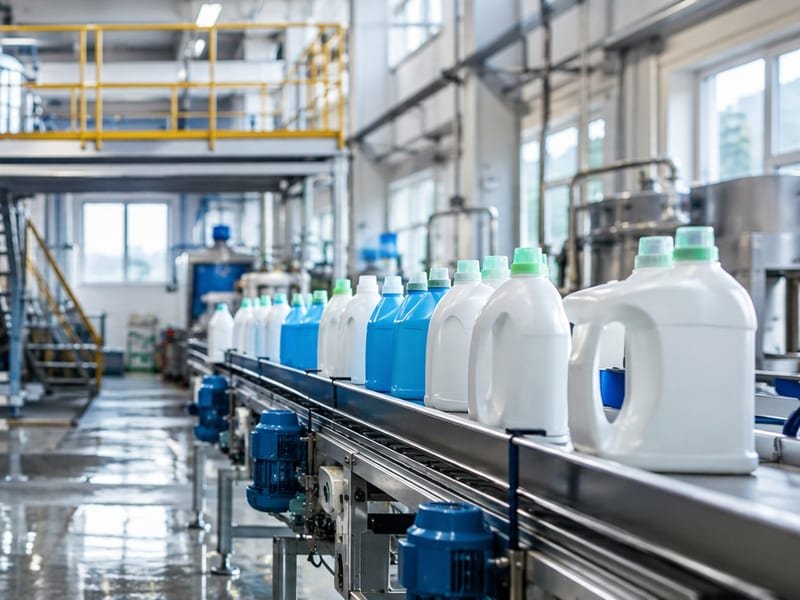
Filling machines don’t dose detergent powder by weight alone — they’re calibrated around a specific volume-to-weight relationship, which means bulk density isn’t a cosmetic property but the actual number a hopper and doser are built to expect.
Root Causes
Bulk density in detergent formulations is documented across a defined range, with high-bulk-density powders reaching above 650 g/liter and commonly falling in the 675-850 g/liter band — spray-dried powders containing nonionic surfactant, sodium carbonate, and sodium sulphate are specifically documented as achieving bulk densities of at least 675 g/liter. Sodium sulphate’s role in this is direct: in household-grade detergent powder, it’s documented as comprising 20-35% of formulation weight, functioning specifically as a filler and flow agent that shapes how the powder packs and moves. Soda ash contributes its own density and dosing characteristics, and is documented as favored by manufacturers specifically because it’s predictable, widely available, and easy to dose — properties tied directly to consistent bulk density behavior.
Bulk density’s practical consequence is documented explicitly: it determines hopper sizes and dosing equipment capacities, meaning the physical equipment on a production line is engineered around an assumed density figure, not just a target fill weight. When bulk density drifts from formulation to formulation or batch to batch, the same volumetric fill setting delivers a different actual weight of product, and the same equipment calibrated for one density range can jam or under/over-dose when fed material outside that range.
What This Means for Raw Material Selection
Because filling and dosing equipment is calibrated around a specific bulk density assumption rather than weight alone, a buyer troubleshooting dosing inconsistency or jamming should check incoming soda ash and sodium sulphate bulk density data before assuming an equipment fault.
The practical points for a buyer are: specify bulk density targets explicitly for both soda ash and sodium sulphate against the documented 675-850 g/liter high-density range relevant to the formulation type, rather than relying on nominal grade names alone; verify sodium sulphate dosage within its documented 20-35% formulation-weight role, since its filler/flow-agent function is specifically tied to that proportion range and drift outside it changes the powder’s packing behavior; and treat bulk density as an equipment-compatibility specification, not just a quality metric, since the documented direct link between density and hopper/doser sizing means a density shift can cause line-level problems even when the underlying chemistry is otherwise in spec.
Sources: USPTO patent literature on high bulk density detergent compositions and processes documenting spray-dried formulation density benchmarks; Petronaftco and JRJ Elementix technical guides on soda ash use and specifications in detergent manufacturing; Laxmi Enterprise technical article on sodium sulfate’s role in powder detergent formulation; Istay Kimya technical reference on soda ash density across industrial applications.