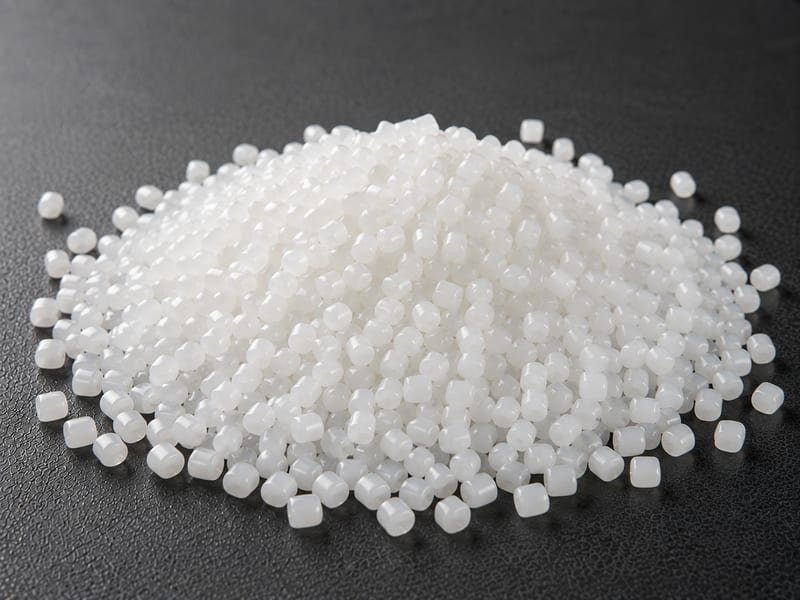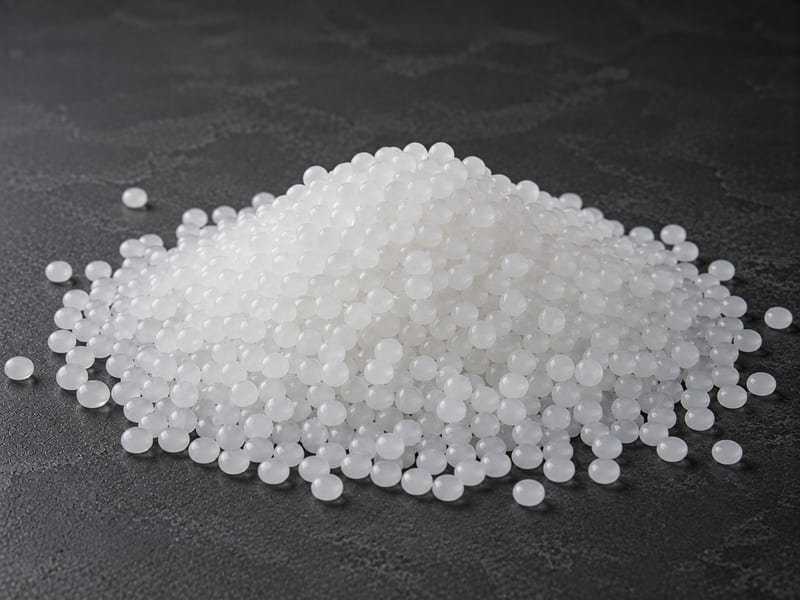
Sustainability targets are pushing buyers to increase recycled content in PP and HDPE formulations, but incorporating regrind or post-consumer resin without a way to quantify the resulting property shift turns a sustainability win into an unplanned processing and quality risk.
Root Causes
Melt flow index is documented as the practical measurement for managing recycled resin quality, because contamination, additives, colorants, and thermal history all shift the MFI reading in ways that are otherwise hard to detect before the material is on the line. The mechanism is chain scission: polymer chains break down a little with every melt cycle, so material that has been reprocessed multiple times typically shows a measurably higher MFI than fresh virgin stock, even when the base resin type is nominally identical.
The relationship is quantified in recycling-industry data: MFI in a mixed-plastic recycled stream is set largely by the purity of what’s actually in it — for example, a stream that’s roughly 90% PP and 10% PE by composition is reported to produce an MFI in the 7-10 g/10min range, and removing more of the off-type PE fraction shifts that number further. This means MFI testing can be used not just to catch contamination but to actively determine how much recycled material a formulation can absorb while still hitting its target processing and mechanical specification.
What This Means for Raw Material Selection
Because MFI drift from recycled content is measurable and largely predictable — driven by reprocessing history and stream purity rather than being random — a buyer increasing recycled content doesn’t need to treat it as an unquantifiable risk. The practical lever is testing incoming recycled or regrind material’s MFI against the virgin-resin baseline before blending, rather than assuming a nominal “PP is PP” equivalence between virgin and recycled sources.
The practical points for a buyer are: request MFI data specifically for recycled or regrind content being considered for blending, not just for the virgin resin it will be mixed with, since the recycled fraction is the more variable half of the formulation; treat stream purity (how much off-type resin contamination is present) as the primary lever on recycled-content MFI, and specify a maximum acceptable contamination level rather than a vague “high purity” requirement; and set the target blend ratio based on actual tested MFI compatibility between the virgin and recycled fractions, since a blend that looks acceptable on paper composition alone can still produce a finished MFI outside the process’s tolerance if the recycled fraction has drifted further than expected from repeated reprocessing.
Sources: Sustainable Design Studio technical explainer on melt flow index and its meaning for recycled plastic; PlastikCity and Impact Solutions plastic recyclers’ guides to melt flow index testing; NCBI/PMC peer-reviewed research on the impact of contamination and thermo-oxidative degradation on recycled polypropylene properties; Banyan Nation technical reference on melt flow rate’s role in recycling quality control.