
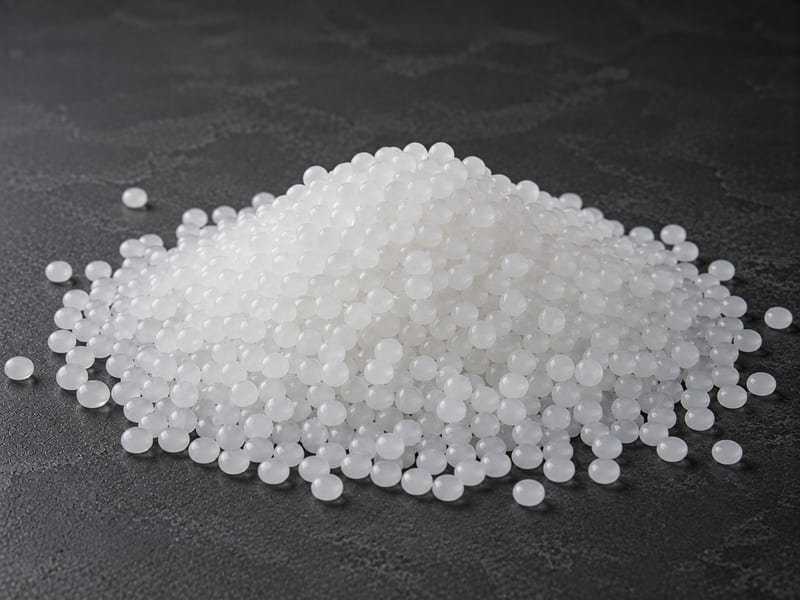
HDPE (High-Density Polyethylene)
Explore HDPE material properties, density, chemical resistance and uses. Compare polyethylene types and learn what to check when selecting an HDPE resin grade.
Overview
HDPE stands for high-density polyethylene, a thermoplastic resin used in molded products, packaging, pipes and cable applications. Learn what the material is, which properties to compare and how to prepare a grade-specific inquiry.
What is HDPE material?
HDPE belongs to the polyethylene family. Its predominantly linear molecular structure distinguishes it from more highly branched polyethylene materials. As a thermoplastic, it can be reprocessed subject to application requirements. ASTM D4976 distinguishes polyethylene materials by molecular structure and measured properties.
HDPE plastic, HDPE resin and PE-HD refer to the same material family. The family name does not identify a commercial grade or certify a finished product’s performance.
HDPE density and material properties
The British Plastics Federation gives a general density range of 0.944–0.965 g/cm³, equivalent to 944–965 kg/m³. Use a grade-specific technical data sheet (TDS) for purchasing decisions.
Mechanical properties: what should you compare?
ASTM D4976 evaluates molding and extrusion materials using properties including tensile stress at yield, strain at break, flexural modulus, flow rate and stress-crack resistance. These measure different aspects of performance.
| Property to request | What to compare in the grade’s TDS |
|---|---|
| Tensile strength | Yield versus break, units and test method |
| Flexural modulus | Stiffness measurement and test conditions |
| Elongation at break | Reported strain and specimen conditions |
| Melt flow rate (MFR/MFI) | Result, test temperature and load |
| Environmental stress-crack resistance (ESCR) | Test method, conditions and reported resistance |
There is no single tensile-strength value for every HDPE grade. Compare results obtained under matching conditions. For cable applications, read about HDPE environmental stress cracking resistance.
Chemical resistance and heat resistance
HDPE has useful chemical resistance, but the BPF reference shows different resistance across chemical categories. Confirm compatibility for the actual chemical, concentration, temperature and exposure time.
For heat resistance, distinguish resin-processing temperature from finished-part service temperature. Request the grade’s thermal data and application limits; a processing temperature is not a service rating.
What is HDPE used for?
BPF examples include chemical containers, household articles and cable insulation. Select a resin by the intended product and process:
- Molded products: compare the molding specification with your part requirements.
- Extrusion: specify the product, equipment and required flow characteristics.
- Pipe and fittings: confirm pipe-material classification and finished-product requirements.
- Wire and cable: request the specification appropriate to the compound’s intended function.
ASTM D4976 covers molding and extrusion materials and points to D3350 for pipe materials and D1248 for wire and cable. These scopes are not interchangeable approvals.
HDPE grades and types: how to choose
Start with the processing route, such as injection molding, blow molding or extrusion, then compare documented properties. Density alone is insufficient to select a resin.
For pipes, ASTM D3350 uses a cell classification covering density, melt index, mechanical performance and crack-growth resistance. Classification does not by itself establish suitability for a particular application. Confirm the applicable standard edition and finished-pipe requirements with the responsible engineer.
HDPE vs LDPE vs LLDPE
All three belong to the polyethylene family. Compare actual grade data before substituting one resin for another.
| Material | Where to continue your comparison |
|---|---|
| HDPE | Check density, mechanical properties and the specification for your process |
| LDPE (low-density polyethylene) | Review the LDPE guide when considering a more flexible polyethylene option |
| LLDPE (linear low-density polyethylene) | Review the LLDPE guide for film and flexible-product options |
Disadvantages and limitations of HDPE
- A general resin description cannot establish chemical compatibility or a thermal service limit.
- Molding-grade data does not automatically qualify a material for pipe or cable service.
- Classification standards do not replace engineering design data.
- Reprocessing does not remove the need to meet end-user material requirements.
Discuss your HDPE requirements
Include your finished product, processing method, required properties, quantity and delivery destination. Attach your current grade’s TDS or purchasing specification if available.
Send an HDPE technical or sourcing inquiry to PlaxRaw. This is material reference information; supply availability and grade documentation require confirmation for each inquiry.
Frequently asked questions about HDPE
What does HDPE mean?
HDPE means high-density polyethylene, a thermoplastic in the polyethylene family. The abbreviation does not identify a supplier grade.
What is HDPE density in kg/m³?
The BPF reference range used here converts to 944–965 kg/m³. Confirm your selected resin’s value from its TDS.
What are the mechanical properties of HDPE?
Compare tensile behavior, flexural modulus, elongation and crack resistance in the grade’s documentation, together with test conditions.
Can any HDPE resin be used for pressure pipes?
The name alone is insufficient. Confirm pipe-material classification, application requirements and finished-product qualification.
Technical references
- British Plastics Federation: HDPE — density, applications and chemical-resistance reference.
- ASTM D4976 — molding and extrusion material evaluation.
- ASTM D3350-24 — historical pipe-material classification reference; verify the applicable edition when specifying.
Physical Properties
| Property | Reference Value | Note |
|---|---|---|
| HDPE density | 0.944–0.965 g/cm³ | General reference range: British Plastics Federation; not a grade specification. |
| Density in kg/m³ | 944–965 kg/m³ | Unit conversion of the BPF reference range; confirm the selected grade's TDS. |
General reference values, not a specification or certificate of analysis for a supplied grade.
Key Applications
The material's role changes by industry — click any industry to see its full page.


Standards & Technical References
Every claim on this page traces back to a verifiable reference:


