
Natural Zeolite: Properties, Uses and Grade Selection
Learn what natural zeolite and clinoptilolite are, where ion exchange and adsorption matter, and which composition, particle-size and test data to compare.
Overview
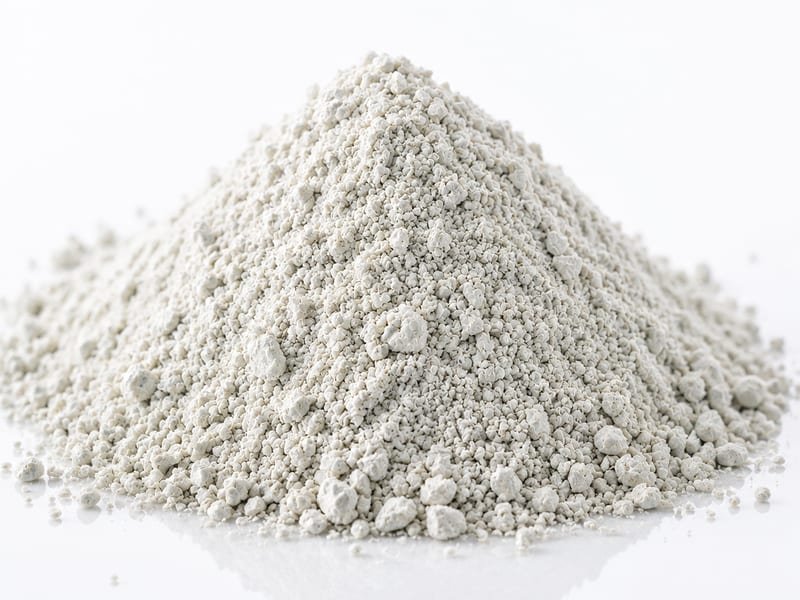
Natural zeolite is a group of hydrated aluminosilicate minerals, not one material with a fixed composition. Clinoptilolite is one member of that group. Natural zeolite is used in applications such as odour control, horticulture, wastewater treatment and qualified animal-feed systems. Useful selection starts with mineral identity, deposit composition and the intended process, rather than the word zeolite alone.
Natural zeolite or synthetic zeolite?
Natural zeolites are mined and processed, while synthetic zeolites are manufactured. USGS distinguishes common natural markets from synthetic applications such as catalysts, detergents and molecular sieves. A mined clinoptilolite product is not automatically interchangeable with a synthetic molecular sieve. Check the required mineral structure and process specification before comparing candidates.
Ion exchange, adsorption and filtration: what is the difference?
Ion exchange concerns exchangeable ions in the mineral; adsorption concerns retention on accessible surfaces. A packed bed can also perform physical filtration, but these functions require different tests. Cation exchange capacity (CEC) is useful characterisation data, not a direct promise of contaminant removal in every water. For ammonium applications, distinguish dissolved ammonium from gaseous ammonia and identify what the test actually measures.
How should you compare zeolite uses?
| Application | Evidence to request |
|---|---|
| Wastewater treatment | Tests on the actual water, target ion and operating conditions |
| Odour control | Results for the intended source, contact time and application method |
| Horticulture | Mineral composition, physical characteristics and suitability for the growing system |
| Animal feed | Grade-specific qualification, applicable market requirements and professional formulation assessment |
A result in one application does not establish suitability in another. Particle size, impurities and the method of application belong in the trial record.
Which properties and test conditions matter?
Ask for mineral composition, clinoptilolite content when relevant, CEC with its method, particle-size distribution, moisture and relevant impurity data. Pore dimensions depend on the mineral structure; there is no single pore diameter for every natural zeolite. Water uptake needs stated humidity, temperature and conditioning. Compare like measurements, and distinguish mineral reference data from a supplied grade’s certified analysis.
How do you qualify a replacement grade?
Define the target function, test method, operating conditions and acceptance criteria. Request a TDS, SDS and batch data, then run an application-specific comparison. Feed or manure research does not provide a universal animal-feed dose or prove drinking-water suitability. For physical sand filtration, compare the separate role of silica sand. Reference zeolite grade examples below are illustrative specifications, not approved products.
Sources and scope
Manufacturer examples are reference evidence, not specifications or certifications for a PLAXRAW shipment.
Content updated:
Key Applications
The material's role changes by industry — click any industry to see its full page.
Physical Properties
| Property | Typical Value | Note |
|---|---|---|
| Cation Exchange Capacity (CEC) | ≈ 1.0–1.6 meq/g (100–160 meq/100g), varies by deposit and treatment | Typical published value — peer-reviewed clinoptilolite CEC literature (Puno, Peru study) |
| Pore dimensions | Mineral- and structure-specific | No single pore diameter defines all natural zeolites |
| Specific Gravity | ≈ 2.1–2.2 | Typical published value — Mindat.org; Wikipedia |
| Water uptake | Grade- and test-condition-specific | State humidity, temperature and sample conditioning |
These are typical published values for the material in general, not a certificate of analysis (COA) for a specific shipment. Actual per-batch values are set by the COA accompanying supply.
Grades
Grade and Specification Guide
These reference codes illustrate grade categories and specifications for comparison and selection. The commercial grade and final specification are determined by your application requirements, the technical data sheet and the batch certificate of analysis.
Standards & Technical References
Every claim on this page traces back to a verifiable reference:
- [Primary reference] USGS: zeolite definitions and application categories — https://www.usgs.gov/centers/national-minerals-information-center/zeolites-statistics-and-information
- [Primary reference] USGS Minerals Yearbook: natural zeolites, 2019 — https://pubs.usgs.gov/myb/vol1/2019/myb1-2019-zeolites.pdf
- Tier 2University/ResearchEvaluation of the cation exchange capacity (CEC) of natural zeolite from ignimbritic formations in Puno, Peru, by measuring the removal of ammonium and heavy metals, Redalyc/Scielo, 2021
- Tier 3Mineralogical DatabaseMindat.org; Wikipedia — Clinoptilolite mineral data (specific gravity, pore size, hardness)
Frequently Asked Questions
Is clinoptilolite the same as every natural zeolite?
No. Clinoptilolite is one natural zeolite mineral; commercial products differ in mineral composition and processing.
Does CEC guarantee ammonium removal?
No. Removal must be tested for the actual water, target concentration and operating conditions.
Can any natural zeolite be used in animal feed?
No. The proposed grade requires application-specific qualification and review of the destination market's requirements.


