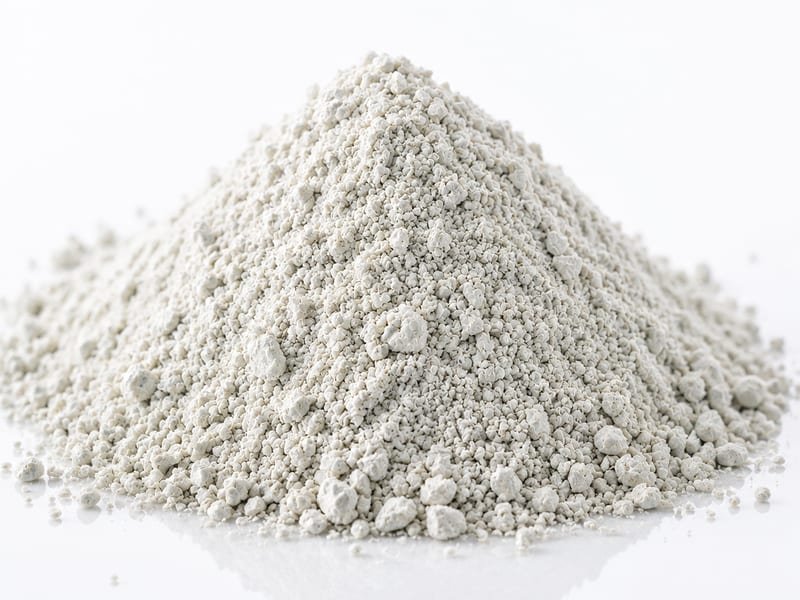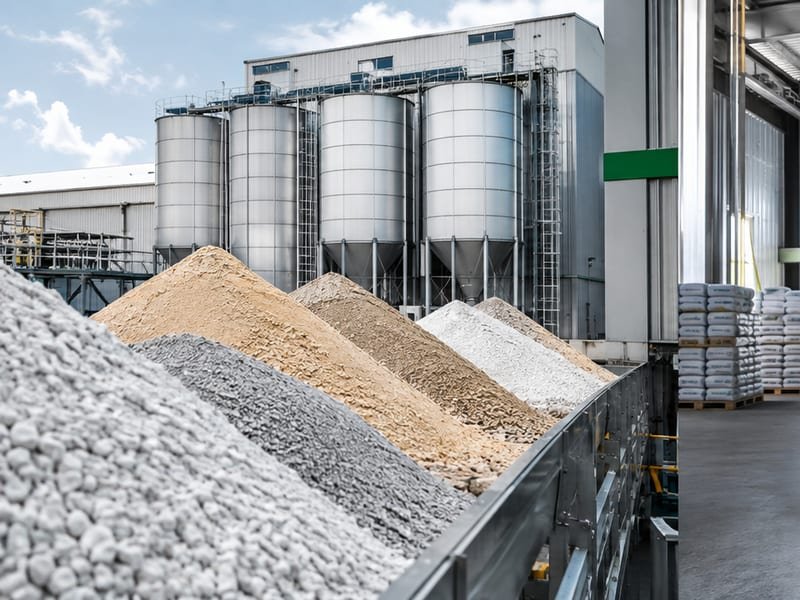
Pellets that arrive at the farm as a pile of fines instead of intact pellets aren’t always a milling-process failure — pushing mineral inclusion rate up without adjusting particle size is a documented, direct path to exactly that outcome.
Root Causes
Pellet durability — the ability of a pellet to stay intact through transport and storage handling — is documented as directly tied to particle size composition: large particles are associated with high-durability pellets, while fines are associated with low-durability pellets, meaning the physical structure of the mineral fraction feeding into the pellet mill is a direct durability lever, not a secondary consideration behind formulation and binder chemistry. Pellet density itself is documented as depending on a specific combination of factors — moisture content, particle size, die temperature, and processing pressure — with smaller particle size, lower moisture, and higher die temperature together producing higher-density pellets, meaning mineral particle size interacts with the rest of the pelletizing process rather than acting as an independent variable.
The consequence of poor durability compounds through the supply chain: pellets of poor physical quality break apart or abrade during transport, generating dust and fines, and that breakdown is documented as causing nutrient segregation that unbalances the diet the animal actually receives — a mineral-loading decision made at the mill shows up as a nutritional-consistency problem at the point of feeding. There is a documented upside worth weighing against this risk: fines that have been successfully processed into pellets are more economical to transport and help producers avoid the liabilities associated with a dusty product, meaning the incentive to push inclusion rates up is real, not just a cost-cutting temptation to be dismissed outright.
What This Means for Raw Material Selection
Because durability is driven by particle size interacting with moisture, die temperature, and pressure rather than mineral inclusion rate alone, a buyer pushing calcium carbonate or zeolite loading higher for cost or functional reasons needs to adjust particle size and processing parameters in tandem, not assume the existing pellet mill setup will absorb a higher mineral fraction without a durability cost.
The practical points for a buyer are: specify mineral particle size grading appropriate to the target inclusion rate rather than using the same grade across a range of loading levels, since the documented large-particle-to-durability relationship means a mineral grade that pellets fine at low inclusion can underperform at high inclusion; coordinate mineral particle size decisions with die temperature and moisture control at the mill, since durability is documented as a function of all these variables acting together, not mineral particle size in isolation; and treat unexplained fines or dust complaints at high mineral inclusion levels as a particle-size and process-parameter diagnostic first, since the documented mechanism links exactly that combination to nutrient segregation in the finished ration.
Sources: USDA Agricultural Research Service technical reports on feed pellet and corn durability and breakage during repeated handling; Borregaard technical guide to pelleting covering particle size and durability factors; general pellet-quality engineering technical literature (Biofuel Machines, FEECO) on the five factors influencing pellet quality including particle size, moisture, die temperature, and processing pressure.