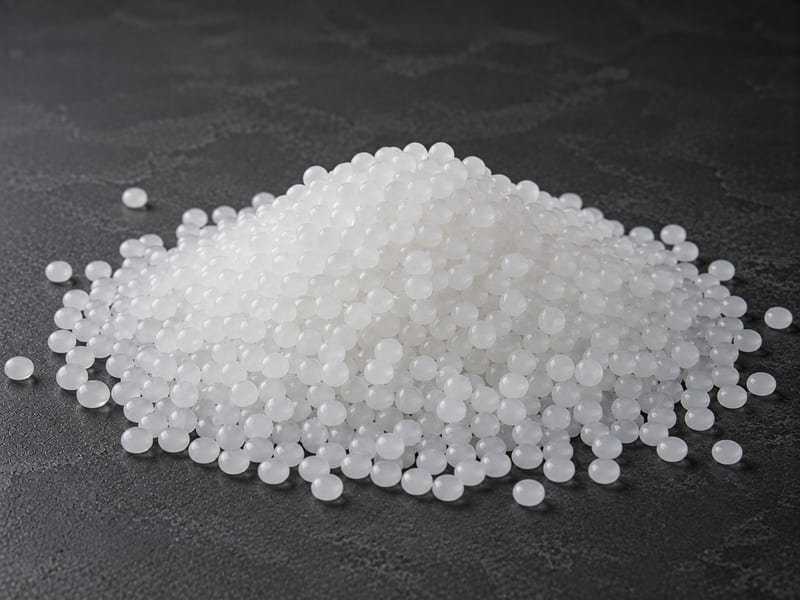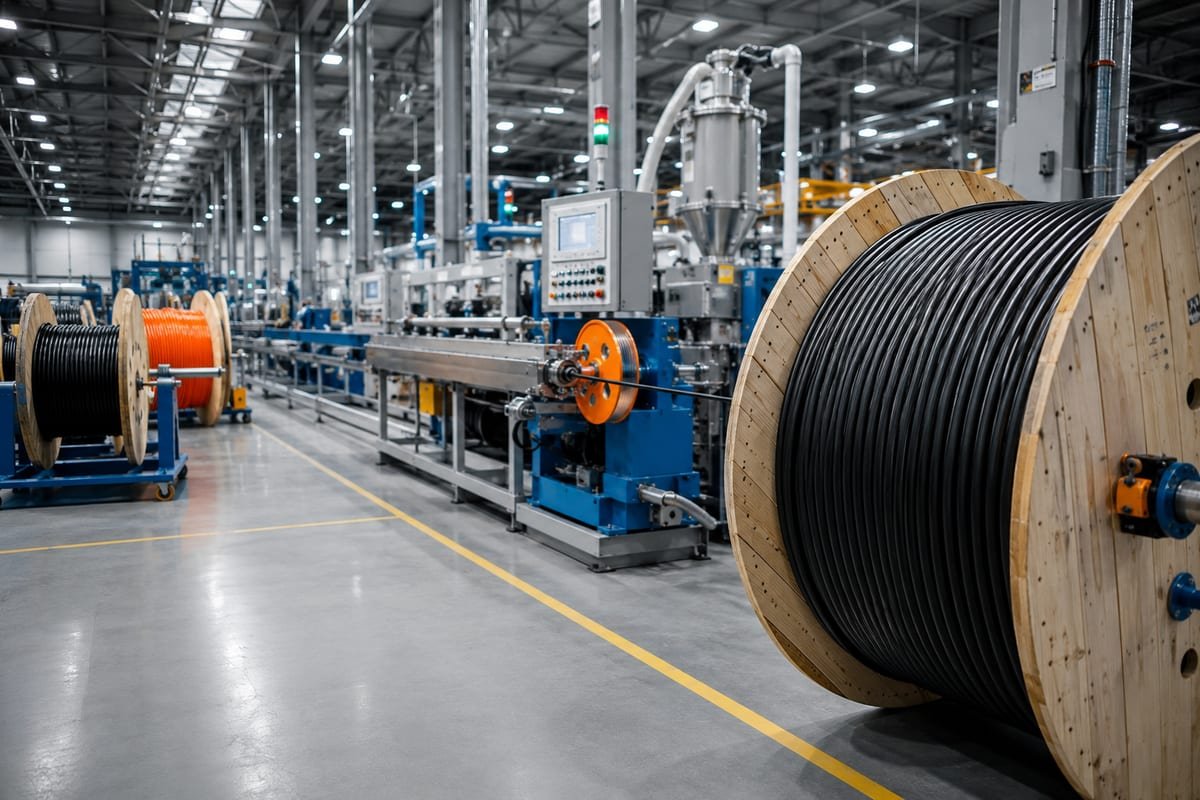
An HDPE cable jacket can crack in service under a stress far lower than its rated yield strength — a brittle failure mode that has nothing to do with mechanical overload and everything to do with a chemistry-driven phenomenon called environmental stress cracking, one that traces back to the same industry that made HDPE cable jacketing common in the first place.
Root Causes
Environmental stress cracking (ESC) is documented as a brittle failure that occurs when HDPE is held under constant tensile stress below its yield stress — the material fails at a load where ordinary mechanical failure would not be expected, and critically, ESC does not occur when the polymer is in compression, which is why it shows up specifically at points of sustained tension in an installed jacket. The mechanism requires a stressed polyolefin surface in the presence of surface-active agents — documented triggers include alcohols, soaps, and surfactants — that lower the surface energy needed for microscopic cracks to initiate and propagate through the material’s crystalline structure.
This isn’t a new or obscure problem for cable applications specifically: in the late 1940s, Bell Labs traced cracking in polyethylene-jacketed wire cable directly to lubricating soaps used during cable installation — one of the earliest documented cases of environmental stress cracking in the industry, and the direct origin of the Bell Labs Bent Strip test that became the standard ESCR test method, now codified as ASTM D1693. Environmental conditions compound the risk: elevated heat and humidity are documented to increase ESC incidence, and molded-in or installation-induced residual stress — from bending, tight radii, or uneven cooling during manufacture — adds the sustained tensile stress ESC requires even without external mechanical loading.
What This Means for Raw Material Selection
Because ESCR is a resin-grade property, not a universal characteristic of “HDPE” as a category, jacket compounds intended for outdoor, buried, or chemically exposed installations need ESCR verified for the specific grade being sourced, not assumed from the general material family. ASTM D1693 (the modern codification of the original Bell Labs test) is the standard method for quantifying this resistance, and it exists specifically because ESCR doesn’t correlate simply with other HDPE properties like density or melt index — a resin can perform well on general mechanical specs and still be ESCR-weak.
For a buyer specifying HDPE for cable jacketing, the practical points are: request ASTM D1693 data for the specific resin grade rather than relying on general HDPE mechanical properties as a proxy; account for installation practices that introduce surface-active agents (lubricants, soaps used during pulling or installation) as a genuine field risk factor, not just a manufacturing-stage concern; and treat jacket geometry and installation-induced residual stress (tight bend radii, uneven wall thickness) as design variables that affect real-world ESC risk independent of the resin’s laboratory-tested ESCR rating.
Sources: INEOS, “Environmental Stress Crack Resistance of Polyethylene,” technical reference; ASTM D1693, Standard Test Method for Environmental Stress-Cracking of Ethylene Plastics (Bell Labs Bent Strip method); general polymer engineering literature on environmental stress cracking mechanisms in HDPE (surface-active agents, molded-in stress); historical account of the Bell Labs/Western Electric polyethylene cable jacket cracking investigation that established ESCR testing.