
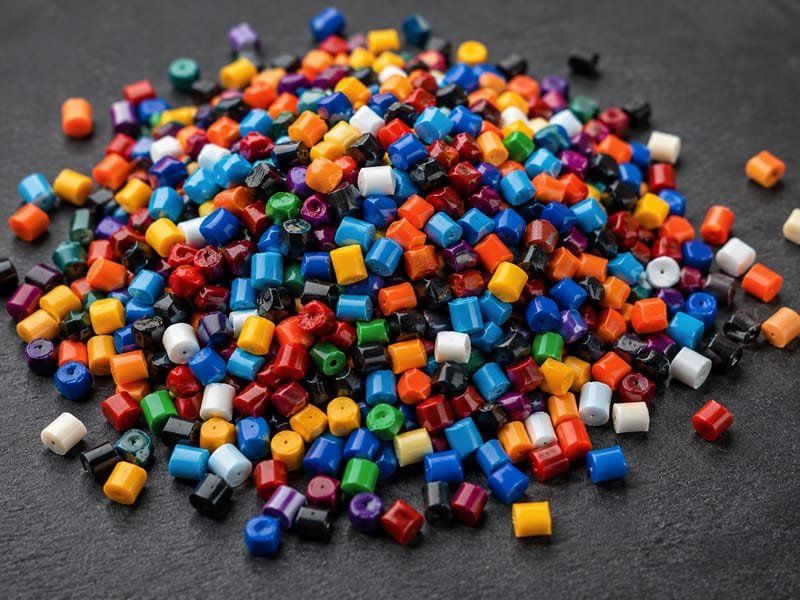
Color Masterbatch
How color masterbatch consistency is measured objectively, and what research shows about why a pigment's lab-measured degradation temperature doesn't guarantee it survives real processing.
Overview
Color masterbatch quality is judged on how consistently it delivers the intended color, and research on pigment thermal behavior during processing shows a genuine trap worth knowing: a pigment’s lab-measured degradation temperature doesn’t necessarily predict whether it survives actual extrusion. This page covers that finding and how color consistency is measured objectively.
What is it?
Color masterbatch is a pigment concentrate used to color plastics. Color consistency and color differences between samples are calculated objectively using ASTM D2244-25, a standard practice for computing color tolerances and differences (such as ΔE) from instrumentally measured color coordinates like CIE Lab*, replacing subjective visual comparison with a numerical method.
Why should I use it?
- Its color consistency can be objectively measured and tracked using a standard color-difference calculation method, rather than relying on visual judgment — see “What is it?” above.
- Choosing a pigment based only on its measured thermal decomposition onset temperature isn’t a complete safety check for processing — see Limitations.
How it’s used
In plastics and polymer applications, color masterbatch is compounded into a carrier resin during processing. A 2024 peer-reviewed study on natural-pigment masterbatches (spirulina, curcumin, beetroot, and chlorophyllin) in PLA and PBS measured thermogravimetric (TGA) degradation onset temperatures for each pigment — for example, 228.5°C for spirulina and 244.19°C for curcumin — to help guide safe processing temperature selection.
Limitations — when it isn’t the right choice
- A pigment’s TGA-measured degradation onset temperature doesn’t guarantee it survives real processing conditions, even when the processing profile stays below that temperature. The same 2024 study found that “only in the case of spirulina pigment it was not possible to obtain blue PLA-based masterbatches as the temperature profile during the processing degraded the pigment” — even though the PLA processing profile peaked at 190°C, well below spirulina’s measured TGA onset of 228.5°C. This means the real thermal and shear stress a pigment experiences during actual extrusion can exceed what a simple TGA onset temperature would predict, so processing trials matter as much as thermal-stability data sheets. Separately, the same study found that even pigments that survived processing could still shift color noticeably under prolonged light exposure: after 50 hours of accelerated xenon-lamp aging, some formulations reached a color difference (ΔEab*) above 5 — the threshold at which, per the study’s own color-difference scale, “the observer notices two different colours.” These findings are specific to the natural pigments and PLA/PBS systems tested and shouldn’t be assumed to apply directly to conventional synthetic pigments like azo or phthalocyanine colorants without separate verification.
Key Applications
The material's role changes by industry — click any industry to see its full page.

Physical Properties
| Property | Typical Value | Note |
|---|---|---|
| Pigment Loading (general-purpose color) | ≈ 60-70% by weight | Typical published value — Oreate AI Blog |
| Pigment Loading (special/high-performance color) | ≈ 20-30% by weight | Typical published value — Oreate AI Blog |
| Letdown Ratio (dosing) | ≈ 1-5% (commonly 2-4%) | Typical published value — industry masterbatch dosing references |
| Carrier Resin | PE, PP, PS, or EVA, often matched to the base polymer | Typical published value — industry masterbatch formulation references |
These are typical published values for the material in general, not a certificate of analysis (COA) for a specific shipment. Actual per-batch values are set by the COA accompanying supply.
Grades
Grade and Specification Guide
These reference codes illustrate grade categories and specifications for comparison and selection. The commercial grade and final specification are determined by your application requirements, the technical data sheet and the batch certificate of analysis.
Standards & Technical References
Every claim on this page traces back to a verifiable reference:
- Tier 1StandardASTM D2244-25 — Standard Practice for Calculation of Color Tolerances and Color Differences from Instrumentally Measured Color Coordinates
- Tier 2University/ResearchSustainability in the Development of Natural Pigment-Based Colour Masterbatches and Their Application in Biopolymers, Polymers (MDPI), 2024, Vol. 16, Issue 15, Article 2116
- Tier 3Industry Technical ReferenceOreate AI Blog — Detailed Explanation of Common Color Masterbatch Formulations (pigment loading ranges)
- Tier 3Industry Technical ReferenceCharming Masterbatch; Colorado Sun Inc — Let Down Ratio industry glossary references
Frequently Asked Questions
How is color masterbatch consistency measured objectively?
Using ASTM D2244-25, a standard practice for computing color tolerances and differences (such as ΔE) from instrumentally measured color coordinates like CIE L*a*b*, replacing subjective visual comparison with a numerical method.
Does a pigment's lab-measured (TGA) degradation temperature guarantee it survives real processing?
Not necessarily. A 2024 peer-reviewed study found that spirulina pigment degraded during processing even though the processing profile (190°C) stayed well below its measured TGA onset temperature (228.5°C).
Can color masterbatch color still shift even after processing succeeds?
Yes. The same study found some formulations reached a color difference (ΔEab*) above 5 after 50 hours of accelerated xenon-lamp aging — the threshold at which the observer notices two different colours.
Do the natural-pigment study's findings apply to conventional synthetic pigments?
This shouldn't be assumed. These findings are specific to the natural pigments and PLA/PBS systems tested and shouldn't be assumed to apply directly to conventional synthetic pigments like azo or phthalocyanine colorants without separate verification.


