
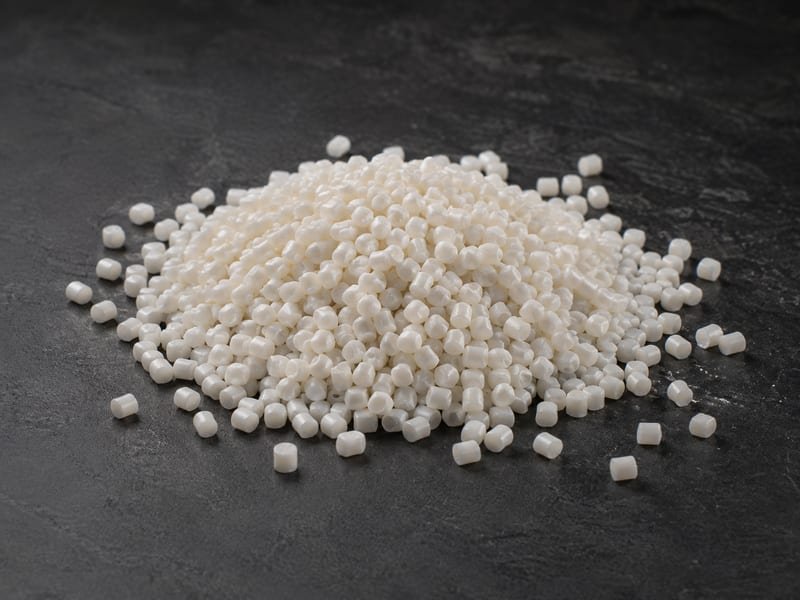
Bio Masterbatch
How bio masterbatch technology is being used to close the gap between industrial and home composting, and what a landmark study found about disintegrating PLA at room temperature.
Overview
Bio masterbatch technology has been used to solve a real, documented gap in PLA’s biodegradability: conventional PLA can pass industrial composting requirements yet still struggle to break down under home-composting conditions. This page covers a landmark study that closed that gap using masterbatch technology, and how industrial compostability itself is specified.
What is it?
Bio masterbatch in this context refers to functional masterbatch technology used to modify how a bioplastic like PLA degrades. Industrial compostability is specified under ASTM D6400-26, an active standard that requires plastics to meet three criteria to qualify: disintegration, inherent biodegradation, and no adverse impact on the resulting compost’s ability to support plant growth, all under industrial composting conditions run at thermophilic temperatures (around 58°C).
Why should I use it?
- It can be engineered to solve a real degradation gap — conventional PLA can meet industrial composting requirements yet still resist breaking down under home-composting conditions — see “How it’s used.”
- Its compostability performance in industrial facilities is governed by a defined, standard specification, not an informal claim — see “What is it?” above.
How it’s used
In plastics and polymer applications, a landmark 2024 study published in Nature used masterbatch technology directly to address this gap: an engineered PLA-degrading enzyme (with an 80-fold activity enhancement from structure-based engineering) was first incorporated into polycaprolactone (PCL) via melt extrusion at 70°C to form an “enzymated” masterbatch, then that masterbatch was compounded into PLA via melt extrusion at 160°C to produce an enzymated PLA film containing 0.02% enzyme by weight.
Limitations — when it isn’t the right choice
- Not all bio masterbatch approaches solve the same problem — industrial composting and home composting are different conditions, and passing one doesn’t guarantee the other. The same 2024 study specifically targeted home-compost conditions (roughly room temperature) rather than the thermophilic industrial conditions (around 58°C) that ASTM D6400 is built around — a gap that matters because conventional PLA is known to degrade poorly at home-composting temperatures even when it satisfies industrial composting requirements. The enzymated PLA film fully disintegrated under home-compost conditions within 20-24 weeks, and its mechanical and degradation properties remained intact during long-term storage beforehand, meaning the enzyme stayed dormant until compost conditions activated it. This means a bio masterbatch chosen for one composting context (industrial vs. home) shouldn’t be assumed to perform the same way in the other; these figures are specific to this enzyme-in-PCL masterbatch system tested in PLA and shouldn’t be assumed to transfer directly to other bio masterbatch formulations.
Key Applications
The material's role changes by industry — click any industry to see its full page.
Physical Properties
| Property | Typical Value | Note |
|---|---|---|
| Carrier Resin | PLA or compatible aliphatic polyester (e.g. PCL) | Definitional |
| Industrial Biodegradation Requirement | ≥ 90% conversion to CO₂ within 180 days at 55-60°C | Typical published value — ASTM D6400 |
| Industrial Disintegration Requirement | < 10% residue after 12 weeks (passing 2mm sieve) | Typical published value — ASTM D6400 |
| Home Biodegradation Requirement | ≥ 90% conversion to CO₂ within 12 months at ≤ 30°C | Typical published value — OK compost HOME (TÜV Austria) / AS 5810 basis |
| Home Disintegration Requirement | ≥ 90% disintegration to < 2mm within 6 months | Typical published value — OK compost HOME (TÜV Austria) / AS 5810 basis |
These are typical published values for the material in general, not a certificate of analysis (COA) for a specific shipment. Actual per-batch values are set by the COA accompanying supply.
Grades
Grade and Specification Guide
These reference codes illustrate grade categories and specifications for comparison and selection. The commercial grade and final specification are determined by your application requirements, the technical data sheet and the batch certificate of analysis.
Standards & Technical References
Every claim on this page traces back to a verifiable reference:
- Tier 1StandardASTM D6400-26 — Standard Specification for Labeling of Plastics Designed to be Aerobically Composted in Municipal or Industrial Facilities
- Tier 2University/ResearchAn engineered enzyme embedded into PLA to make self-biodegradable plastic, Nature, 2024, Vol. 631, pp. 884-890
- Tier 2Certification SchemeTÜV AUSTRIA — OK compost HOME certification requirements (basis for Australian standard AS 5810)
- Tier 3Testing Referencemicrobe-investigations.com / testinglab.com — ASTM D6400 testing requirements summary
Frequently Asked Questions
What is the real gap in conventional PLA's biodegradability?
Conventional PLA can pass industrial composting requirements yet still struggle to break down under the lower-temperature conditions of home composting.
What are the three qualifying criteria under ASTM D6400?
Disintegration, inherent biodegradation, and no adverse impact on the resulting compost's ability to support plant growth, all under industrial composting conditions at thermophilic temperatures (around 58°C).
How did the 2024 Nature study use masterbatch technology to solve the home-compost gap?
An engineered PLA-degrading enzyme was first incorporated into polycaprolactone (PCL) via melt extrusion at 70°C to form an 'enzymated' masterbatch, then that masterbatch was compounded into PLA at 160°C to produce a film containing 0.02% enzyme by weight.
Does passing industrial composting guarantee passing home composting?
No. These are different contexts, and passing one doesn't guarantee passing the other — conventional PLA is known to degrade poorly at home-composting temperatures even when it satisfies industrial composting requirements.


