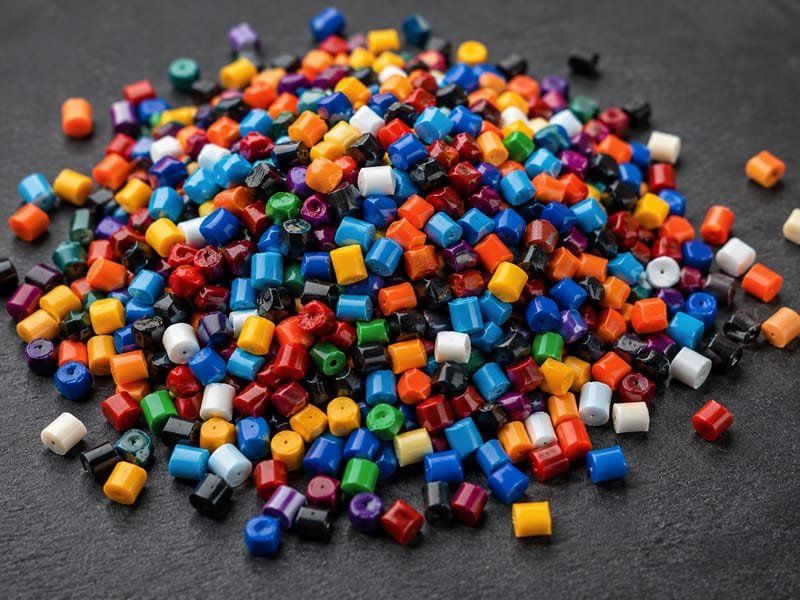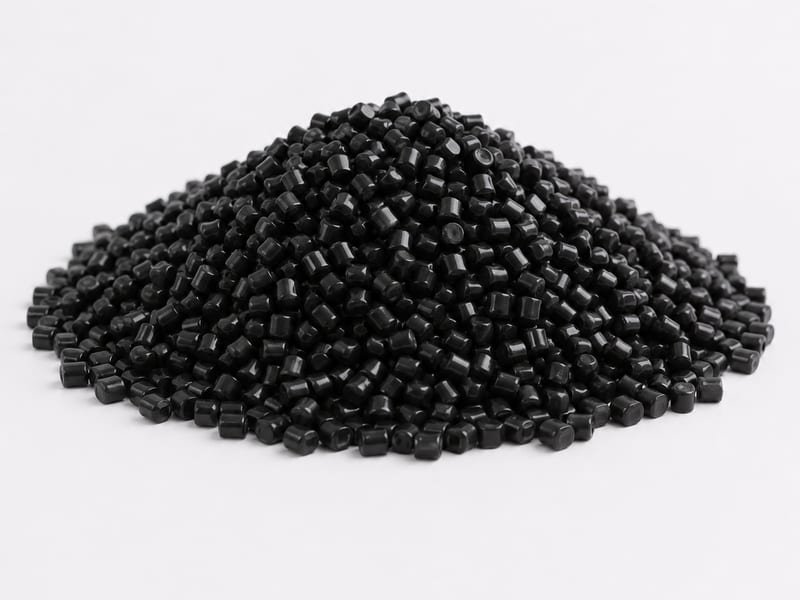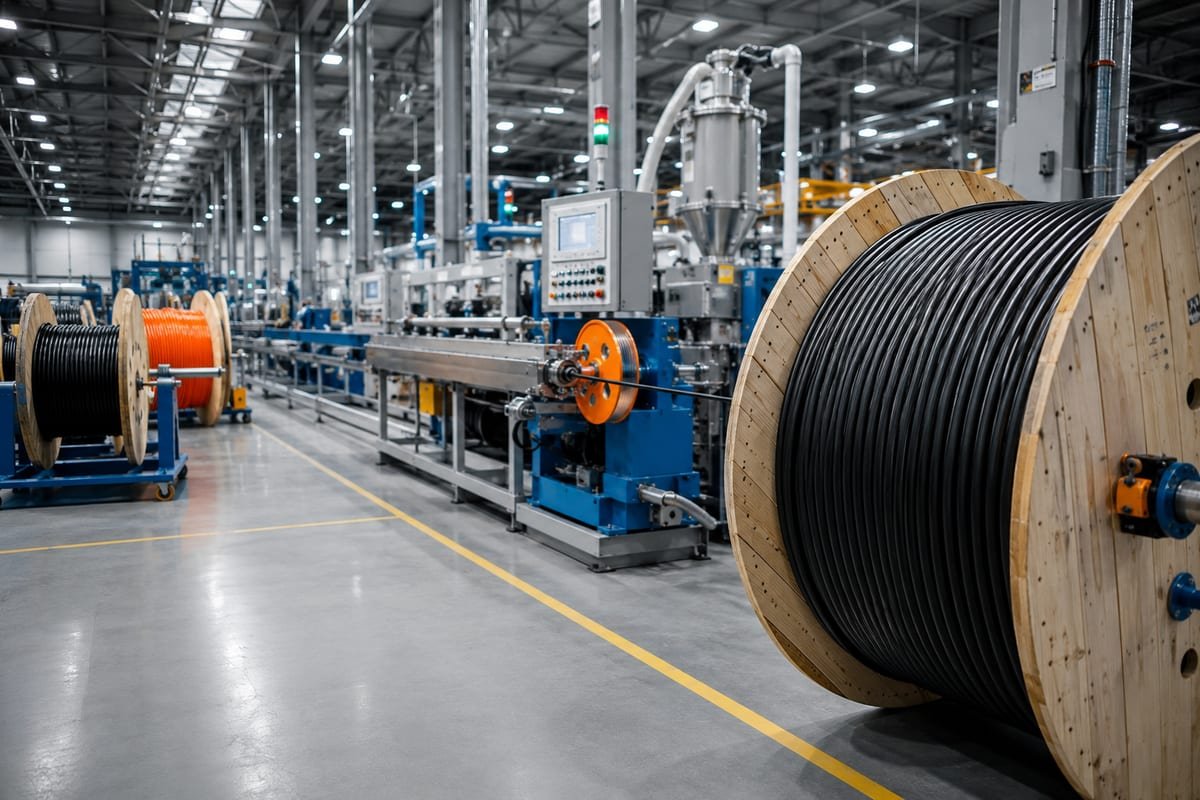
A cable jacket line running the same masterbatch dosage batch after batch can still produce visible color streaks, specks, or a shade that drifts from the previous run — a quality problem that traces back to dispersion quality during extrusion, not to the masterbatch dosage itself being wrong.
Root Causes
Color and black masterbatches deliver their pigment or carbon black as pre-dispersed concentrate specifically so that the extrusion process only needs to disperse that concentrate evenly through the base resin, rather than dispersing raw pigment powder from scratch. But that final dispersion step still has to happen correctly at the jacket line, and industry quality guidance for extruded cable and pipe products documents specific visible defects — un-dispersed particles, color spots, streaks, and surface roughness — that result when it doesn’t, alongside the more fundamental concern of batch-to-batch color and blackness uniformity.
Batch-to-batch color inconsistency is documented as most commonly caused by variation in dispersion quality itself, not by masterbatch formulation drift — meaning the same masterbatch, run through the same nominal process, can still produce inconsistent color if extrusion parameters vary. Screw speed and the temperature profile along the extruder both affect how completely pigment agglomerates break down during processing, and proportional feeding equipment is what keeps pigment concentration consistent across a production run — a mechanical/process variable, not a masterbatch quality variable, though both need to be right for a consistent result.
What This Means for Raw Material Selection
Because dispersion quality depends on the interaction between the masterbatch and the specific extrusion process it runs through, masterbatch selection and process control are not separable decisions for a buyer chasing consistent cable jacket appearance — a masterbatch that disperses well on one line’s screw design and temperature profile is not guaranteed to disperse equally well on a different line, even at identical nominal dosage.
The practical points for a buyer are: specify masterbatch carrier resin and pigment/carbon black dispersion characteristics against the actual extruder type in use (co-rotating twin-screw systems are documented to provide more thorough dispersion through repeated high-shear cycles than simpler single-screw setups), rather than assuming any masterbatch performs identically across equipment; hold screw speed and temperature profile consistent as a process-control discipline alongside masterbatch dosage, since the same recipe run under different process parameters is a documented source of batch-to-batch shade drift; and treat visible surface defects (specks, streaks) as a dispersion diagnostic first — a real-time signal to check process parameters and feeding consistency — rather than assuming a masterbatch quality issue without first confirming the process side is controlled.
Sources: industry technical literature on carbon black and color masterbatch dispersion quality for pipe and cable extrusion (surface defect inspection criteria); general masterbatch industry technical references on pigment agglomeration, dispersion mechanisms, and proportional feeding for batch-to-batch color consistency; general polymer extrusion engineering literature on twin-screw versus single-screw dispersion performance.