
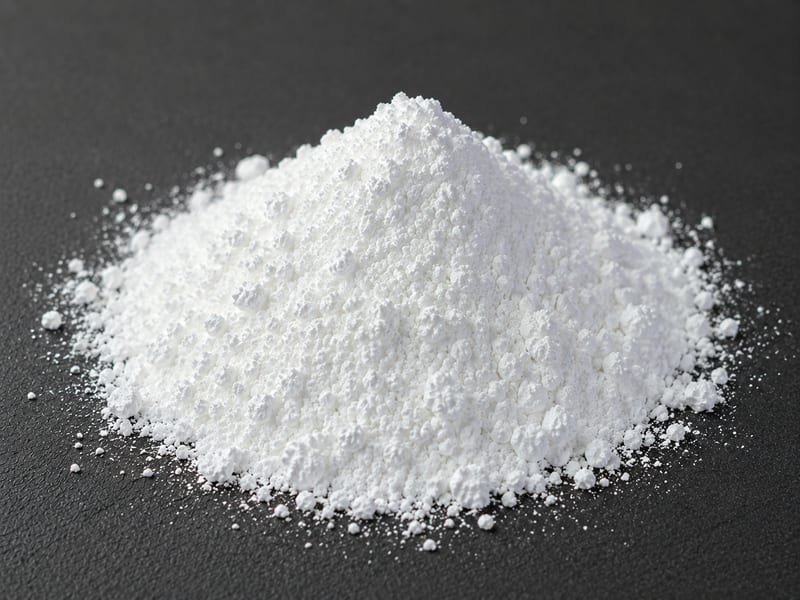
Optical Brighteners for Plastics: Selection and Trials
Evaluate optical brighteners for the resin, processing conditions and viewing light. Compare appearance with a control and request application-specific grade documents.
Overview
Optical brighteners change the perceived whiteness of a material through fluorescence. Select a plastic optical brightener for the resin, processing conditions and lighting under which the finished product will be evaluated. A brighter laboratory plaque under one light source does not establish the same appearance in every application.
Whitening is a different task from stabilization
The existing research describes differences between polymer hosts. That is a reason to test the actual resin and formulation rather than selecting only by additive name. If the problem is degradation during processing or outdoor service, investigate antioxidants or UV stabilizers as appropriate; perceived whiteness does not by itself prove that degradation has been controlled.
BASF’s Tinopal overview presents named brighteners for different applications. Product-family branding is not evidence that a detergent brightener or coating grade is suitable for a particular plastic process.
Screen the candidate for the actual application
| Selection input | What to record | What to compare |
|---|---|---|
| Resin and formulation | Polymer, colorants, filler and recycled content | Candidate guidance and appearance in that complete formulation |
| Processing | Temperature and residence history, addition form and mixing route | Grade-specific processing guidance and repeatable distribution |
| Appearance | Required shade, whiteness or yellowness method and thickness | Control and candidate specimens measured on the same basis |
| Lighting | Measurement settings and intended display or use lighting | Appearance under the relevant conditions, not one convenient lamp |
| End use | Contact conditions and product or market requirements | Documents and tests applicable to the exact material and use |
For resin background, read PP or PET. These links explain material families; they do not certify an additive grade for them.
Include lighting in the trial
Milliken discusses PP appearance under different lighting. Use this as a reason to define how the product will be viewed and measured. Its commercial clarifier discussion does not prove that every brightener will behave identically, or establish the superiority of a product in your formulation.
ASTM E313 is the existing reference for calculating whiteness and yellowness indices. Record the instrument method and measurement settings alongside specimen thickness, formulation and processing history. Keep the control specimen so later lots can be compared under the same conditions.
A controlled color and processing comparison
Obtain the candidate TDS and SDS, including processing and addition guidance. Compare a control formulation with defined candidate levels within that guidance. Check shade and uniformity, as well as the properties required of the finished product. Do not publish a universal dosage from a study performed in a different polymer.
The previously cited polymer-host study supports treating the resin as part of the experiment. Its results concern the tested systems, not an automatic selection rule for all formulations. For color changes that may originate in compounding or molding, see color-masterbatch matching across processes.
Check end-use documentation independently
For a contact-use application, request the grade-specific documentation and assess testing for the actual polymer, concentration and use conditions with the responsible technical team. A migration result for one additive and package cannot be generalized to every optical brightener. The existing research citation is an example of why test conditions matter, not a commercial approval.
Share resin, process, current formulation, appearance target, viewing conditions, end use, quantity and destination when discussing a candidate. This is a reference selection guide; commercial availability and suitability need confirmation separately.
Content reviewed: 8 October 2026. BASF and Milliken sources are linked above; existing ASTM and polymer-host/migration research references remain in the technical-reference section.
Content updated:
Key Applications
The material's role changes by industry — click any industry to see its full page.

Standards & Technical References
Every claim on this page traces back to a verifiable reference:
- Tier 1Industry StandardASTM E313-20(2025) — Standard Practice for Calculating Yellowness and Whiteness Indices from Instrumentally Measured Color Coordinates
- Tier 2University/ResearchEffect of Polymer Host on Aggregation-Induced Enhanced Emission of Fluorescent Optical Brighteners, Schyns, Bennett, Davison & Shaver, ACS Applied Polymer Materials, 2024, Vol. 6, Issue 3, pp. 2031-2040
- Tier 2University/ResearchMigration study of optical brighteners from polymer packing materials to jam squeeze and fruit drink by spectrofluorimetry and RP-HPLC methods, Gandhimathi, Murugavel & Ravi, Journal of Food Science and Technology, 2014, Vol. 51, Issue 6, pp. 1133-1139
- Reviewed 2026-10-08Primary sourceBASF — Tinopal product applications — https://www.basf.com/us/en/products/dispersions-resins-additives/products/tinopal
- Reviewed 2026-10-08Primary sourceMilliken — Lighting context for PP clarifier appearance — https://www.milliken.com/en-us/chemicals/blogs/under-any-light---specifying-the-best-clarifier-for-commercial-lighting
Related Materials


