
Anti-block Agents (Specialty Chemicals)
How different inorganic anti-block agents control slip-additive migration to different degrees in polyethylene film, and why one type's optical clarity can suffer even as another delivers the best friction performance.
Overview
Choosing an inorganic anti-block agent isn’t a one-size-fits-all decision — research comparing three common types in the same film formulation found that the one delivering the best friction control wasn’t the one with the worst optical trade-off, and vice versa.
What is it?
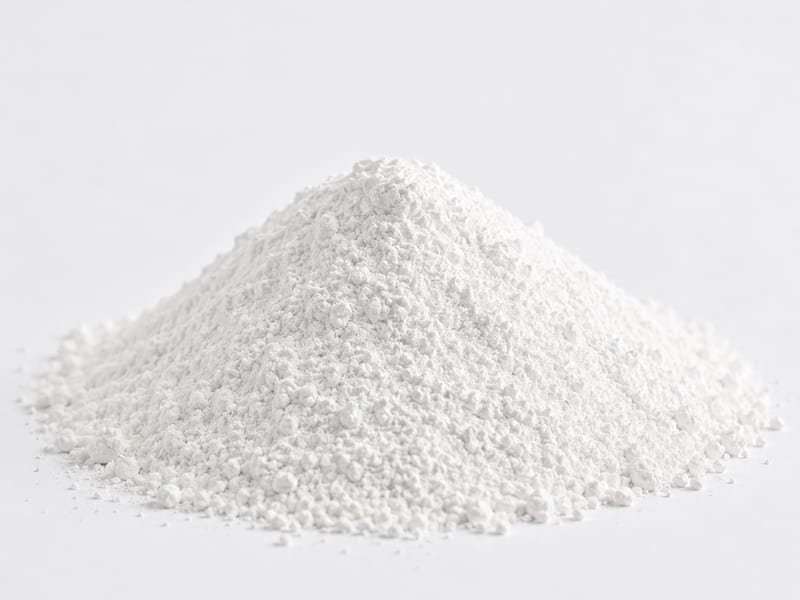
Anti-block agents are fine inorganic particles compounded into plastic film to prevent adjacent layers from sticking together (“blocking”) by limiting how much slip additive migrates to the film’s surface. The industry-standard way of evaluating their effect on film handling is ASTM D1894, which measures the static and kinetic coefficients of friction of plastic film and sheeting.
Why should I use it?
- The right inorganic anti-block can substantially cut how much slip additive migrates to the film surface, improving friction control — see “How it’s used.”
- But inorganic anti-blocks aren’t interchangeable — the same particle characteristics that control migration well can come with a real cost to optical clarity — see Limitations.
How it’s used
A 2024 peer-reviewed study compared three inorganic anti-block types — talc, natural silica, and synthetic silica — at the same 2,000 ppm loading alongside the same slip additive (erucamide, 1,500 ppm) in a low-density polyethylene (LDPE) monolayer film, tracking erucamide migration to the surface by FTIR and friction by ASTM D1894. After seven days, relative erucamide migration to the surface was 44% in the film with no anti-block at all, versus 29% with talc, 36% with natural silica, and 26% with synthetic silica. Synthetic silica reduced migration by up to 39.9% compared to the no-anti-block film and delivered the best friction performance of the three, attributed to its smaller particle size and higher silica content.
Limitations — when it isn’t the right choice
- Being an inorganic anti-block doesn’t guarantee the same trade-offs — particle size and shape matter as much as chemistry. The same study found that natural silica, despite being an inorganic anti-block in the same general category as talc and synthetic silica, produced the highest haze (the worst optical clarity) of all the film formulations tested, due to its coarser and more randomly distributed particle size. Talc and synthetic silica, by contrast, both showed relatively low haze (20.3% and 20.7% respectively). This means selecting an anti-block agent requires weighing migration control and friction performance together with optical clarity for the specific type under consideration — assuming any inorganic anti-block will deliver a similar balance of these properties isn’t supported by this comparison. These findings are specific to the three anti-block types, the erucamide slip additive, and the LDPE monolayer film tested; other polymers, slip additives, or anti-block chemistries would need separate verification.
Key Applications
The material's role changes by industry — click any industry to see its full page.

Physical Properties
| Property | Typical Value | Note |
|---|---|---|
| Chemical Type | Inorganic particulate (talc, natural or synthetic silica) | Definitional |
| Particle Size (D50) | ≈ 1-20 microns, grade-dependent | Typical published value — Evonik TI 1206 / Grace Silica Anti-blocking Agents |
| Synthetic Silica Purity | > 99% SiO₂ | Typical published value — Grace Silica Anti-blocking Agents |
| Typical Masterbatch Loading | 1-5% by weight in film | Typical published value — Evonik TI 1206 |
| Typical Pure Additive Loading | 0.1-0.5% by weight | Typical published value — Evonik TI 1206 |
These are typical published values for the material in general, not a certificate of analysis (COA) for a specific shipment. Actual per-batch values are set by the COA accompanying supply.
Grades
Grade and Specification Guide
These reference codes illustrate grade categories and specifications for comparison and selection. The commercial grade and final specification are determined by your application requirements, the technical data sheet and the batch certificate of analysis.
Standards & Technical References
Every claim on this page traces back to a verifiable reference:
- Tier 1Industry StandardASTM D1894-24 — Standard Test Method for Static and Kinetic Coefficients of Friction of Plastic Film and Sheeting
- Tier 2University/ResearchStudy of inorganic based anti-blocks as migration control of slip additive on surface polyethylene monolayer film, Agustina, Lestari, Adhinanda, Ariesta, Choi, Prananto & Febriani, Acta Chimica Asiana, 2024, Vol. 7, Issue 1, pp. 366-376
Frequently Asked Questions
What is an anti-block agent?
Anti-block agents are fine inorganic particles compounded into plastic film to prevent adjacent layers from sticking together ("blocking") by limiting how much slip additive migrates to the film's surface. Their effect on film handling is measured against ASTM D1894.
How do inorganic anti-block agents work?
They are fine inorganic particles compounded into plastic film to limit how much slip additive migrates to the film's surface, preventing adjacent layers from sticking together ("blocking").
Do all inorganic anti-block agents give the same result?
No. A comparative study using talc, natural silica, and synthetic silica at the same loading (2,000 ppm) found erucamide migration after seven days at 29% with talc, 36% with natural silica, and 26% with synthetic silica — a real difference despite all three belonging to the same "inorganic" category.
What's the potential drawback of natural silica despite controlling blocking effectively?
Natural silica produced the highest haze (the worst optical clarity) of the three formulations tested, due to its coarser and more randomly distributed particle size — while talc and synthetic silica both showed relatively low haze (20.3% and 20.7% respectively).
What standard is used to measure anti-block performance on film?
The industry-standard method is ASTM D1894, which measures the static and kinetic coefficients of friction of plastic film and sheeting.
Do these findings apply to any plastic film or slip additive?
No. These findings are specific to the three anti-block types, the erucamide slip additive, and the LDPE monolayer film tested; other polymers, slip additives, or anti-block chemistries would need separate verification.
Related Materials


