
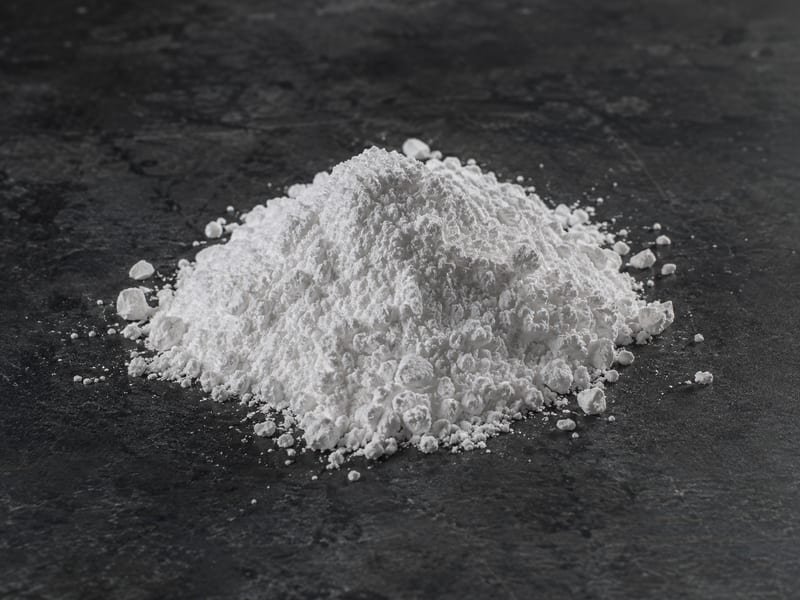
Antioxidants (Specialty Chemicals)
How antioxidants protect polyolefins from oxidative degradation, and why closed-loop mechanical recycling can actually build up antioxidant levels across cycles instead of using them up.
Overview
The usual assumption is that antioxidants get consumed with every reprocessing cycle a plastic goes through — but research on closed-loop recycled polypropylene found the opposite happening: antioxidant levels actually rose across five recycling cycles instead of dropping.
What is it?
Antioxidants are additives used to protect polyolefins from oxidative degradation during processing and service life. The industry-standard way of measuring how well-protected a material is comes from ASTM D3895, which measures the oxidative-induction time (OIT) of a fully stabilized polyolefin by differential scanning calorimetry — a quality-control measure used to monitor the stabilization level in a formulated resin as received from a supplier.
Why should I use it?
- Antioxidants can remain measurably intact through multiple processing steps, not just get used up on first pass — see “How it’s used.”
- In closed-loop recycling specifically, antioxidant levels can build up across cycles rather than deplete, which changes how dosing should be thought about — see Limitations.
How it’s used
A 2025 peer-reviewed study tracked antioxidant consumption and build-up in polypropylene through both open-loop recycling (mixed-waste regranulate) and closed-loop recycling (five successive cycles), using DSC and HPLC analysis. In the open-loop material, the study found intact secondary antioxidant (Irgafos 168) still present at 150-190 ppm even in regranulate batches where no antioxidant had been freshly added, showing that meaningful residual protection can carry over from the original formulation.
Limitations — when it isn’t the right choice
- In closed-loop recycling, antioxidant levels can accumulate across cycles instead of being consumed — the opposite of what a simple “each cycle uses some up” model would predict. The same study found that across five closed-loop recycling cycles with antioxidant re-added each time, the material’s isothermal oxidative-induction time (the same type of DSC measurement ASTM D3895 defines, in minutes) actually rose rather than fell — from 2.9 minutes in Cycle 1 to 36.6 minutes in Cycle 5 — and HPLC analysis showed the primary antioxidant (Irganox 1010) was “hardly used” through the cycles — its intact concentration rose from 460 ppm in Cycle 1 to 2,050 ppm in Cycle 5, more than quadrupling. This means dosing antioxidants for recycled content isn’t simply a matter of topping up what was lost in the previous cycle; in a closed-loop system, repeated top-ups can compound faster than the antioxidant is actually being consumed. These findings are specific to polypropylene under the two recycling scenarios tested; other polymers or different recycling configurations would need separate verification.
Key Applications
The material's role changes by industry — click any industry to see its full page.
Standards & Technical References
Every claim on this page traces back to a verifiable reference:
- Tier 1Industry StandardASTM D3895-19 — Standard Test Method for Oxidative-Induction Time of Polyolefins by Differential Scanning Calorimetry
- Tier 2University/ResearchMonitoring Antioxidant Consumption and Build-Up in Polypropylene During Open-Loop and Closed-Loop Mechanical Recycling, Knoben, Vanhouttem, Wypkema & Subramanian, Materials (MDPI), 2025, Vol. 18, Issue 7, Article 1640
Related Materials


