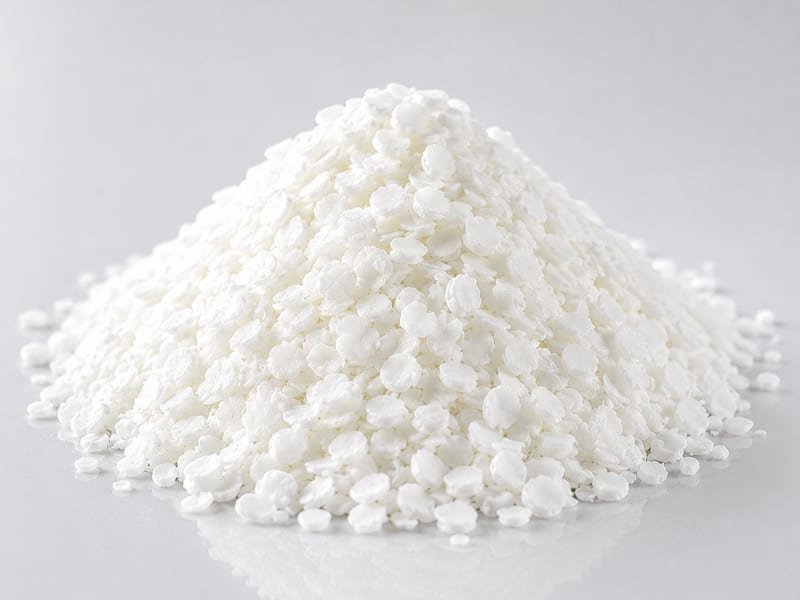
Fortifying a food or beverage with calcium doesn’t only add a nutrient — it can add a taste and texture problem alongside it, and the documented sensory literature shows this isn’t a rare formulation accident but a predictable consequence of how much calcium, in what form, gets added.
Root Causes
Calcium enrichment is documented as capable of adversely affecting the organoleptic properties of the food or beverage it’s added to, with specific, named effects: off-flavors, flavor changes, off-colors, and textural changes. The mechanism is form-specific rather than a generic “minerals taste bad” problem — significant calcium levels supplied by calcium chloride specifically are documented as imparting an unacceptable bitter flavor, while sufficient amounts of many calcium salts more broadly are documented as producing an undesirably dry texture and gritty mouthfeel. This means the calcium source matters as much as the calcium dose: not every calcium-bearing mineral produces the same sensory penalty at an equivalent fortification level.
Off-flavors themselves are documented as originating from several distinct pathways — raw materials, chemical changes during processing and storage, and microbial activity — meaning a sensory problem traced to a mineral fortificant specifically points to the raw-material pathway rather than a processing or storage failure, and should be diagnosed accordingly. Impurities compound this risk: insoluble mineral residues, trace metals, or inconsistent particle size in the fortificant itself are documented as capable of compromising sensory attributes independent of the calcium-form issue, meaning both the mineral form chosen and its purity level contribute separately to sensory risk.
What This Means for Raw Material Selection
Because the sensory penalty from calcium fortification is documented as form-specific rather than universal across all calcium sources, a formulator troubleshooting an off-flavor or gritty-texture complaint should evaluate whether the calcium form itself is a known contributor before assuming a dosage error or unrelated processing issue.
The practical points for a buyer are: evaluate calcium source form specifically for sensory impact at the target fortification level, since documented evidence shows calcium chloride’s bitterness risk and the broader gritty-texture tendency of calcium salts aren’t uniform across all calcium-bearing minerals; request particle size and purity data for the fortificant as a sensory-risk factor, not just a nutritional or safety specification, since insoluble residues and inconsistent particle size are documented as independently capable of degrading sensory quality; and diagnose an off-flavor complaint against its documented possible origins (raw material, processing chemistry, microbial activity) systematically, since a mineral-fortificant-driven off-flavor requires a different corrective action than one originating in storage or processing.
Sources: peer-reviewed and industry technical literature on calcium fortification’s organoleptic effects in food and beverage products; PMC/NCBI peer-reviewed sensory evaluation research on off-tastes in effervescent nutritional supplements; Wikipedia technical reference on off-flavour origins and classification; Masda Chemicals technical guide on food-grade calcium carbonate purity and quality considerations.