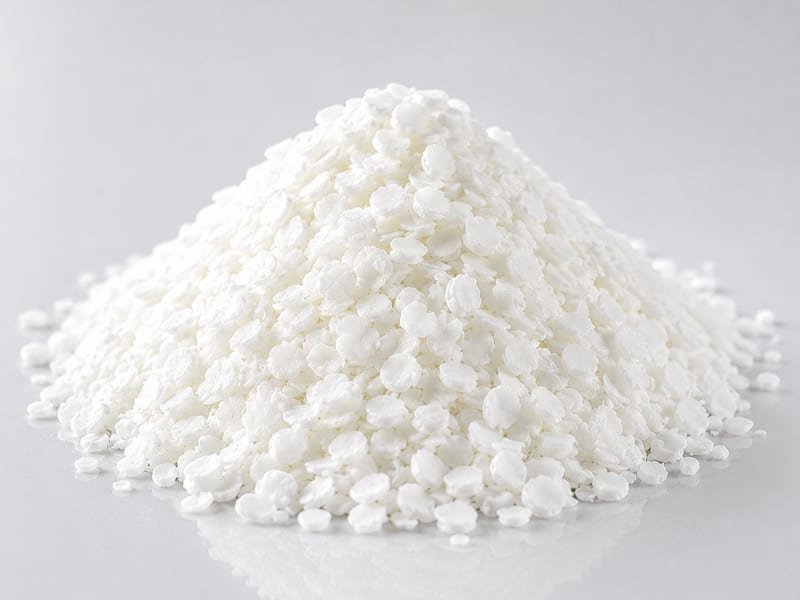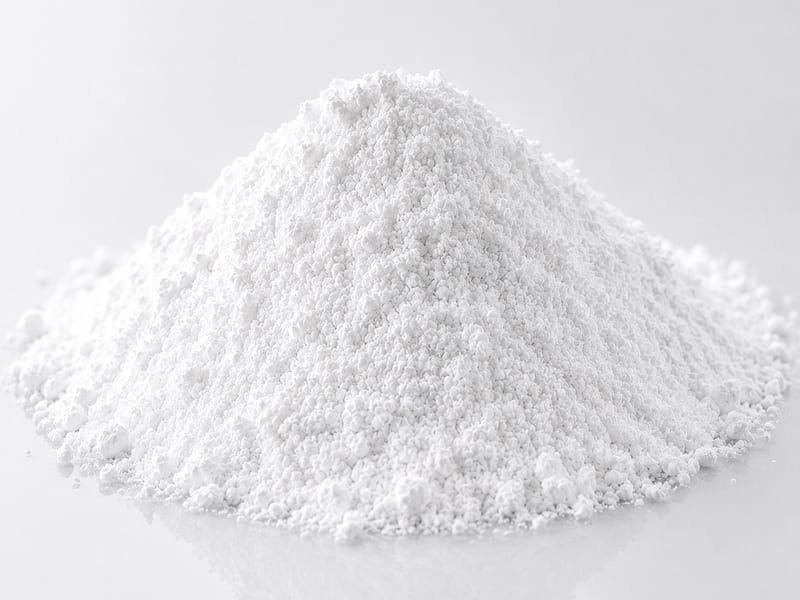
A mineral additive can pass every purity check and still cause a tablet or powder blend to fail — because particle size, not chemical composition, is what governs whether that additive actually disperses evenly rather than clumping in pockets through the batch.
Root Causes
Each mineral additive used across food formulations plays a role that depends on consistent particle behavior: calcium carbonate functions as both a fortification ingredient and inert filler in flour, supplements, and tablets, stearic acid acts as a lubricant in tablet manufacturing and a glazing agent in confectionery, and synthetic precipitated silica works as an anticaking and flow agent keeping powdered products free-flowing. All three functions depend on the particle actually reaching and staying at the location in the formulation it’s meant to occupy — a coarser-than-expected or inconsistently sized lot of any of these can concentrate in pockets rather than distributing evenly through a powder blend or tablet matrix.
The consequence of uneven particle size shows up differently depending on which mineral is affected: inconsistent calcium carbonate particle size directly undermines fortification accuracy, since dosing depends on uniform distribution of the calcium-bearing particles through the batch; inconsistent stearic acid particle size can create localized lubrication differences during tableting, affecting compression consistency; and inconsistent silica particle size changes local anticaking effectiveness, leaving some regions of a powder blend more prone to clumping than others even when the average dosage across the batch looks correct on paper.
What This Means for Raw Material Selection
Because particle size distribution, not average chemical composition, is what determines dispersion uniformity, a buyer troubleshooting inconsistent tablet weight, uneven fortification, or localized clumping should check incoming particle size data for the specific mineral involved before assuming a mixing-process fault.
The practical points for a buyer are: request particle size distribution data, not just a purity certificate, for calcium carbonate, stearic acid, and silica used in blending-sensitive applications, since the documented function of each depends specifically on consistent particle behavior rather than bulk chemistry alone; verify that particle size tolerance is specified relative to the batch’s actual blending equipment and process, since the same nominal grade can disperse differently depending on mixer type and blend time; and diagnose localized quality issues (fortification hot spots, tableting variability, uneven anticaking) by mineral type first, since each of the three functions documented here fails in a distinct, traceable way when particle size drifts.
Sources: general food-manufacturing formulation technical literature on calcium carbonate, stearic acid, and synthetic precipitated silica functional roles in tablets, confectionery, and powdered products; industry technical guidance on particle size distribution’s role in uniform blending and dosing accuracy for mineral food additives.