
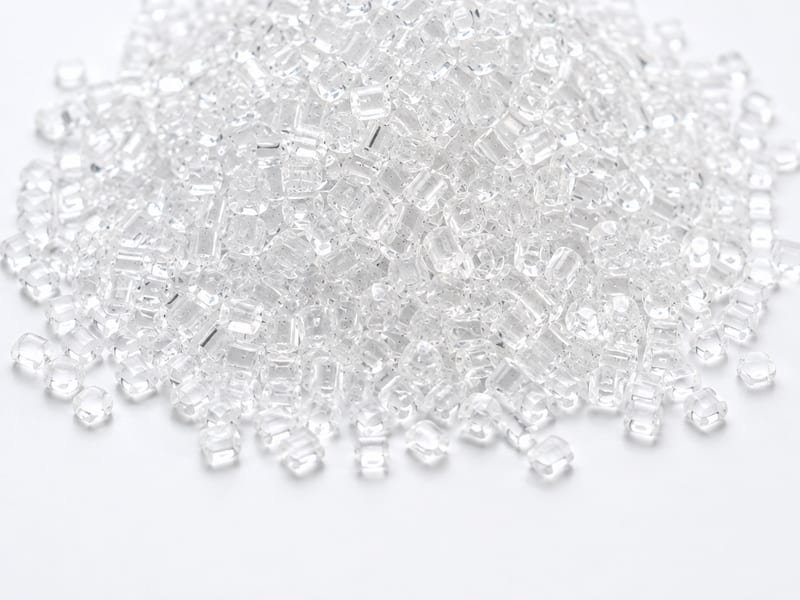
PMMA (Poly Methyl Methacrylate / Acrylic)
How PMMA (acrylic) grades are classified by UV performance, and what a direct weathering comparison against ABS and ASA found — including a real trade-off to weigh.
Overview
PMMA (Poly Methyl Methacrylate, commonly known as acrylic) is a resin used in plastics processing, classified by composition and UV-transmission performance. This page covers that classification system and what a direct weathering comparison study found.
What is it?
PMMA is a polymer in which at least 70% is polymerized from methyl methacrylate, classified under ASTM D788 for molding and extrusion materials. Grades are tied to UV performance: general-purpose use where special UV transmission or stabilization isn’t required, grades for maximum UV light transmission, and grades formulated for resistance to color change or UV filtering.
Why should I use it?
- Its grades are classified specifically around UV transmission and stabilization needs — see “What is it?” above.
- In a direct weathering comparison, it outperformed two other polymers — see Limitations for the trade-off that comes with it.
How it’s used
In Plastics & Polymers, PMMA is used for injection-molded and extruded parts.
Limitations — when it isn’t the right choice
- Weathering exposure still causes measurable hardening, even though PMMA compares favorably to some alternatives. A 2022 peer-reviewed study directly compared PMMA, ABS, and ASA under natural weathering (one year, Turkey) and accelerated methods (Xenon-arc and UV fluorescent lamps per ISO standards). PMMA showed the best performance of the three across every weathering method tested, and tensile stress showed no remarkable change. However, tensile strain (elongation) decreased in the weathered samples — including PMMA’s — indicating the material hardens under photo-oxidation from sustained weathering. This was documented as a three-polymer comparison; it should not be read as PMMA being immune to weathering effects, only as performing comparatively better than the other two polymers tested.
Key Applications
The material's role changes by industry — click any industry to see its full page.

Standards & Technical References
Every claim on this page traces back to a verifiable reference:
- Tier 1StandardASTM D788-24 — Standard Classification System for and Basis of Specification for Poly(Methyl Methacrylate) (PMMA) Molding and Extrusion Materials
- Tier 2University/ResearchThe effects of the weathering methods on the properties of the ABS, ASA and PMMA polymers, Polymer Testing, 2022, Vol. 107, p. 107484


