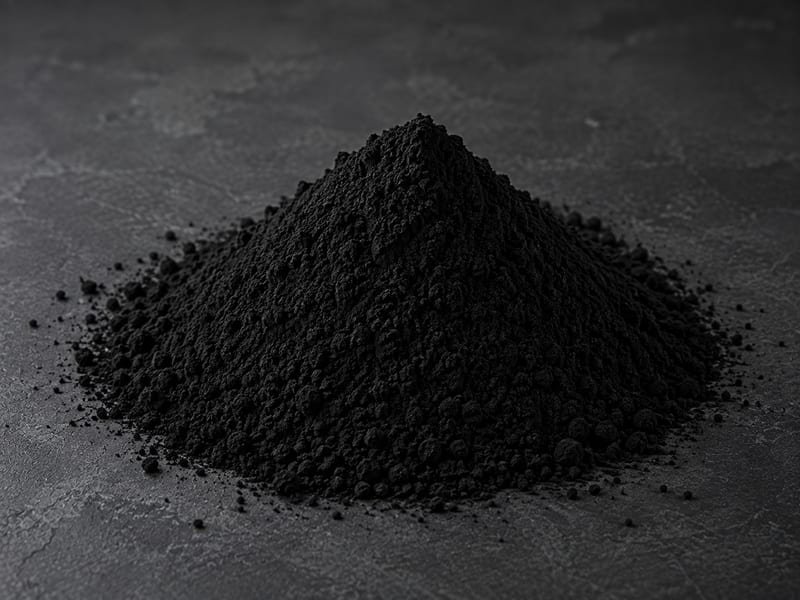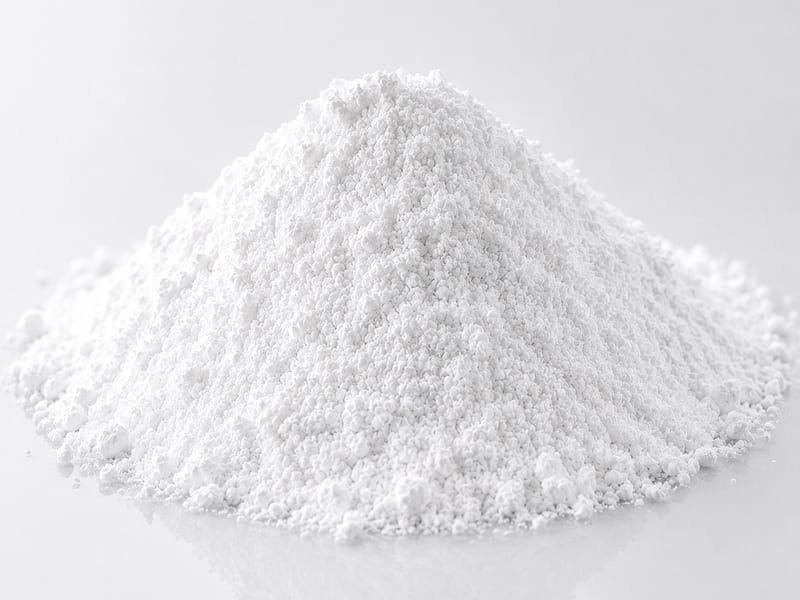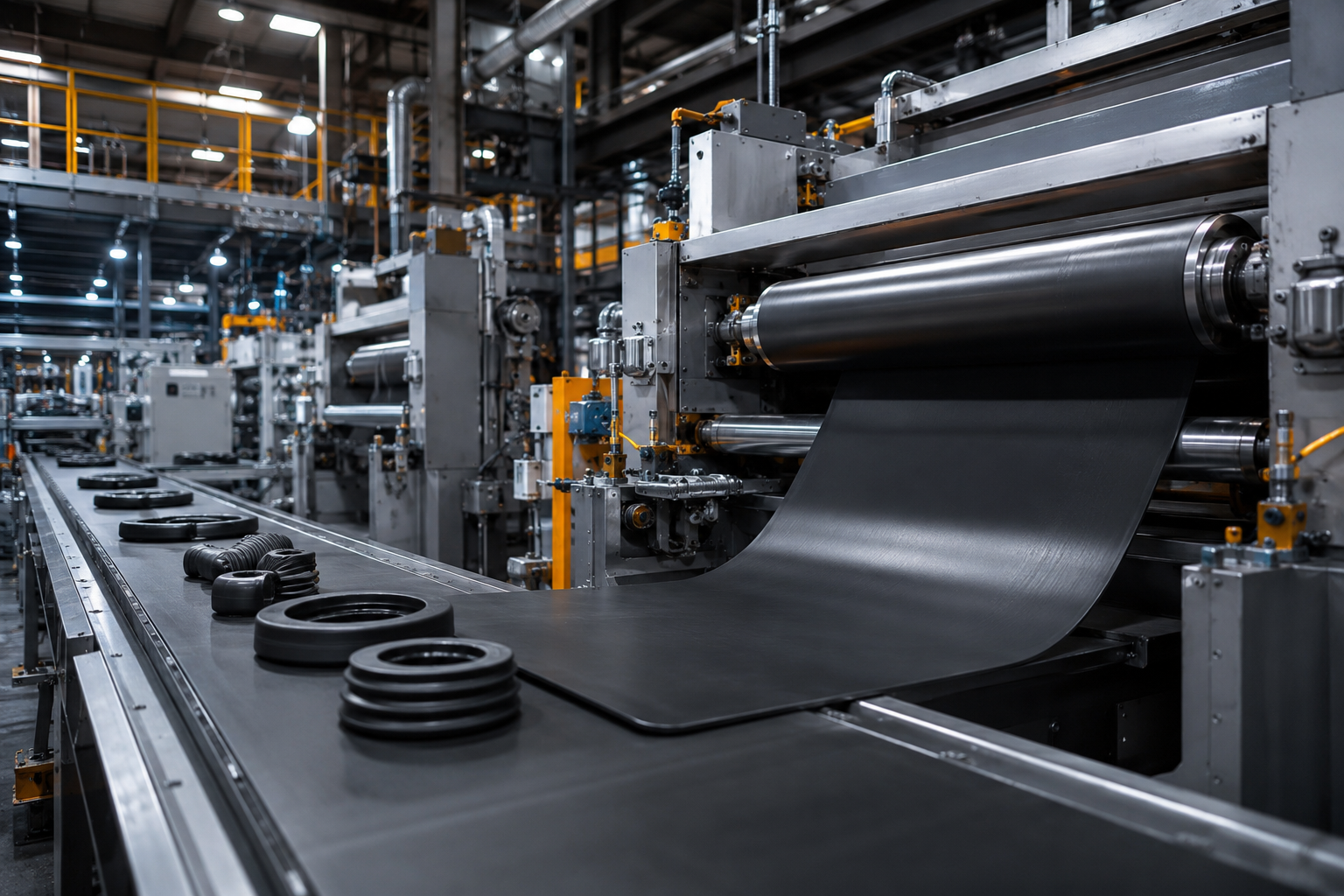
Carbon black and silica are added to rubber for reinforcement, but the property gain they deliver depends on how evenly they actually end up distributed through the rubber matrix — not just how much filler goes into the mixer. Poorly dispersed filler survives as agglomerated clusters that behave as stress concentrators rather than reinforcement, producing localized weak spots and inconsistent mechanical properties that a single bulk-average test on the finished compound can miss entirely.
Root Causes
Neither filler stays as isolated particles once it is in the compound. Carbon black primary particles — typically 10 to 400 nanometers in diameter — fuse into grape-like (aciniform) aggregates that then clump further into larger agglomerates held together by van der Waals forces; precipitated silica particles similarly clump into agglomerates, but held together by hydrogen bonding between surface silanol (Si-OH) groups rather than van der Waals attraction alone. Dispersion is the mechanical work of breaking those agglomerates apart and distributing the resulting aggregates uniformly through the rubber — it is a distinct step from simply metering the correct filler loading into the batch.
Breaking agglomerates down requires sufficient mixing energy — shear and stress delivered during internal mixing or milling — and there is a real ceiling on both sides: too little mixing energy leaves large agglomerates surviving in the finished compound, while pushing mixing time and intensity higher to compensate raises the compound’s heat history, which works against the same batch’s scorch safety margin during processing.
Filler surface chemistry is a second, independent driver. Silica’s silanol surface groups are hydrophilic and hydrogen-bond readily to each other, giving silica a stronger tendency to re-agglomerate into a filler-filler network within a hydrocarbon rubber matrix than carbon black shows at an equivalent particle size — a difference rooted in surface chemistry, not just how much mixing energy is applied. This filler-filler network effect is measurable directly as the Payne effect — the drop in dynamic storage modulus as strain amplitude increases, attributed to progressive breakdown of the filler network under strain — where a higher measured value indicates a stronger, less-broken-down filler network and correspondingly poorer dispersion.
What This Means for Raw Material Selection
For carbon black, dispersion is not a subjective visual call — it is a standardized, testable property. ASTM D1765’s classification system already encodes surface area and structure into the grade designation itself (the first character relates to the grade’s effect on cure rate, the second to surface area), and ASTM D2663 exists specifically to test and grade dispersion quality in a mixed rubber compound. That means a buyer experiencing dispersion-related property variation can specify and verify dispersion rating grade by grade, rather than treating “carbon black” as a single undifferentiated input.
For silica, coupling-agent use is the central selection decision rather than a refinement. A peer-reviewed 2023 study comparing untreated precipitated silica against the same silica paired with a standard silane coupling agent in a natural rubber compound measured the Payne effect at 3.1 MPa without the coupling agent versus 1.3 MPa with it (lower indicates better dispersion), alongside tensile strength nearly doubling, from 15.7 MPa to 28.2 MPa. Because silica’s own surface chemistry drives it toward self-agglomeration in a hydrocarbon matrix, mixing energy alone cannot fully substitute for a coupling agent that chemically links the filler surface to the rubber — without one, a real share of the filler’s reinforcement potential goes unrealized regardless of how thoroughly it is mixed.
The practical takeaway for a buyer: filler dispersion problems are not solved by mixing time or energy alone, though sufficient mixing energy is a necessary condition — grade and surface-treatment selection work alongside it. Carbon black grade choice should reference its ASTM D1765 classification and, where dispersion is a live quality concern, request or verify ASTM D2663 dispersion-rating data rather than treat all carbon black as interchangeable; silica should be specified and used together with an appropriate silane coupling agent, since without one, the same nominal silica loading and the same nominal mixing energy still deliver measurably weaker and less consistent reinforcement.
Sources: ASTM D1765-21, Standard Classification System for Carbon Blacks Used in Rubber Products; ASTM D2663, Standard Test Methods for Carbon Black—Dispersion in Rubber; “Plasma Polymerization of Precipitated Silica for Tire Application,” Molecules (MDPI), 2023, Vol. 28, Issue 18, Article 6646; general rubber-reinforcement literature on filler-filler networks and the Payne effect (e.g., Mark, Erman & Roland, eds., Science and Technology of Rubber, Academic Press).