
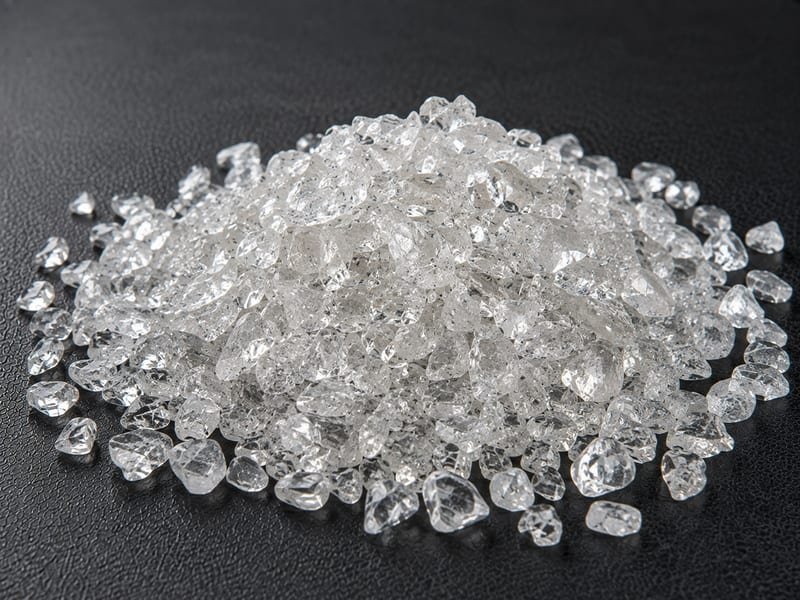
Quartz
How natural quartz-based dimension stone is classified under ASTM C616, and a documented safety finding specific to cutting engineered quartz surfaces — a separate, man-made product.
Overview
Quartz-based dimension stone — natural stone that is sawed, cut, or split, not molded or aggregated from fragments — is classified for structural and building use under its own ASTM specification. This page covers that classification and a documented safety finding specific to a different, man-made form of quartz: engineered stone surfaces.
What is it?
Quartz-based dimension stone is classified under ASTM C616 into three types by free silica content — sandstone (Type I), quartzitic sandstone (Type II), and quartzite (Type III) — with physical requirements covering absorption by weight, density, compressive strength, modulus of rupture, and abrasion resistance. The specification explicitly excludes molded, cast, or otherwise artificially aggregated units, as well as crushed and broken stone.
Why should I use it?
- A dedicated specification classifies natural quartz-based stone into three types with clear physical requirements — see “What is it?” above.
- A separate, man-made form of quartz — engineered stone surfaces — has a directly measured safety consideration worth knowing — see Limitations.
How it’s used
In Plastics & Polymers, Quartz is used as a filler; separately, quartz-based dimension stone (sandstone, quartzitic sandstone, or quartzite) is classified for structural and building use under ASTM C616.
Limitations — when it isn’t the right choice
- Engineered quartz surfaces — a man-made composite of crushed quartz and resin, not the natural dimension stone covered by ASTM C616 — carry a real, well-documented cutting hazard. A 2022 peer-reviewed study characterizing dust from machined engineered stone found respirable crystalline silica content of 70–91% in the tested products, compared to far lower levels in natural stone (30% in black granite, 11% in white marble, 3.5% in white granite). The dust produced was extremely fine — 90% of particles measured 190–825 nanometers — with a specific surface area of 1.43–2.73 m²/g, versus 0.44–0.88 m²/g for natural stone dust. This was documented for the specific engineered stone samples tested during machining, a fabrication-stage risk distinct from packaged raw quartz or from the natural stone covered by C616; it should not be assumed identical for every commercial engineered quartz product without checking its own fabrication safety data.
Key Applications
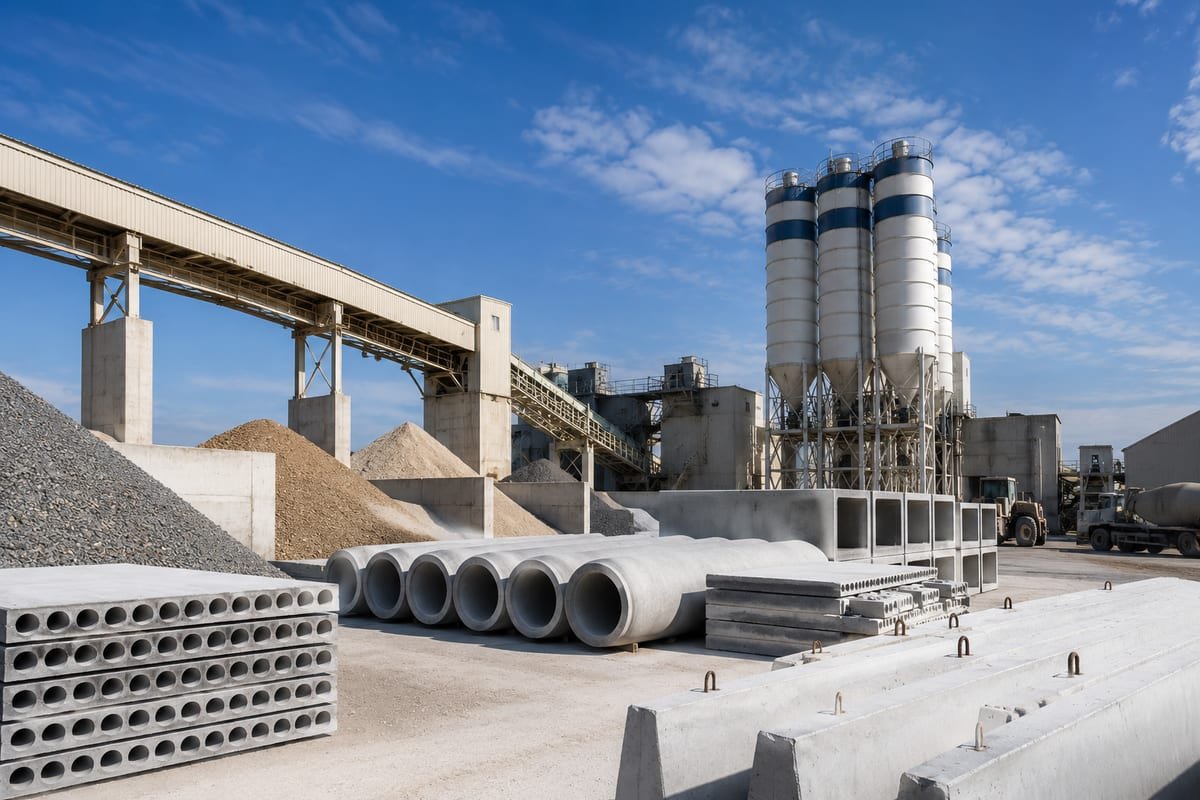
The material's role changes by industry — click any industry to see its full page.

Physical Properties
| Property | Typical Value | Note |
|---|---|---|
| Chemical Formula | SiO₂ | Definitional |
| Mohs Hardness | 7 | Typical published value — ChemicalBook |
| Specific Gravity | ≈ 2.65 | Typical published value — ChemicalBook |
| Melting Point | ≈ 1713 – 1750°C | Typical published value — ChemicalBook |
| SiO₂ Purity (ground filler grade) | ≈ 99.5% | Typical published value — Sibelco (Sikron® M300) |
These are typical published values for the material in general, not a certificate of analysis (COA) for a specific shipment. Actual per-batch values are set by the COA accompanying supply.
Grades
Grade and Specification Guide
These reference codes illustrate grade categories and specifications for comparison and selection. The commercial grade and final specification are determined by your application requirements, the technical data sheet and the batch certificate of analysis.
Standards & Technical References
Every claim on this page traces back to a verifiable reference:
- Tier 1StandardASTM C616/C616M-22 — Standard Specification for Quartz-Based Dimension Stone
- Tier 2University/ResearchCharacterisation of dust emissions from machined engineered stones to understand the hazard for accelerated silicosis, Scientific Reports, 2022
- Tier 3Reference BookChemicalBook — Quartz (CAS 14808-60-7), Physical Properties
- Tier 3Global SupplierSibelco — Sikron® Ground Quartz Filler Technical Data
Frequently Asked Questions
How is quartz-based dimension stone classified under ASTM C616?
Into three types by free silica content — sandstone (Type I), quartzitic sandstone (Type II), and quartzite (Type III) — with physical requirements covering absorption by weight, density, compressive strength, modulus of rupture, and abrasion resistance.
Is engineered quartz surface the same product as natural quartz dimension stone?
No. Engineered quartz surfaces are a man-made composite of crushed quartz and resin, entirely distinct from the natural dimension stone covered by ASTM C616, which explicitly excludes molded or artificially aggregated units.
What safety hazard is documented for cutting engineered quartz surfaces?
A 2022 peer-reviewed study found respirable crystalline silica content of 70–91% in dust from machining the tested engineered stone products, compared to far lower levels in natural stone (3.5–30%), with extremely fine particles (90% measuring 190–825 nanometers).
How is quartz used in plastics?
As a filler in plastics and polymers, separately from quartz-based dimension stone's role in structural and building use classified under ASTM C616.


