
Perlite
How expanded perlite is used across building construction, horticulture, and filtration, and what concrete research shows about its variable effect on compressive strength.
Overview
Expanded perlite’s largest end use, by a wide margin, is building construction products. This page covers that end-use split and what concrete research shows about a real trade-off worth understanding before specifying it as a lightweight aggregate.
What is it?
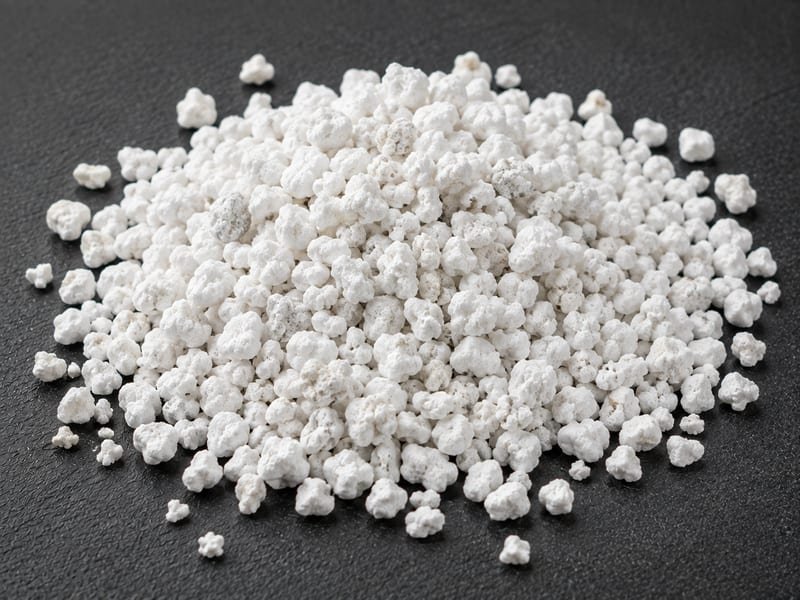
Perlite is expanded into a lightweight aggregate. Per 2024 U.S. Geological Survey data, an estimated 47% of U.S. expanded perlite use went to building construction products, 16% to horticultural aggregate, 14% to filter aids, and the remaining 23% to other uses.
Why should I use it?
- Building construction is documented as its single largest end use, by a wide margin over any other application — see “What is it?” above.
- Its effect on concrete strength has been directly measured, including a real trade-off depending on the mix — see Limitations.
How it’s used
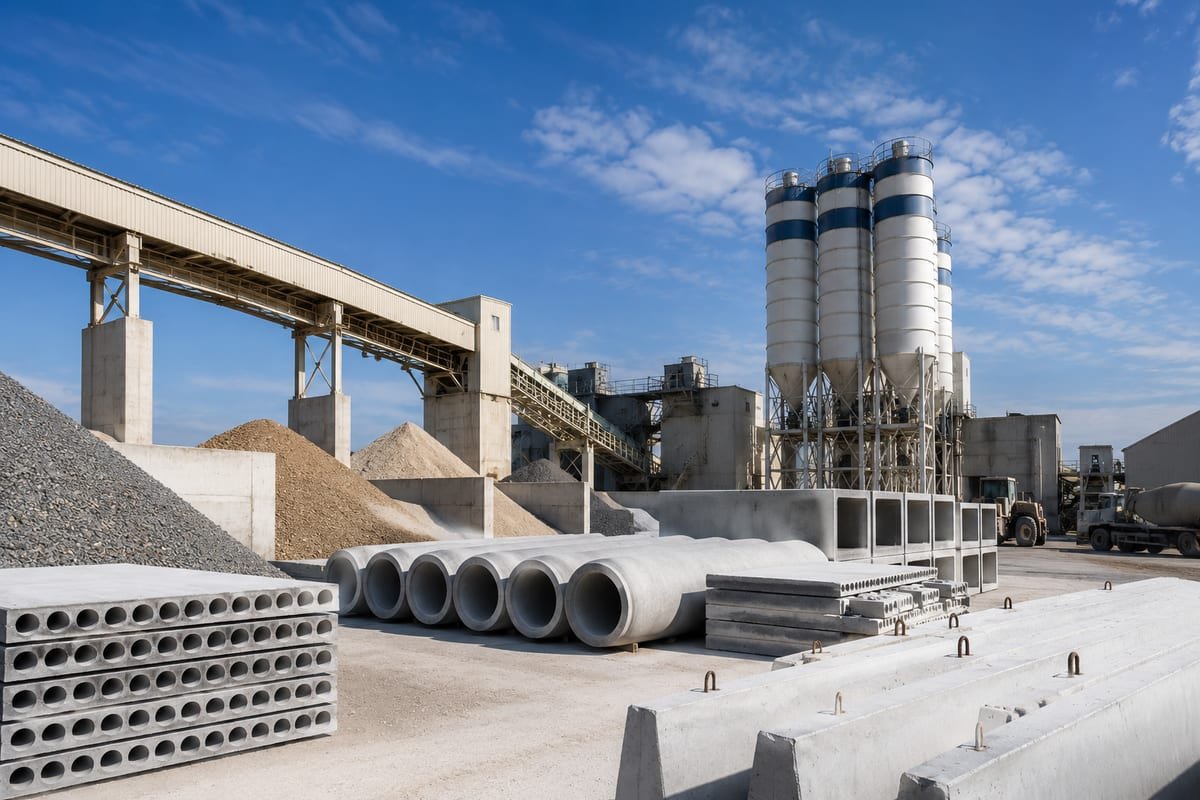
In Construction & Building Materials, perlite is used as a lightweight aggregate in building construction products.
Limitations — when it isn’t the right choice
- Replacing sand with expanded perlite doesn’t reliably improve concrete — its effect on compressive strength depends heavily on the mix design. A 2025 peer-reviewed study tested 18 concrete mixes with varying water-to-cement and fine-to-coarse aggregate ratios, fully replacing natural sand with expanded perlite aggregate in half of them. Higher cement content improved perlite’s internal curing effect and helped offset strength loss, while lower-strength mixes saw a real reduction in compressive strength when perlite replaced sand. The study’s own identified best-performing mix reached 44.2 MPa at 65 days — still a 14% reduction in compressive strength compared to the reference mix, alongside a 5.4% reduction in density and a 14% reduction in thermal conductivity. This was documented across 18 specific tested mixes; it should not be assumed that every concrete formulation responds the same way to perlite replacement without its own mix testing.
Key Applications
The material's role changes by industry — click any industry to see its full page.
Physical Properties
| Property | Typical Value | Note |
|---|---|---|
| Chemical Composition | Amorphous aluminum silicate volcanic glass | Definitional |
| Specific Gravity (expanded) | ≈ 2.2 – 2.4 | Typical published value — Perlite Institute |
| Bulk Density (expanded) | ≈ 30 – 150 kg/m³ | Typical published value — Perlite Institute |
| Softening Point | ≈ 870 – 1090°C (1600 – 2000°F) | Typical published value — Perlite Institute |
| pH | ≈ 6.6 – 8.5 | Typical published value — Perlite Institute |
These are typical published values for the material in general, not a certificate of analysis (COA) for a specific shipment. Actual per-batch values are set by the COA accompanying supply.
Grades
Grade and Specification Guide
These reference codes illustrate grade categories and specifications for comparison and selection. The commercial grade and final specification are determined by your application requirements, the technical data sheet and the batch certificate of analysis.
Standards & Technical References
Every claim on this page traces back to a verifiable reference:
- Tier 1Government PublicationUSGS — Mineral Commodity Summaries 2025, Perlite
- Tier 2University/ResearchInvestigation of the Effects of Water-to-Cement Ratios on Concrete with Varying Fine Expanded Perlite Aggregate Content, Journal of Composites Science, 2025
- Tier 2Industry AssociationPerlite Institute — Physical & Chemical Properties of Perlite; Grades and Sizes of Expanded Perlite
Frequently Asked Questions
What is expanded perlite's largest end use?
Building construction products, by a wide margin over any other application — an estimated 47% of U.S. use per 2024 USGS data.
Does replacing sand with expanded perlite always improve concrete strength?
No. The effect depends heavily on mix design; a 2025 peer-reviewed study found even its best-performing tested mix reached 44.2 MPa at 65 days — still a 14% reduction in compressive strength compared to the reference mix.
What other uses does perlite have besides construction?
Horticultural aggregate (16% of U.S. use) and filter aids (14%), with the remaining 23% going to other uses, per 2024 USGS data.
What other effects does replacing sand with perlite have on concrete besides compressive strength?
In the study's best-documented mix, density dropped 5.4% and thermal conductivity dropped 14% — making perlite as much a thermal-insulation choice as a structural aggregate one.


