Raising filler loading is the most direct lever a compounder has for increasing hardness and abrasion resistance, but it isn’t a free adjustment — published rubber-compounding research consistently shows that the same reinforcing fillers that raise hardness, modulus, and tear strength also reduce elongation at break, and past a certain loading the trade-off can start working against the very tear resistance the filler was added to improve.
Root Causes
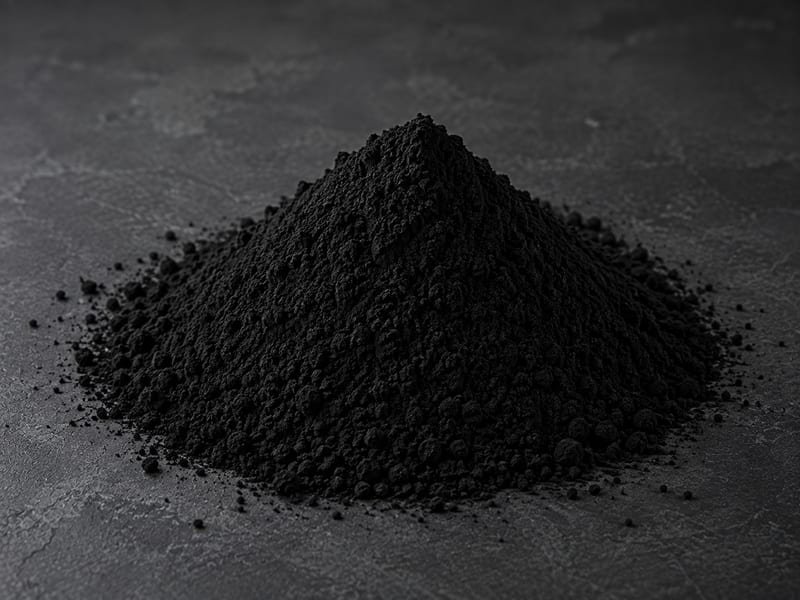
Reinforcing fillers such as carbon black and precipitated silica work by forming strong physical and, for silica when paired with a coupling agent, chemical interactions with the rubber matrix, restricting chain mobility under strain. Research on carbon-black-loaded natural rubber and NR/BR blends documents that increasing carbon black loading raises hardness, tensile strength, modulus, and, up to a point, tear strength, because the filler network reinforces the rubber and resists crack propagation; the same studies document a corresponding fall in elongation at break as loading increases, because the more restricted the rubber matrix becomes, the less it can stretch before it fails.
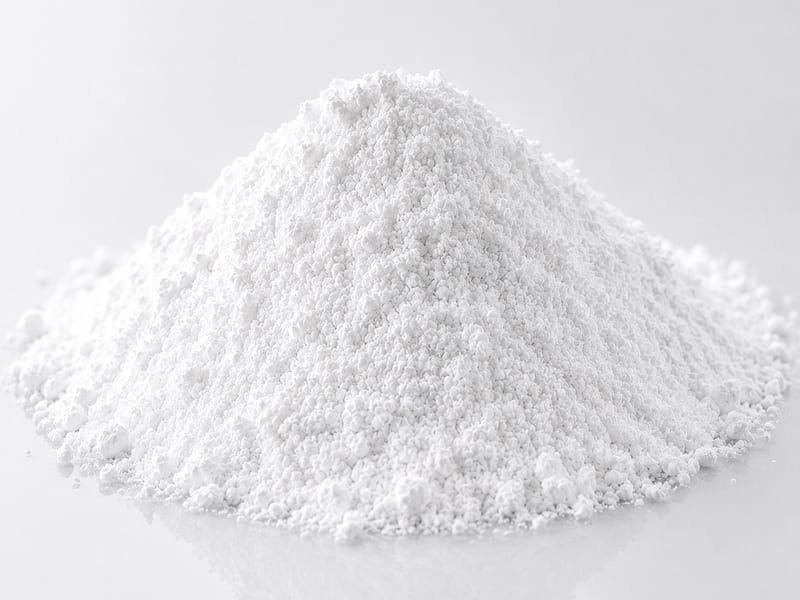
This isn’t a defect to be engineered away — it’s the structural mechanism the reinforcement itself depends on, which is why the literature frames it as a trade-off rather than a fixable inefficiency. Studies on carbon-black-filled NR/BR tread compounds report that tensile properties improve with loading only up to a threshold — commonly cited in the range of roughly 60-70 phr for some carbon black grades — beyond which further loading can start reducing tensile and tear performance too, as the compound becomes overloaded and harder to disperse and process. Calcium carbonate sits at the other end of this spectrum: it’s a non-reinforcing, extending filler used to add bulk and reduce cost without driving the same hardness or tear gains, and correspondingly without the same elongation penalty — the trade-off curve documented for carbon black and silica simply doesn’t apply to it in the same way, because it isn’t reinforcing the matrix in the same way.
What This Means for Raw Material Selection
For a buyer, the practical implication is that filler loading and filler type need to be specified against the compound’s actual end-use failure mode, not against a generic hardness target. A compound destined for an application where abrasion resistance is the dominant failure mode can justify pushing carbon black or silica loading higher even at some elongation cost; a compound destined for a flexing or dynamic-fatigue application, where elongation and tear resistance under repeated strain matter more, needs loading pulled back from what a hardness spec alone would suggest, or reinforcement supplemented with a different filler or polymer strategy rather than simply more of the same filler.
This also means “increase hardness” and “increase abrasion resistance” aren’t requests that can be filled by raising loading without a corresponding conversation about the elongation and tear-strength floor the application requires — and where bulk or cost reduction, rather than reinforcement, is the actual goal, calcium carbonate or a blended filler system is the more appropriate raw-material choice precisely because it doesn’t carry the reinforcing filler’s elongation penalty. Specifying loading level and filler type together, against the part’s real mechanical duty cycle, is the raw-material-selection discipline this trade-off actually requires.
Sources: “Effect of Carbon Black Type and Loading on Properties of Natural Rubber/Butadiene Rubber Blends for Solid Tire Tread Compounds,” on carbon black loading versus tensile, tear, and elongation properties; “The Effect of Carbon Black Loading and Structure on Tensile Property of Natural Rubber Composite,” on loading thresholds and property trade-offs; general rubber-compounding literature on calcium carbonate as a non-reinforcing, extending filler.