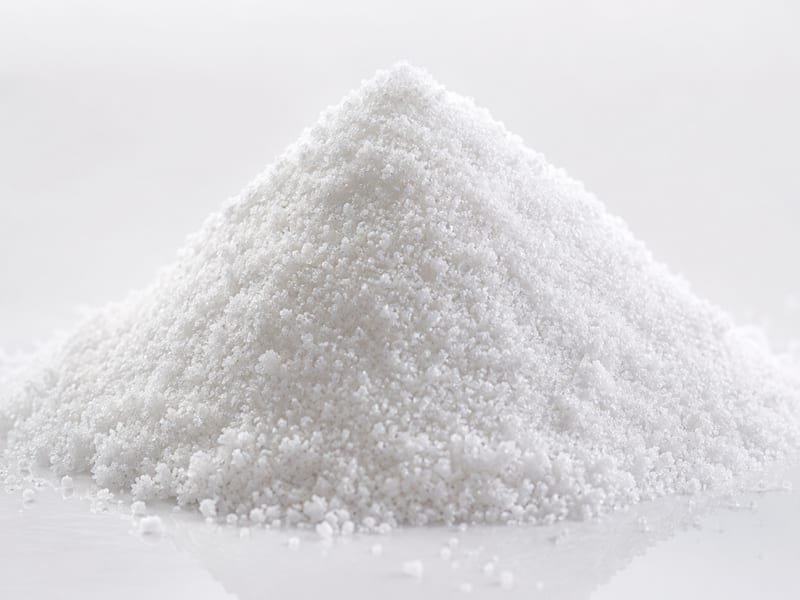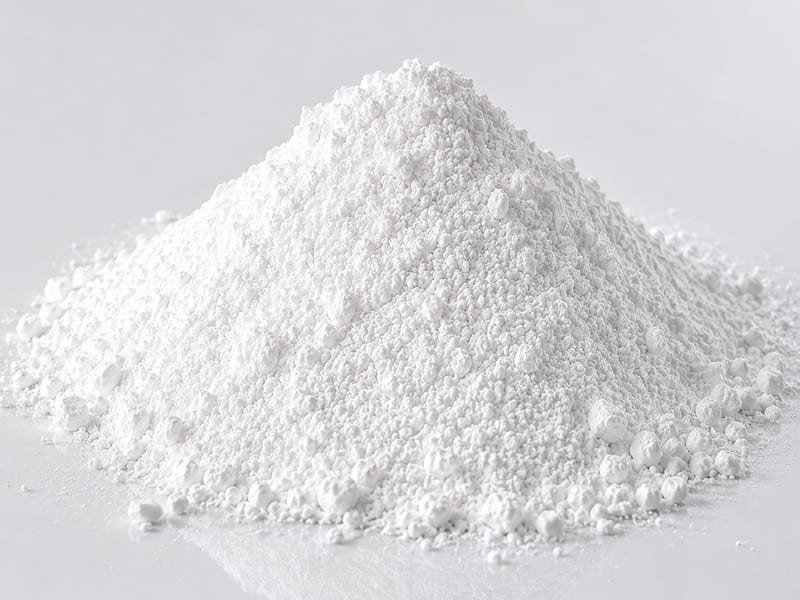

Sodium sulphate is bought in small proportions but its quality shows in the product: in glass it acts as a fining agent and its impurities can change colour, in detergent powders it is a filler that affects flow and bulk density, and in textile dyeing it is an electrolyte. This checklist is written for glass, detergent and textile buyers in Saudi Arabia and the wider GCC who want to compare suppliers on facts before asking for a price.
This is a buyer’s reference, not a PLAXRAW product specification. The material is described on the sodium sulphate reference page. PLAXRAW does not publish prices or stock on this page; to discuss a requirement use the quotation request form, and any grade, availability and price are confirmed in writing for your enquiry.
Step 1: Fix the application before the grade
- Glass: sodium sulphate is used as a fining agent in small amounts in a soda-lime batch; purity, iron and consistent feeding matter. See air bubbles and colour variation.
- Detergent powders: bulk density, particle size and flow decide dosing and powder quality; see bulk density and dosing.
- Textile dyeing: used as an electrolyte; see dosing and shade consistency.
State the use and the form you need. A quote for the wrong form (anhydrous vs hydrated) is not comparable and can change the quantity you must buy for the same sodium sulphate content.
Step 2: Specify the product, not just the name
| Item | What to ask for | Why it matters |
|---|---|---|
| Form | Anhydrous (thenardite) or decahydrate (Glauber's salt), with the supplier grade name | The hydrate carries water, so the same weight contains less Na2SO4. |
| Na2SO4 content | Content on a stated basis (for example dried basis) and the analysis method | Purity figures are comparable only on the same basis and method. |
| Impurities | Iron, insolubles, chloride, magnesium and calcium as reported by the supplier | Iron and insolubles affect glass colour and clarity; others affect detergent and dyeing uses. |
| Moisture | Moisture content and storage guidance | Moisture affects weighing, flow and caking. |
| Particle size | Size distribution and bulk density | Controls batch mixing, segregation and powder behaviour. |
| Origin type | Natural or by-product source, if the supplier can state it | Different sources can carry different impurity profiles; ask for batch data. |
Step 3: Ask for the documents that prove it
Request the current technical data sheet (TDS) and safety data sheet (SDS) for the exact grade and a certificate of analysis (COA) per shipment where issued. For glass, ask for recent COA values for iron and insolubles from the commercial production route, and compare a sample against your control material in your own batch before approving volume. Origin and impurity profile can vary between sources, so compare shipments, not only the first sample.
Step 4: Fix the commercial terms
-
Packaging: 25 kg or 50 kg bags on pallets or big bags, with moisture protection.
-
Quantity and timing: trial quantity, regular volume and delivery window. Dosing is small relative to soda ash in a glass batch (see the soda ash checklist), but a consistent supply matters.
-
Delivery term: state the Incoterms 2020 term you want quoted so offers are comparable.
-
Import requirements: confirm with your customs broker which conformity and customs documents apply to your product in Saudi Arabia or the destination country before shipment.
Compare offers by landed cost per usable unit, including freight and trial cost, not by the ex-works figure alone.
Enquiry template
- Use (glass, detergent, textile or other) and the process.
- Form required (anhydrous or hydrate) and purity basis.
- Impurity limits (iron, insolubles, chloride) and particle-size needs.
- Required documents (TDS, SDS, COA).
- Trial quantity and regular volume.
- Packaging, delivery place and Incoterms term.
Send it through the PLAXRAW quotation form. PLAXRAW reviews it and replies with the relevant questions or options; it does not promise stock, specifications or lead times before the details are confirmed.
Related reading
- Air Bubbles and Gas Inclusions
- Color Variation Between Glass Production Batches
- Bulk Density Control in Detergent Powder for Accurate Dosing
- Sodium Sulphate Dosing and Shade Consistency in Reactive Dyeing
Sources and editorial scope
Prepared by the PLAXRAW editorial team on 15 October 2026. This is editorial buying guidance, not PLAXRAW laboratory data, and it contains no price, stock or lead-time commitment. Standards are named so you can ask a supplier which method applies; consult the current edition of each standard for its scope.
- USGS — Mineral Commodity Summaries, Sodium Sulfate (January 2013, the last edition published before USGS discontinued coverage).
- Min’ko N.I. and Binaliev I.M., Role of Sodium Sulfate in Glass Technology, Glass and Ceramics, 2013, vol. 69, pp. 361–365.
- Aysha T. et al., Eco-friendly salt/alkali-free exhaustion dyeing of cotton fabric with reactive dyes, Scientific Reports, 2022, vol. 12, article 22339.
- ICC — Incoterms 2020.
Content updated: