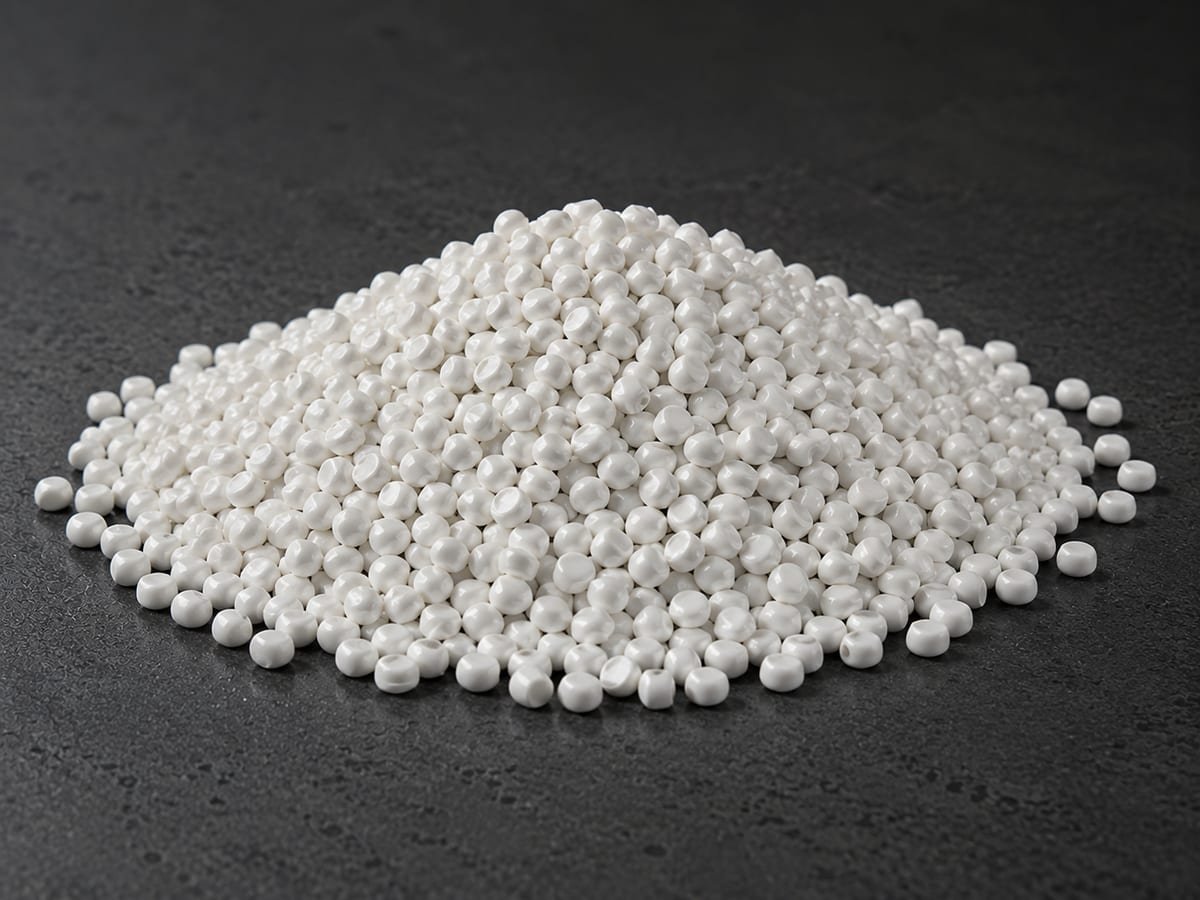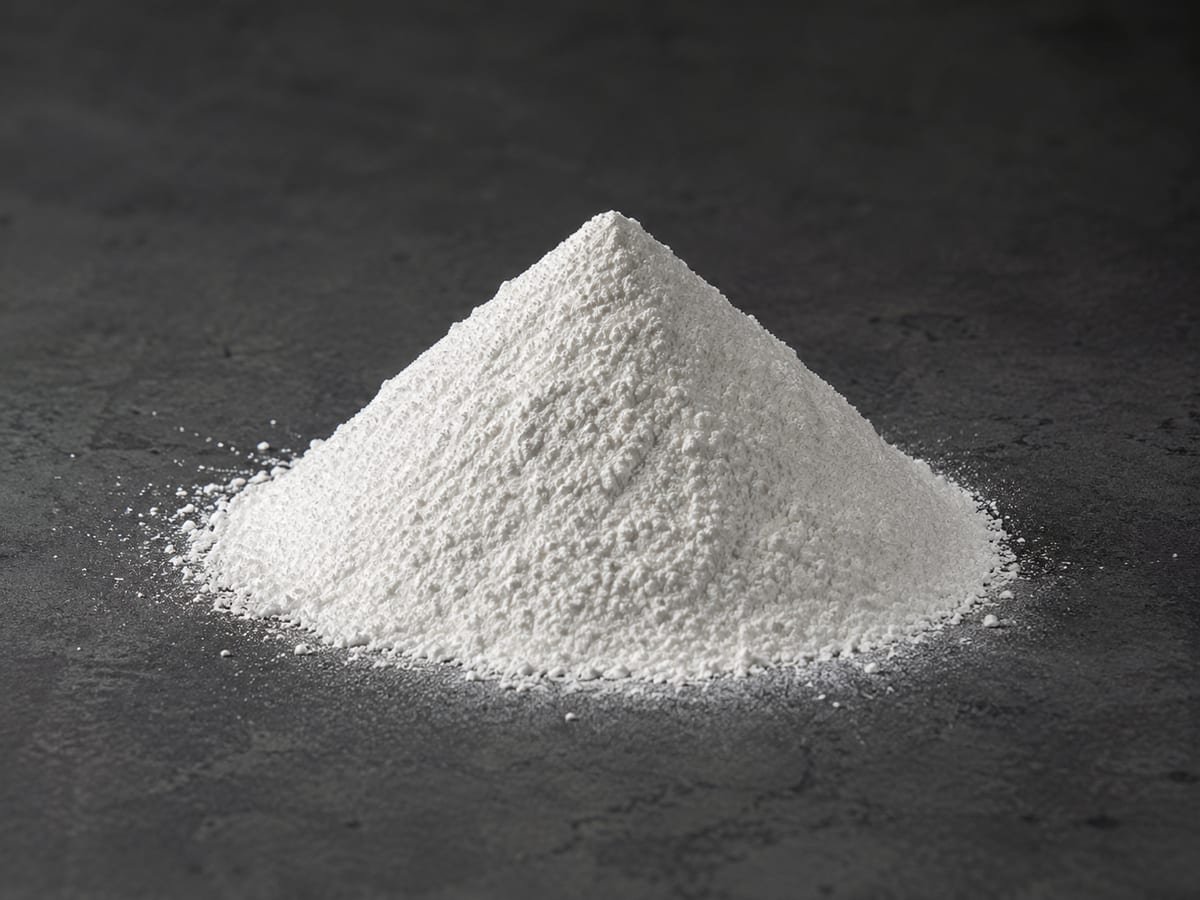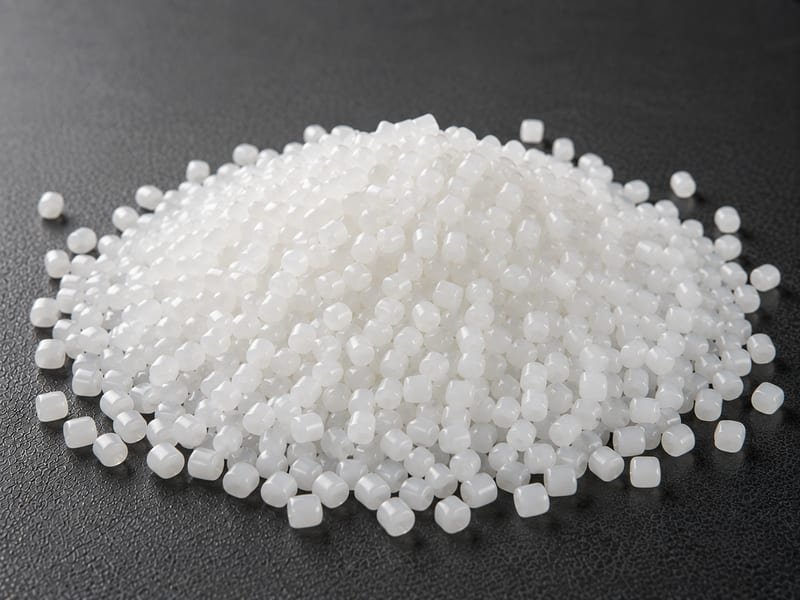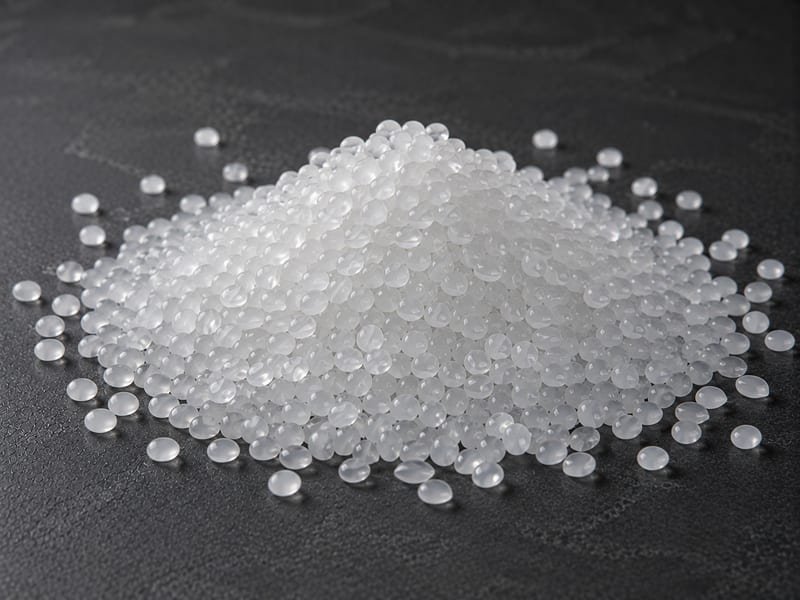

Filler masterbatch is bought on a data sheet and proven in a trial, not chosen on price per kilogram. A bag that costs less per kilogram can cost more per accepted product if it raises scrap, forces a thinner process window or fails a seal or tear requirement. This checklist sets out what to specify, what to verify and how to write an enquiry that a supplier can answer with a grade instead of a list of questions.
It is a buyer’s reference, not a PLAXRAW product specification. The material is described on the filler masterbatch reference page. PLAXRAW does not publish prices or stock on this page. To discuss a requirement, use the quotation request form; any grade, availability and price are confirmed in writing for your enquiry.
Define what the concentrate must do in your product
Start from the finished product: PE film or bags, PP raffia tape, injection-moulded parts or something else. Write the mandatory limits first (thickness, tear and seal behaviour, appearance, any regulatory restriction) and the control material you use today. A masterbatch is judged against that control, not against another supplier’s brochure.
Specify the concentrate
| Item | What to request | Why it matters |
|---|---|---|
| Carrier resin | Carrier type (PE or PP family) and its flow figure with the test conditions | The carrier must be compatible with your base resin; a PE-carrier grade is not automatically suitable for PP. |
| Mineral content | Calcium carbonate content of the concentrate, and the method (for example ash content, ISO 3451-1) | The concentrate loading is not the loading in your product. |
| Filler particle size | Median and an upper-size figure, plus the surface treatment declared by the supplier | Coarse particles and poor treatment are linked to dispersion defects and process problems. |
| Moisture | Moisture figure, storage and packaging protection | Moisture in filled compounds can cause voids or surface defects during extrusion. |
| Letdown guidance | The supplier's recommended addition range for your resin and process | Dosage is qualified by trial; the data sheet gives the starting range. |
| Documents | TDS and SDS for the grade, COA per shipment, any regulatory declaration | Industrial grades do not cover food-contact or other regulated uses by default. |
Work out the actual filler content
The mineral content of the finished product is the share of concentrate multiplied by the mineral content of the concentrate. Adding 20% of a concentrate that is 70% mineral gives about 14% mineral in the product. This is arithmetic for comparing offers on the same basis, not a dosage recommendation. Two quotes with different concentrate loadings are comparable only after you convert both to the same mineral content in the product.
Compare cost per accepted product
Price per kilogram of concentrate is only one input. Compare:
- the resin saved at your qualified letdown level,
- changes in scrap, line speed or film gauge control,
- any extra cost for additives that the filled formulation needs,
- freight, packaging and the delivery term (state an Incoterms 2020 term so offers use the same basis).
Run a controlled trial before volume
- Request a sample from the commercial production route and record its identification and storage condition.
- Keep the resin, additives and process settings constant and change one variable at a time.
- Record the observations that matter for your product: dispersion, visible defects, thickness control, tear and seal behaviour, scrap.
- Retain control and trial samples and repeat any promising result before approving the supplier.
Operating settings and acceptance limits come from your resin supplier’s guidance and your own specification. For defects that look like filler dispersion problems see the dispersion troubleshooting guide, and for the filler itself see coated vs uncoated calcium carbonate.
Enquiry template
Include in your first message:
- Product and process (for example blown film, raffia tape), base resin and current additives.
- Current filler or masterbatch, if any, and the reason for the change.
- Target letdown range or “open to recommendation”.
- Required documents (TDS, SDS, COA, any declaration).
- Trial quantity and regular volume.
- Packaging, delivery place and Incoterms term.
Send it through the PLAXRAW quotation form. PLAXRAW reviews it and replies with the relevant questions or options; it does not promise stock, specifications or lead times before the details are confirmed.
Tool
Sources and editorial scope
Prepared by the PLAXRAW editorial team on 14 October 2026. The checklist and trial workflow are editorial guidance, not PLAXRAW laboratory results.
- Omya — polymer packaging and application-specific mineral products.
- Omya — Omyalene 2012 A-LN product page, cited as an example of a manufacturer data sheet for a filler masterbatch.
- ICC — Incoterms 2020 rules.
- ISO 3451-1 (ash determination for plastics) is named so you can ask which method a supplier uses; consult the current standard for its scope.
Content updated: