
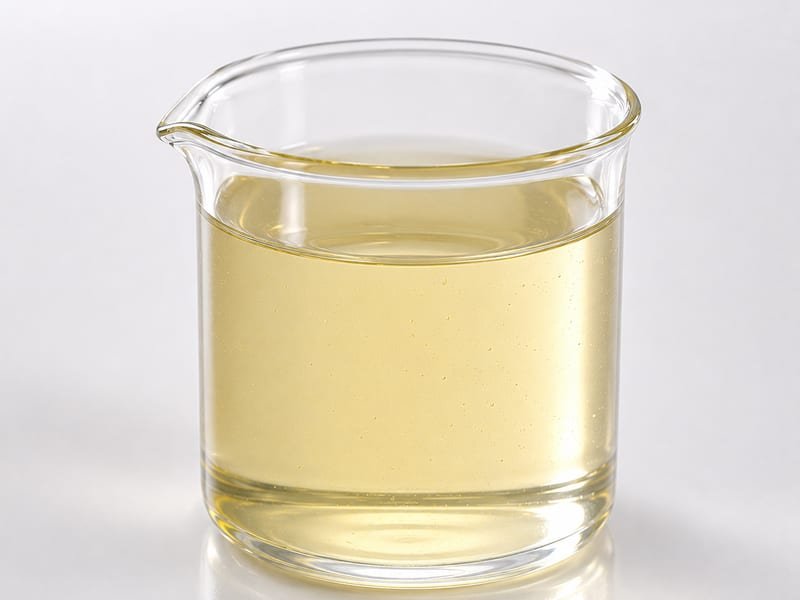
Vinyl Ester Resin
How vinyl ester resin reactivity is tested under ASTM D7029, and a documented finding on why water immersion causes embrittlement even when total water uptake stays low.
Overview
Vinyl Ester Resin’s reactivity after mixing with an initiator is measured under a standardized test method shared with unsaturated polyesters. This page covers that test method and a documented finding on why water immersion causes embrittlement even when total water uptake stays low.
What is it?
Vinyl Ester Resin’s reactivity is tested under ASTM D7029, which measures the gelation and exotherm curve at 82.2°C (180°F) after the resin is mixed with an initiator — used to assess how the resin is expected to perform during processing.
Why should I use it?
- Its processing reactivity is measured by a standardized test shared across the resin family — see “What is it?” above.
- Its behavior under sustained water exposure has been directly measured, including a trade-off worth knowing — see Limitations.
How it’s used
In Plastics & Polymers, Vinyl Ester Resin’s reactivity is evaluated under ASTM D7029 as part of assessing its processing performance.
Limitations — when it isn’t the right choice
- Low total water absorption doesn’t mean the resin stays tough under sustained immersion. A 2009 peer-reviewed study on a neat, unreinforced commercial vinyl ester resin grade found that water uptake reached only about 0.80% at saturation (around 51 days at 60°C) — a modest figure. Despite that, strain at fracture collapsed from 8.03% before exposure to just 0.19% after only 16 days of immersion, indicating rapid embrittlement. The glass transition temperature followed a two-phase pattern: it first rose slightly, from 117.20°C unaged to 118.54°C at 16 days (attributed to post-cure), then declined to 110.77°C at 36 days and 107.65°C at 64 days as the resin progressively plasticized. This was documented for one specific unreinforced commercial grade; it should not be assumed that every vinyl ester formulation embrittles at the same rate without checking its own immersion data.
Key Applications
The material's role changes by industry — click any industry to see its full page.

Standards & Technical References
Every claim on this page traces back to a verifiable reference:
- Tier 1StandardASTM D7029/D7029M-24 — Standard Test Method for Determination of Reactivity of Unsaturated Polyesters and Vinyl Esters at 180.0°F (82.2°C)
- Tier 2University/ResearchThe effects of water absorption on an ester vinyl resin system, Materials Research, 2009


