
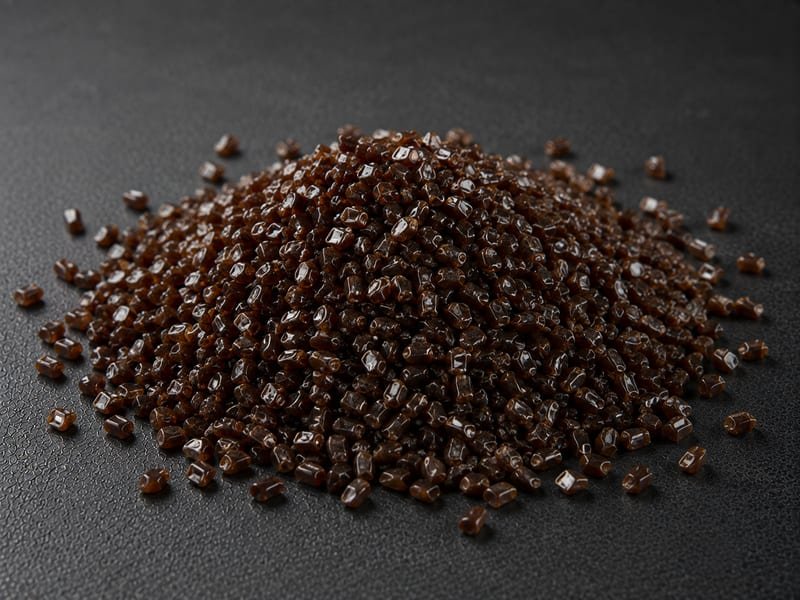
Phenolic Resin: Novolac, Resole and Application Selection
Compare novolac and resole phenolic resins by form, application and grade documents. Separate cure instructions from thermal-degradation data and define trial criteria.
Overview
Phenolic resin is a family of thermosetting binders and molding materials, rather than one interchangeable formulation. Selection depends on resin family, supplied form, processing route and the finished product. Identify whether the project concerns a molding compound, abrasive, refractory binder or another application before comparing candidates.
Novolac and resole: identify the resin family
Bakelite’s phenolic-materials overview distinguishes novolacs and resoles and their supplied forms. Ask for the exact grade and cure-system instructions, not simply a quotation for “phenolic resin.”
| Selection route | Information to establish | Comparison to make |
|---|---|---|
| Novolac resin | Resin form and specified curing system, including whether a curing agent is already present | Flow, cure behavior and processing instructions for the named grade |
| Resole resin | Supplied liquid or other grade form, reactive characteristics and handling instructions | Solids, viscosity and cure guidance where reported in the TDS |
| Filled molding compound | Resin system plus reinforcement, filler and other constituents | Finished-compound properties and relevant molding specification |
Bakelite identifies hexamine as a curing agent for industrial phenolic resins. That does not establish an addition rate for every novolac, or mean that every supplied product requires the user to add it. Confirm what is already in the formulation and follow the grade-specific instructions.
Match the form to the application
| Application question | What to request | What the name alone cannot prove |
|---|---|---|
| Thermoset molding | Complete compound identity, molding guidance and required mechanical, thermal or electrical data | That a neat resin and a filled compound are substitutes |
| Abrasive bonding | Binder grade, liquid/powder route and processing guidance | That every phenolic powder has the same cure or flow |
| Refractory bonding | Grade guidance for the intended refractory composition and process | That a molding-grade specification qualifies the binder |
Bakelite Select’s abrasive range provides examples of distinct powder novolac and liquid resole products. These are examples of application-specific selection, not PLAXRAW stock declarations. If the requirement is a different thermoset system, compare its specification with epoxy resin or melamine resin rather than substituting by name.
Read the data sheet on a consistent basis
For each candidate, record resin family, form, batch identity, viscosity test conditions where applicable, solids or volatile basis, cure data and storage instructions. Distinguish supplier typical values from agreed acceptance limits. ASTM D5948 is a molding-compound specification; it does not set one purchasing specification for every liquid binder or neat phenolic resin.
Use the SDS for handling and exposure controls, and the controlled supplier instructions for mixing and processing. Storage life and cure schedule are grade-specific information; they should not be inferred from a general family description.
Cure behavior is not a thermal-degradation recipe
The previously cited BioResources study investigates thermal degradation and stability of particular phenol-formaldehyde systems. Its temperature stages should not be presented as a universal production cure schedule. Ask instead for the candidate’s cure characterization and recommended process window, then validate the actual compound and part.
An industrial trial record can include mix and lot identity, equipment and process history, observed flow and demolding behavior, appearance, dimensions and the tests required by the product specification. Set acceptance limits before the comparison and retain a control sample. Do not approve a candidate from a favorable thermal curve alone.
Prepare an application-specific enquiry
Share the product, resin or compound route, current grade, process, required tests, quantity and destination. Specify whether you need a resin, a ready-to-process compound or technical selection guidance. Commercial availability and grade suitability must be confirmed separately from this reference page.
Content reviewed: 8 October 2026. Industrial sources are linked beside the selection questions; the existing ASTM and thermal-study references remain listed with their distinct scopes.
Content updated:
Key Applications
The material's role changes by industry — click any industry to see its full page.

Standards & Technical References
Every claim on this page traces back to a verifiable reference:
- Tier 1StandardASTM D5948-05(2020) — Standard Specification for Molding Compounds, Thermosetting
- Tier 2University/ResearchThermal Degradation and Stability of Accelerated-Curing Phenol-Formaldehyde Resin, BioResources, 2014, 9(3):4063-4075
- Reviewed 2026-10-08Primary sourceBakelite — Phenolic resins — https://bakelite.com/products/phenolic-resins/
- Reviewed 2026-10-08Primary sourceBakelite — Hexamine — https://bakelite.com/products/hexamine/
- Reviewed 2026-10-08Primary sourceBakelite Select — Abrasive binder grades — https://www.bakeliteselect.com/abrasive
- Reviewed 2026-10-08Primary sourceBioResources — Thermal degradation and stability, Chen et al. (2014) — https://bioresources.cnr.ncsu.edu/resources/thermal-degradation-and-stability-of-accelerated-curing-phenol-formaldehyde-resin/


