
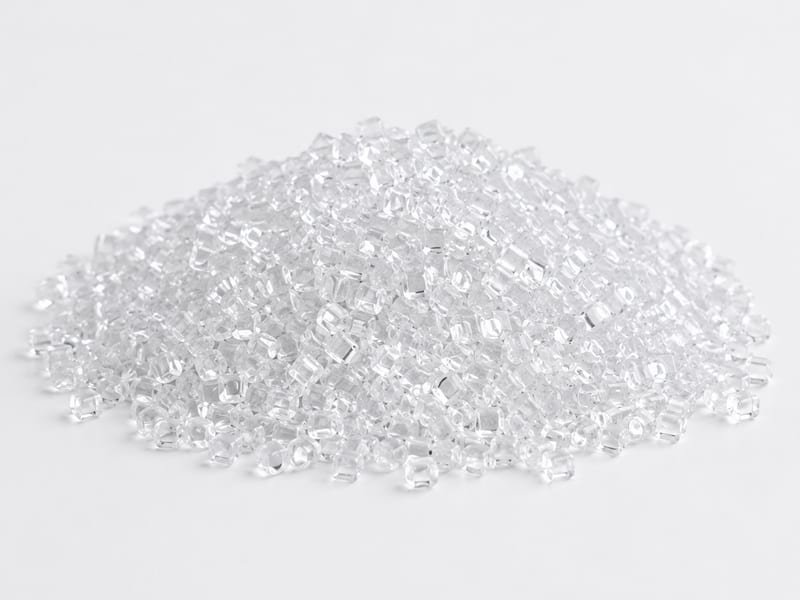
Acrylic Resin
How liquid-applied acrylic roofing coatings are specified under ASTM D6083, and a documented finding on why unmodified waterborne acrylic resin needs water-resistance additives.
Overview
Acrylic Resin, as a water-based emulsion, is specified for liquid-applied roofing coatings. This page covers that specification and a documented finding on why unmodified waterborne acrylic resin needs water-resistance additives.
What is it?
Acrylic Resin, in its water-based acrylic latex elastomeric emulsion form, is specified under ASTM D6083 for liquid-applied roofing coatings, with requirements covering viscosity, solids content, elongation at break, tensile strength, permeance, water swelling, adhesion, fungi resistance, tear resistance, and low-temperature flexibility after accelerated weathering.
Why should I use it?
- A single specification defines its performance requirements for roofing coatings — see “What is it?” above.
- Its water resistance is directly tied to formulation, not a given — see Limitations.
How it’s used
In Plastics & Polymers, Acrylic Resin in emulsion form is used for liquid-applied roofing coatings specified under ASTM D6083.
Limitations — when it isn’t the right choice
- Unmodified waterborne acrylic resin has poor resistance to continuous water immersion. A 2022 peer-reviewed study found that an unmodified waterborne acrylic resin film failed after just one day of water soaking. After modifying the resin with 10 wt% of a biphenyl diglycidyl ether compound, the film withstood more than 35 days of soaking, and tensile strength reached 9.12 MPa — 2.2 times higher than the unmodified film. This was documented for one specific modified-versus-unmodified resin system; it should not be assumed that every commercial waterborne acrylic formulation performs identically without verifying its own water-resistance data.
Key Applications
The material's role changes by industry — click any industry to see its full page.

Standards & Technical References
Every claim on this page traces back to a verifiable reference:
- Tier 1StandardASTM D6083/D6083M-24 — Standard Specification for Liquid-Applied Acrylic Coating Used in Roofing
- Tier 2University/ResearchImproving water resistance and mechanical properties of waterborne acrylic resin modified by 3,3′,5,5′-tetramethyl-4,4′-biphenyl diglycidyl ether, Surfaces and Interfaces, 2022, Vol. 35


