
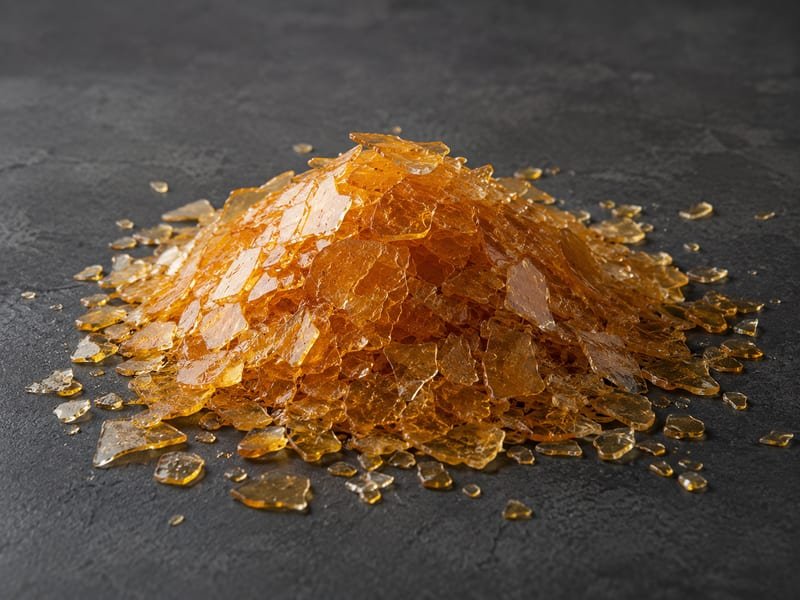
Alkyd Resin
How alkyd resin compatibility with hydrocarbon resins is tested under ASTM D6887, and what the research shows about bio-based monomer substitution.
Overview
Alkyd Resin’s compatibility with hydrocarbon resins in solution is tested under a standardized method used for ink vehicle applications. This page covers that test method and what the research shows about substituting bio-based monomers in its formulation.
What is it?
Alkyd Resin’s compatibility with hydrocarbon resins or their solutions in an aliphatic solvent is tested under ASTM D6887, most commonly applied to lithographic ink vehicle formulations.
Why should I use it?
- Its compatibility with other resin systems is verified by a standardized test method — see “What is it?” above.
- How it’s formulated directly shapes its final coating properties — see Limitations.
How it’s used
In Plastics & Polymers, Alkyd Resin’s compatibility testing under ASTM D6887 is applied most commonly to lithographic ink vehicle formulations.
Limitations — when it isn’t the right choice
- Substituting bio-based monomers for conventional petroleum-derived ones changes final coating properties in ways that aren’t automatically equivalent. A 2023 peer-reviewed review on alkyd resins produced from bio-based resources found that replacing non-renewable monomers with bio-based ones directly affects a coating’s final adhesiveness, drying time, hardness, and tackiness. This is a documented, real effect from the reviewed research, not a fixed or uniform outcome across every substitution — formulations built around bio-based monomers should not be assumed to perform identically to conventional petroleum-based alkyd formulations without separately verifying the specific property in question.
Key Applications
The material's role changes by industry — click any industry to see its full page.
Standards & Technical References
Every claim on this page traces back to a verifiable reference:
- Tier 1StandardASTM D6887-03(2020) — Standard Test Method for Testing Alkyd Compatibility with Resin or Resin Solutions
- Tier 2University/ResearchAlkyd resins produced from bio-based resources for more sustainable and environmentally friendly coating applications, Turkish Journal of Chemistry, 2023, Vol. 47


