
Vermiculite
How exfoliated vermiculite is used across agriculture, lightweight concrete, and insulation, and what research shows about why cement type matters for its high-temperature performance.
Overview
Exfoliated vermiculite’s use splits across agriculture, lightweight concrete aggregate, and insulation, with agriculture as the largest of these three specifically-tracked uses. This page covers that end-use split and what mortar research shows about why cement type matters when vermiculite is used for high-temperature performance.
What is it?
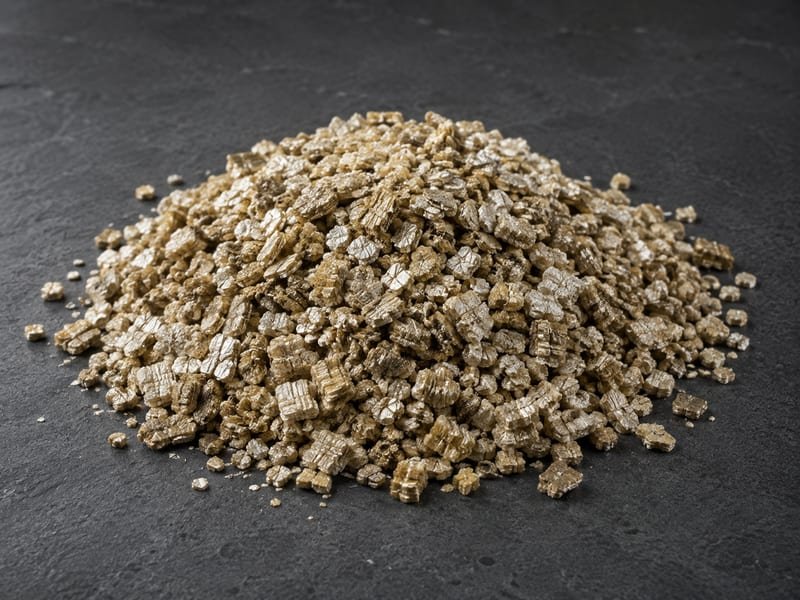
Vermiculite is exfoliated into a lightweight, heat-resistant material. Per 2024 U.S. Geological Survey data, an estimated 30% of U.S. exfoliated vermiculite use went to agriculture and horticulture, 16% to lightweight concrete aggregates (cement premixes, concrete, and plaster), 15% to insulation, and the remaining 39% to other uses.
Why should I use it?
- Agriculture, lightweight concrete, and insulation are all documented, substantial end uses — see “What is it?” above.
- Research has directly shown that the cement it’s combined with changes its high-temperature performance — see Limitations.
How it’s used
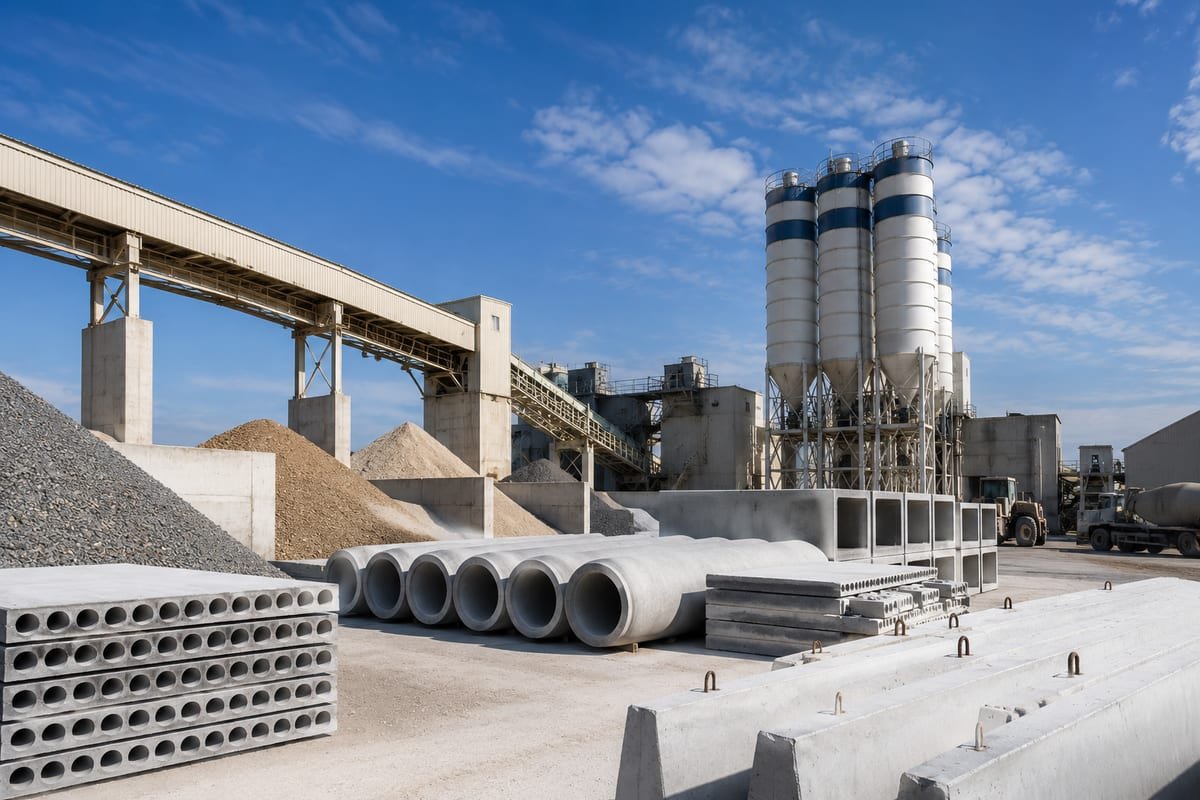
In Construction & Building Materials, vermiculite is used as a lightweight aggregate in cement premixes, concrete, and plaster, and separately as a loose-fill insulation material.
Limitations — when it isn’t the right choice
- Vermiculite’s high-temperature performance in mortar depends on the cement it’s paired with — it isn’t a fixed property of the mineral alone. A 2021 peer-reviewed study tested lightweight mortars with expanded vermiculite powder replacing 0–45% of the mix, comparing Portland cement and calcium aluminate cement, with testing up to 900°C. The calcium aluminate cement and vermiculite combination showed superior high-temperature resistance and refractory performance compared to the Portland cement combination. This was documented for these two specific cement types and replacement range; it should not be assumed that every vermiculite-cement combination performs the same way at high temperature without checking its own formulation data.
Key Applications
The material's role changes by industry — click any industry to see its full page.
Physical Properties
| Property | Typical Value | Note |
|---|---|---|
| Specific Gravity (exfoliated) | ≈ 2.5–2.6 | Typical published value — Vermiculite Association |
| Bulk Density (exfoliated) | ≈ 64–160 kg/m³ | Typical published value — Vermiculite Association |
| Exfoliation/Expansion Ratio | Relative free expansion ≈ 2.5 for material of 2.5–2.9 g/cm³ raw specific density; ≈ 1.3 for material below 2.5 g/cm³ | Typical published value — Vermiculite Association |
| Particle Size Grades | Large 2–15 mm; Medium 1–8 mm; Fine 0.5–3.0 mm; Superfine 0.25–1.7 mm; Micron 0.1–1.0 mm | Typical published value — Dupré Minerals technical brochure |
These are typical published values for the material in general, not a certificate of analysis (COA) for a specific shipment. Actual per-batch values are set by the COA accompanying supply.
Grades
Grade and Specification Guide
These reference codes illustrate grade categories and specifications for comparison and selection. The commercial grade and final specification are determined by your application requirements, the technical data sheet and the batch certificate of analysis.
Standards & Technical References
Every claim on this page traces back to a verifiable reference:
- Tier 1Government PublicationUSGS — Mineral Commodity Summaries 2025, Vermiculite
- Tier 2University/ResearchThe effects of cement type and expanded vermiculite powder on the thermo-mechanical characteristics and durability of lightweight mortars at high temperature and RSM modelling, Case Studies in Construction Materials, 2021, Vol. 15
- Tier 2Industry AssociationVermiculite Association — Exfoliated Vermiculite Data
- Tier 3Global SupplierDupré Minerals — Exfoliated Vermiculite technical brochure (particle size grades)
Frequently Asked Questions
What are the largest uses of exfoliated vermiculite?
Agriculture and horticulture (about 30% of U.S. use), followed by lightweight concrete aggregates (16%), then insulation (15%), per 2024 USGS data.
How does vermiculite become lightweight?
It exfoliates through heat treatment — water molecules within its flaked structure are expelled as steam, causing the mineral to expand into a lightweight, heat-resistant material.
How is vermiculite used in construction?
As a lightweight aggregate in cement premixes, concrete, and plaster, and separately as a loose-fill insulation material.
Does every vermiculite-cement combination perform the same at high temperature?
No. A 2021 peer-reviewed study found the calcium aluminate cement and vermiculite combination showed superior high-temperature resistance compared to the Portland cement combination — every combination shouldn't be assumed to perform the same without checking.


