
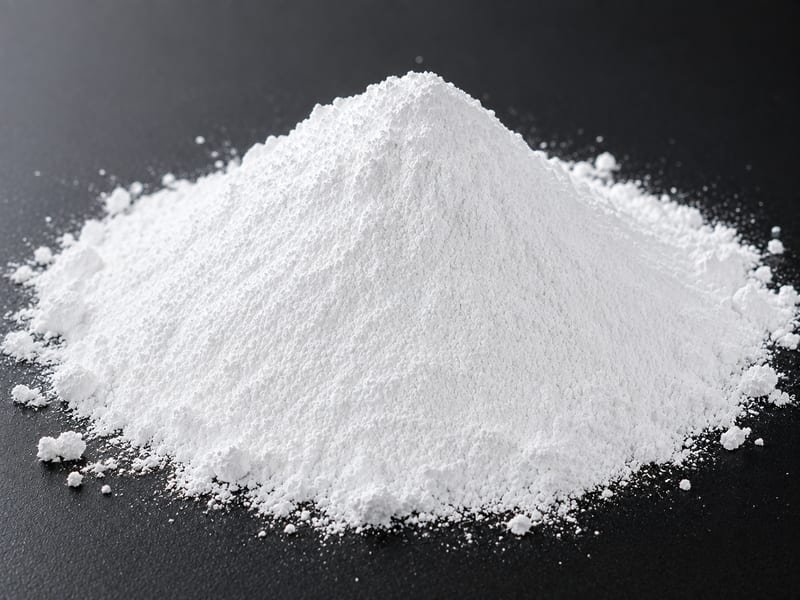
Precipitated Calcium Carbonate (PCC)
How PCC is classified under ASTM D1199 as a distinct type from ground calcium carbonate, and what the research shows about controlling its crystal morphology during production.
Overview
Precipitated Calcium Carbonate (PCC) is chemically the same compound as ground calcium carbonate (GCC), but produced differently — and that difference in production is what gives it distinct, controllable properties. This page covers its classification and what the research shows about controlling its crystal shape and surface area during manufacturing.
What is it?
PCC is classified under ASTM D1199 as Type PC — prepared either by complete solution or by carbonation of lime — distinct from Type GC (ground calcium carbonate). The same specification classifies both types into six grades by particle size, from fine paint grade to ultrafine grade.
Why should I use it?
- It’s produced by a chemical process (solution or carbonation of lime) rather than mechanical grinding — see “What is it?” above.
- Research has directly demonstrated that this production process lets crystal shape and surface area be engineered, not just grinding fineness — see Limitations for what that control requires.
How it’s used
In Plastics & Polymers, PCC is used as a filler classified under the grade system set by ASTM D1199.
Limitations — when it isn’t the right choice
- Hitting a specific target crystal shape and surface area requires precise, simultaneous control of multiple production variables. A 2020 peer-reviewed study on a semi-continuous carbonation process found that temperature, milk-of-lime solids content, CO₂ injection rate, and agitation together determined the resulting surface area and morphology — achieving high-purity PCC with specific surface areas ranging from 5.99 to 26.69 m²/g and morphologies from scalenohedral crystals to chain-like agglomerates, without needing external crystal-growth modifiers. This was documented for one specific production process; it should not be assumed that every PCC grade achieves the same morphology or surface area consistency without checking a supplier’s own batch data.
Key Applications
The material's role changes by industry — click any industry to see its full page.

Physical Properties
| Property | Typical Value | Note |
|---|---|---|
| Chemical Formula | CaCO₃ | Definitional |
| Particle Size (D50) | ≈ 0.4 – 3 microns | Typical published value — Minerals Technologies Inc. |
| Specific Surface Area (BET) | ≈ 10 m²/g (typical; grades range ≈ 1 – 50 m²/g) | Typical published value — Minerals Technologies Inc. |
| Density | ≈ 2.7 g/cm³ | Typical published value — Minerals Technologies Inc. |
| Brightness | ≈ 92 – 96% ISO | Typical published value — Minerals Technologies Inc. |
These are typical published values for the material in general, not a certificate of analysis (COA) for a specific shipment. Actual per-batch values are set by the COA accompanying supply.
Grades
Grade and Specification Guide
These reference codes illustrate grade categories and specifications for comparison and selection. The commercial grade and final specification are determined by your application requirements, the technical data sheet and the batch certificate of analysis.
Standards & Technical References
Every claim on this page traces back to a verifiable reference:
- Tier 1StandardASTM D1199-86(2020) — Standard Specification for Calcium Carbonate Pigments
- Tier 2University/ResearchControl of the morphology, specific surface area and agglomeration of precipitated calcium carbonate crystals through a multiphase carbonation process, CrystEngComm, 2020, Vol. 22
- Tier 3Global SupplierMinerals Technologies Inc. (Specialty Minerals) — Precipitated Calcium Carbonate Technical Data (Calofort/Ultra-Pflex/Thixo-Carb Product Lines)
Frequently Asked Questions
How is PCC classified under ASTM D1199?
As Type PC — prepared either by complete solution or by carbonation of lime — distinct from Type GC (ground calcium carbonate). The specification classifies both types into six grades by particle size, from fine paint grade to ultrafine grade.
What controls PCC's crystal shape and surface area during production?
Temperature, milk-of-lime solids content, CO₂ injection rate, and agitation — a 2020 peer-reviewed study found these variables together determine the resulting surface area and morphology, with specific surface areas ranging from 5.99 to 26.69 m²/g.
Can high-purity PCC be produced without external crystal-growth modifiers?
Yes. The 2020 peer-reviewed study found a semi-continuous carbonation process achieved high-purity PCC with a range of morphologies — from scalenohedral crystals to chain-like agglomerates — without needing external crystal-growth modifiers.
Does every PCC grade achieve the same morphology and surface area?
No. This was documented for one specific production process; it should not be assumed that every PCC grade achieves the same morphology or surface area consistency without checking a supplier's own batch data.


