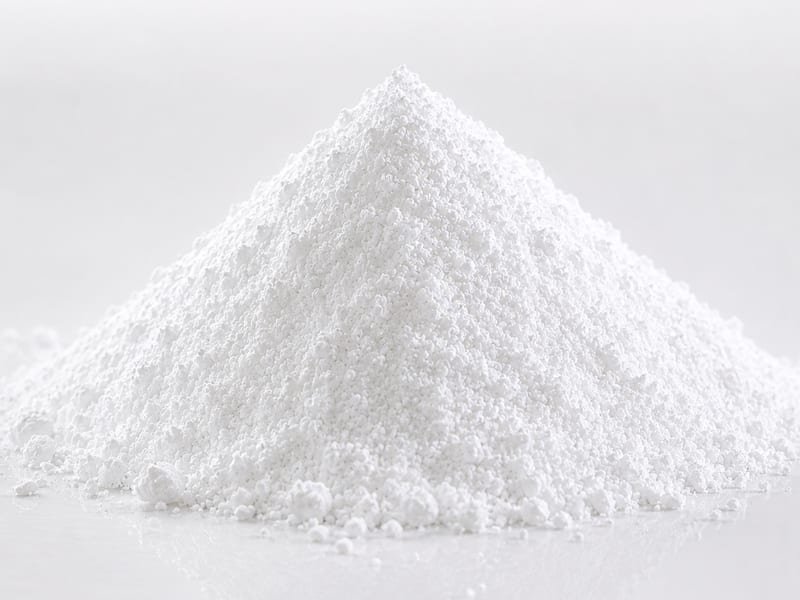
Adding titanium dioxide to lighten or opacify an ink can accelerate the very fading it’s meant to help avoid — the effect depends on which crystal form of TiO2 is used, a distinction that a generic “titanium dioxide” spec sheet doesn’t necessarily capture.
Root Causes
Titanium dioxide exists in two crystal forms relevant to pigments, anatase and rutile, and the two are documented as behaving differently for lightfastness purposes: the anatase form has a greater influence than the rutile form on accelerating the fading of prints made from TiO2-containing inks. There’s a real trade-off rather than a simple “avoid anatase” rule, however — an optimum amount of titanium dioxide is documented as needed in a formulation specifically to protect the print from fading under xenon arc light exposure, meaning TiO2 loading and crystal form both interact with fade resistance rather than TiO2 being purely a fading risk.
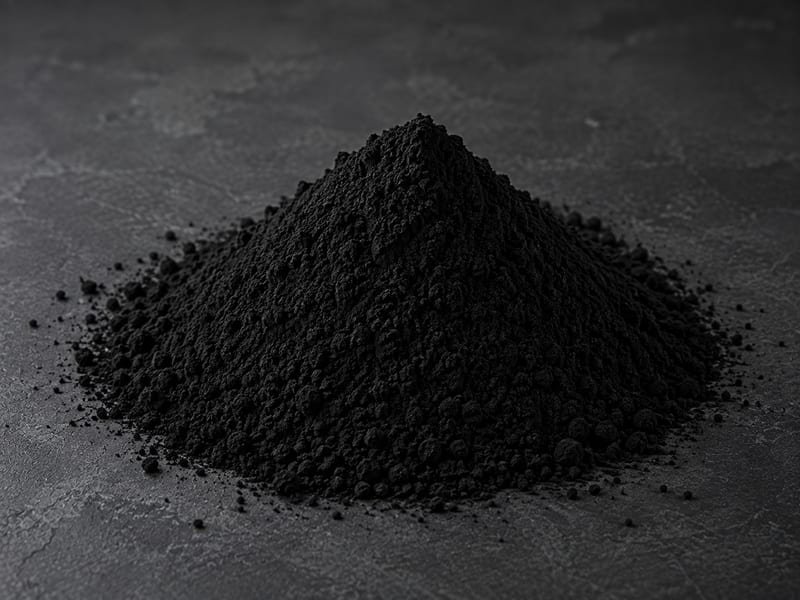
Lightfastness itself is measured on the Blue Wool Scale (British Standard BS1006), a 1-8 rating where a reference bluewool textile card is exposed alongside the sample and the rating corresponds to which reference strip shows matching fade — an internationally recognized, testable benchmark rather than a subjective color-shift judgment. Carbon black performs strongly on this measure: pigment black 7 is documented showing greater than 12 months of fade resistance in outdoor exposure testing and greater than 240 hours in accelerated Fadeometer testing, outperforming several colored process pigments tested under the same conditions. Particle size interacts with lightfastness independent of pigment chemistry: reducing pigment particle size is documented as generally reducing lightfastness, meaning the same finer grades chosen for higher jetness or tint strength carry a fade-resistance trade-off that needs to be weighed against the color-strength benefit.
What This Means for Raw Material Selection
Because lightfastness depends on TiO2 crystal form and pigment particle size, not just pigment identity, a buyer specifying ink for light-exposed packaging (retail shelf display, outdoor labels, long-shelf-life goods) needs those specific parameters confirmed, not just a general “lightfast” claim on a data sheet.
The practical points for a buyer are: confirm TiO2 crystal form (rutile versus anatase) for light-exposed applications, since the documented fading-acceleration difference between the two forms is a real, testable specification gap; verify TiO2 loading is calibrated to the application’s actual light exposure rather than assumed to be fade-neutral, since an optimum loading level is documented as protective while under- or over-dosing shifts the fade-resistance outcome; and request Blue Wool Scale ratings for lightfastness-critical formulations specifically, since this is a standardized, comparable benchmark rather than a qualitative claim, and factor in that finer particle-size pigment grades chosen for jetness or tint strength carry a documented lightfastness trade-off that should be weighed against the color-strength gain.
Sources: USPTO patent literature on dissimilar pigments for dark and light inkjet inks documenting the anatase-versus-rutile TiO2 fading relationship and optimum loading data; Wikipedia and DRB Mattech technical references on the Blue Wool Scale (BS1006) lightfastness measurement standard; ScienceDirect/ResearchGate peer-reviewed research on pigment characteristics affecting the fading kinetics of water-based liquid ink prints, including carbon black and process pigment fade-resistance benchmarks.